Genova
La Superba
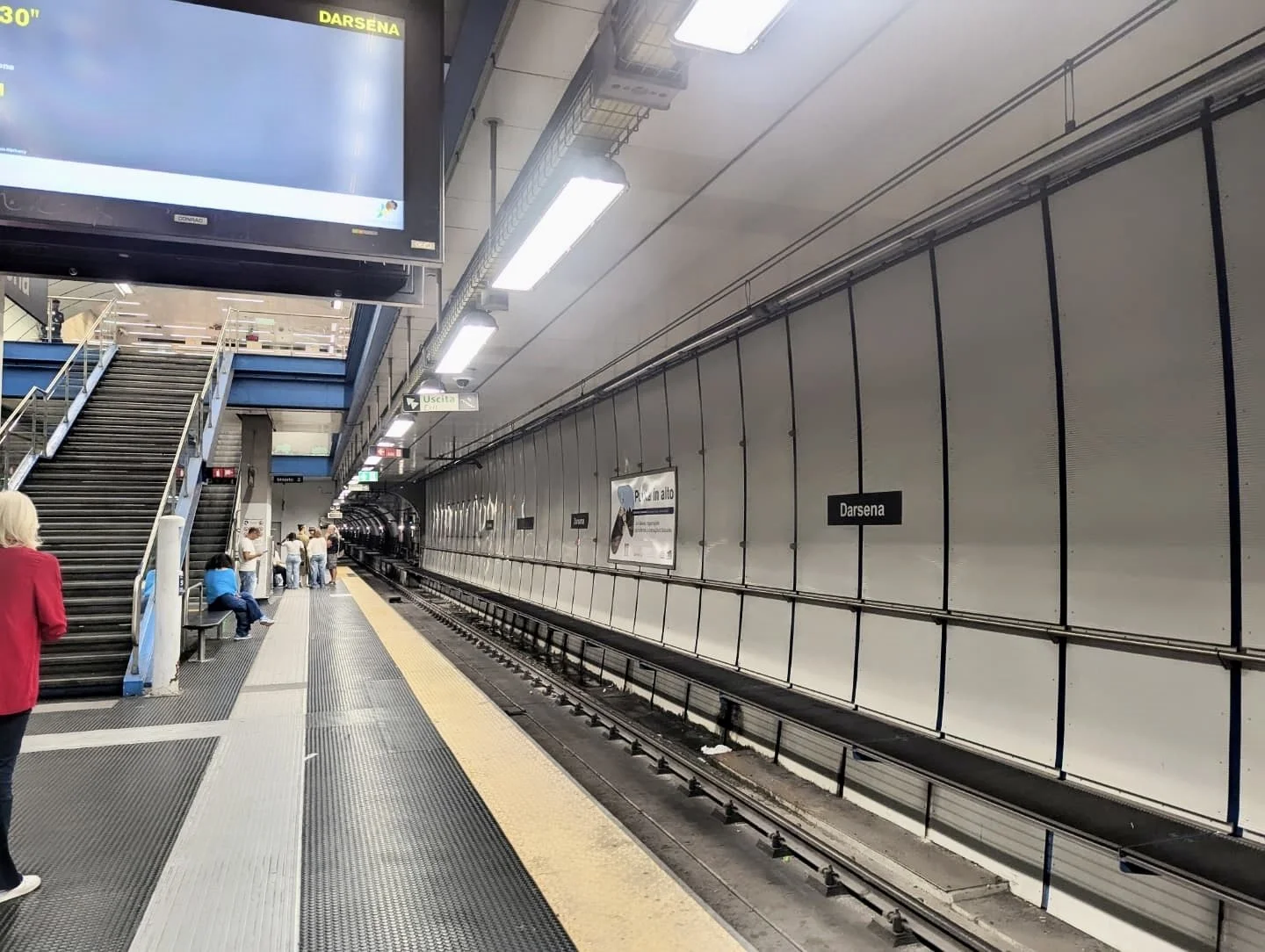
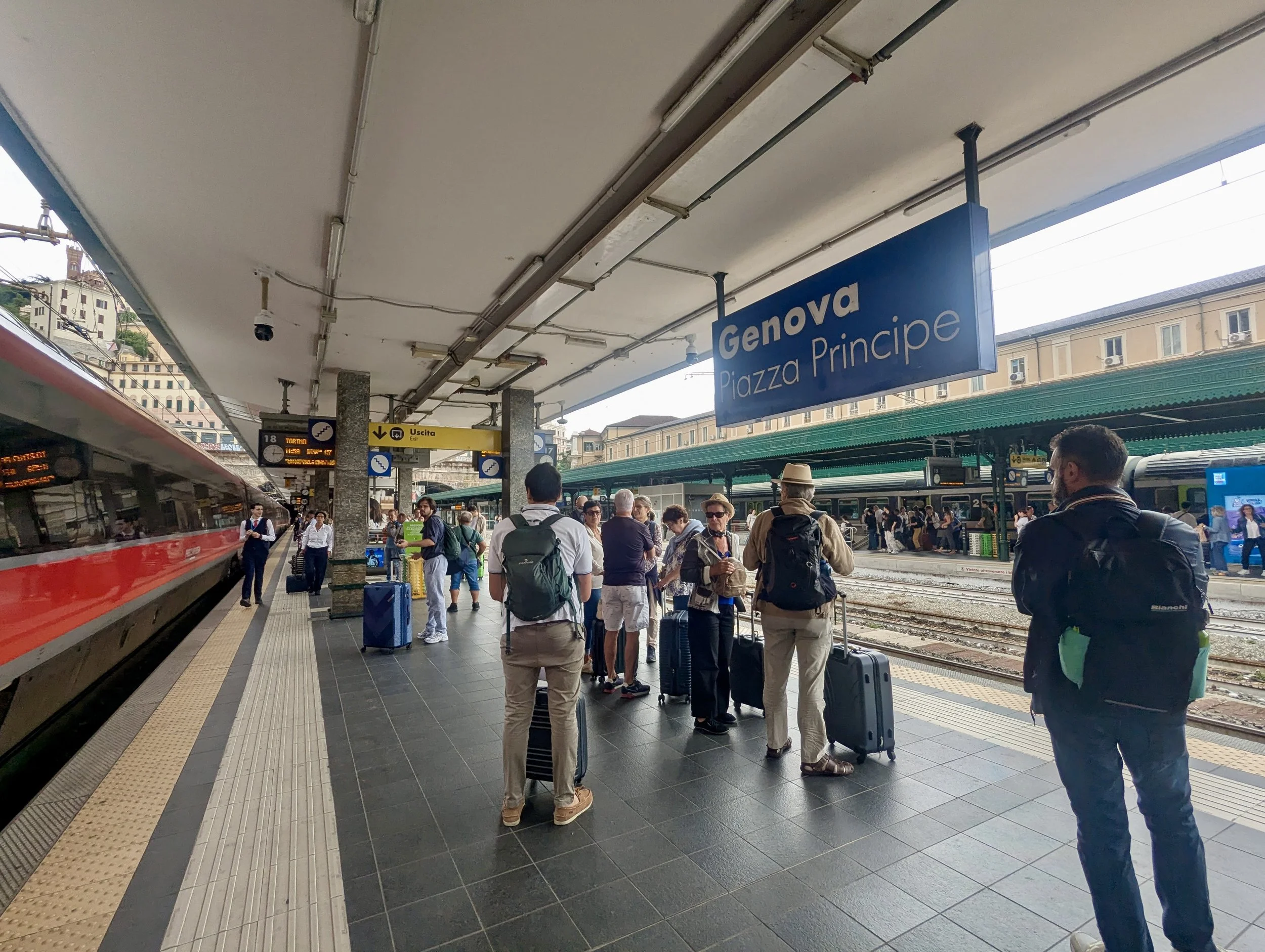
Travel: Ferry (Genova is a major port city and there are a lot of ferry options, from Sicily to North Africa, or in our case, Corsica), bus (the best option to get all over town, and you can buy tickets online using the AMT app, or just tap a credit card to pay at the reader), Metro (not the best option for getting around town as there’s only one line, the only time we used it was to get to the train station when we were leaving), funicular/rack railway (it’s a hilly town, so the two funiculars and the single rack railway are good options to get up or downhill quickly), train (Piazza Principe is the largest station in Liguria, good connections to get anywhere in Italy and France), walking (especially in the Centro Storico, where the labyrinthine streets are too narrow for any vehicles)
Eat: Pesto - seriously, just eat pesto, this is where it’s from (Pesto alla Genovese is its full name), focaccia, pansotti, torte di verdure (veggie pies, containing potatoes, chard, or rice), and panissa, plus so much excellent seafood. Ligurian cuisine isn’t particularly fancy; some of the best places to eat are the no-frills spots, away from the main part of town - don’t look for nice decor, look for lines of locals. Very sadly, these places didn’t appear to be open on Sundays, so plan your eating accordingly.
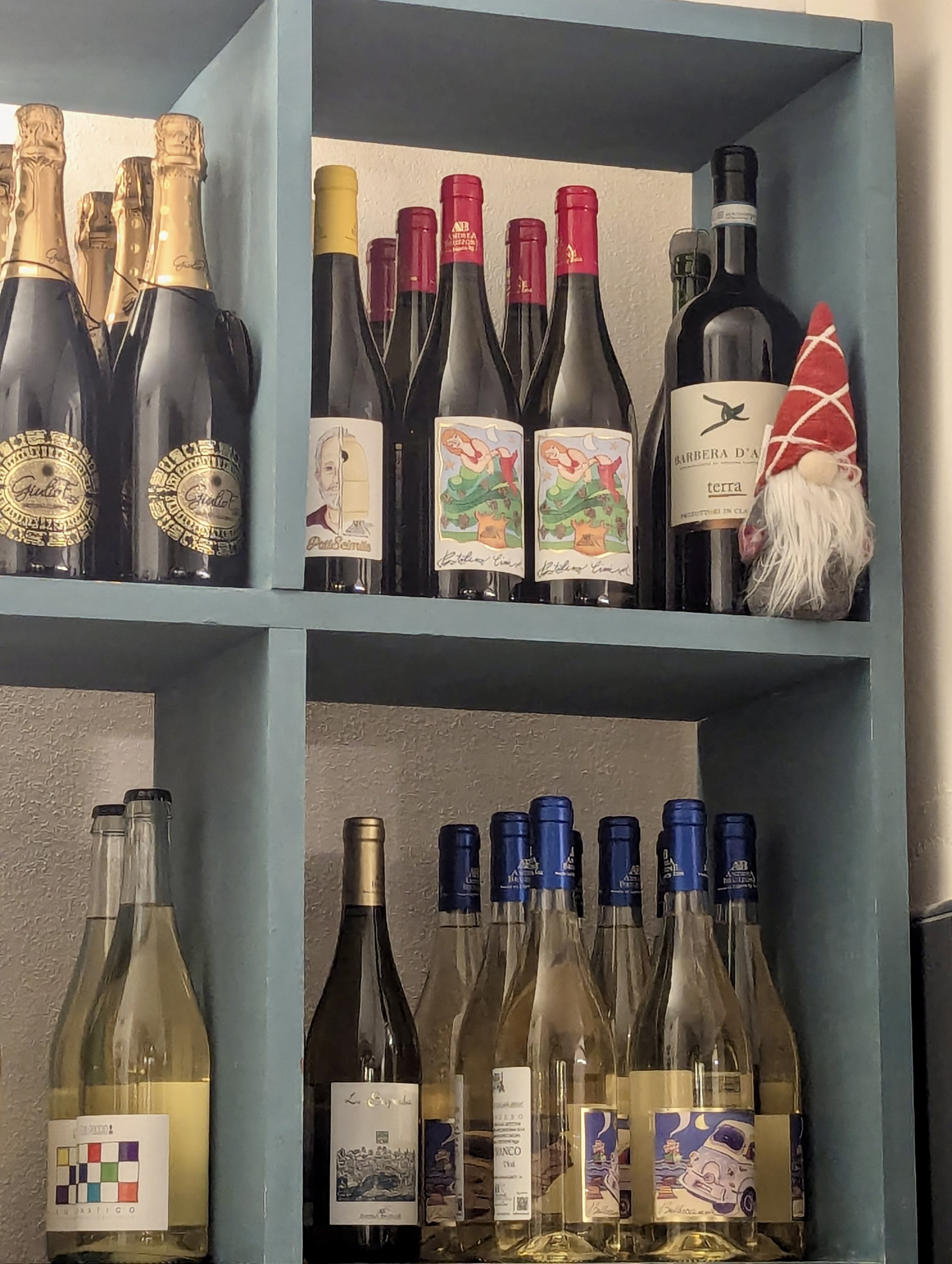
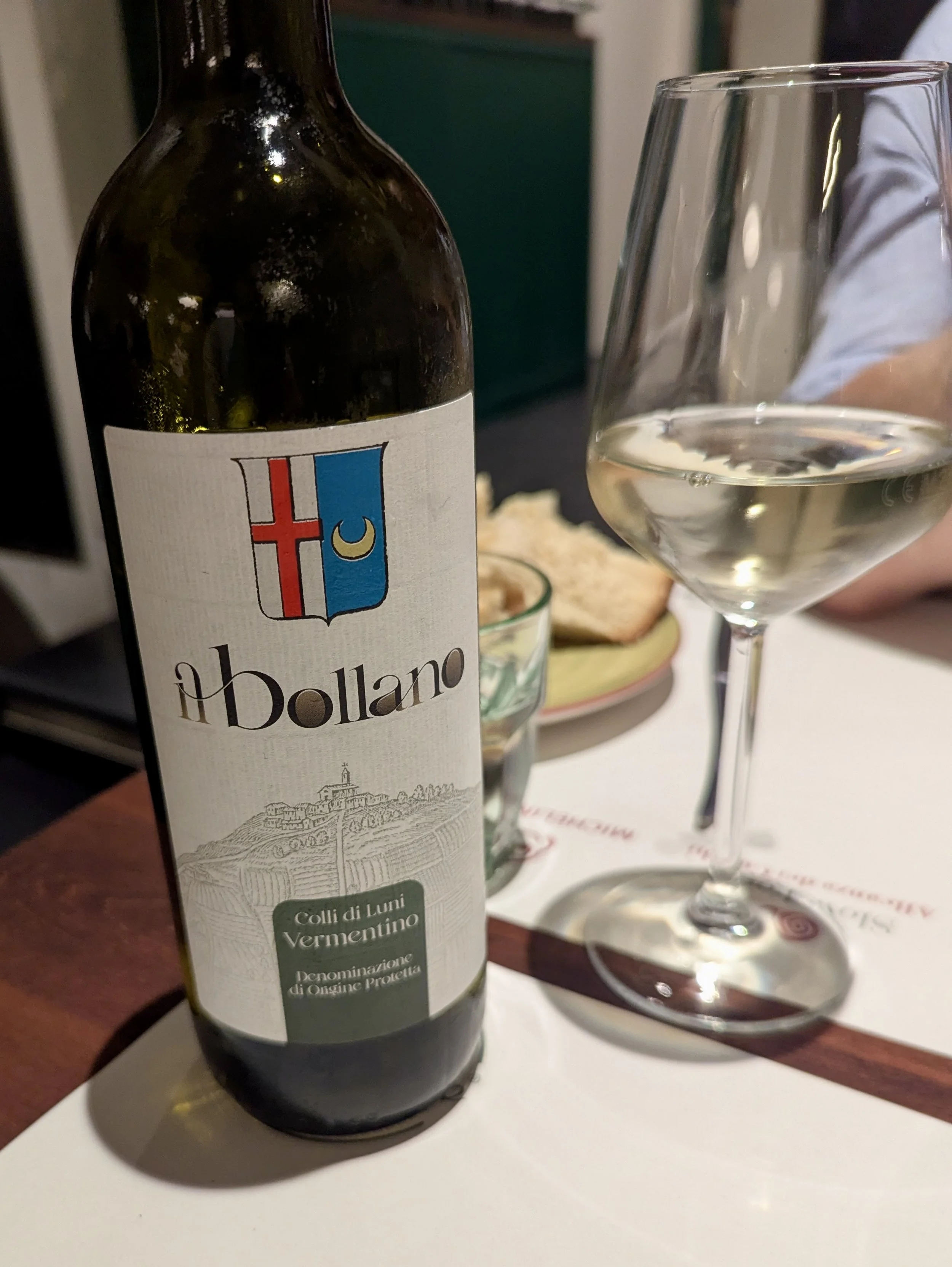
Ligurian wine is delicious, mostly white, and production volume isn’t high thanks to the steep hills requiring a lot of terracing. The most commonly grown grapes are Vermentino, Pigato, and Rossese. We mostly drank Vermentino, and it was delicious.
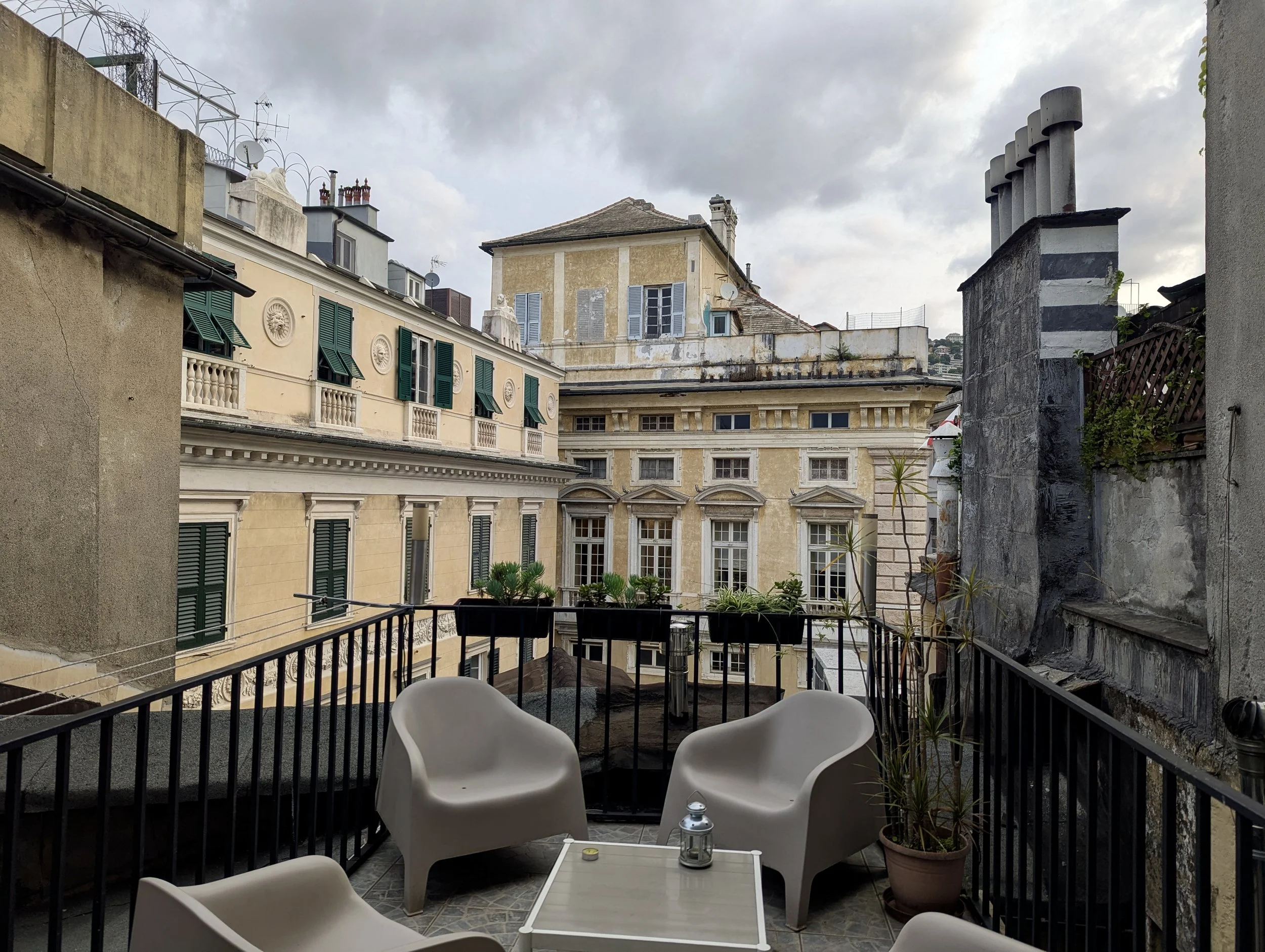
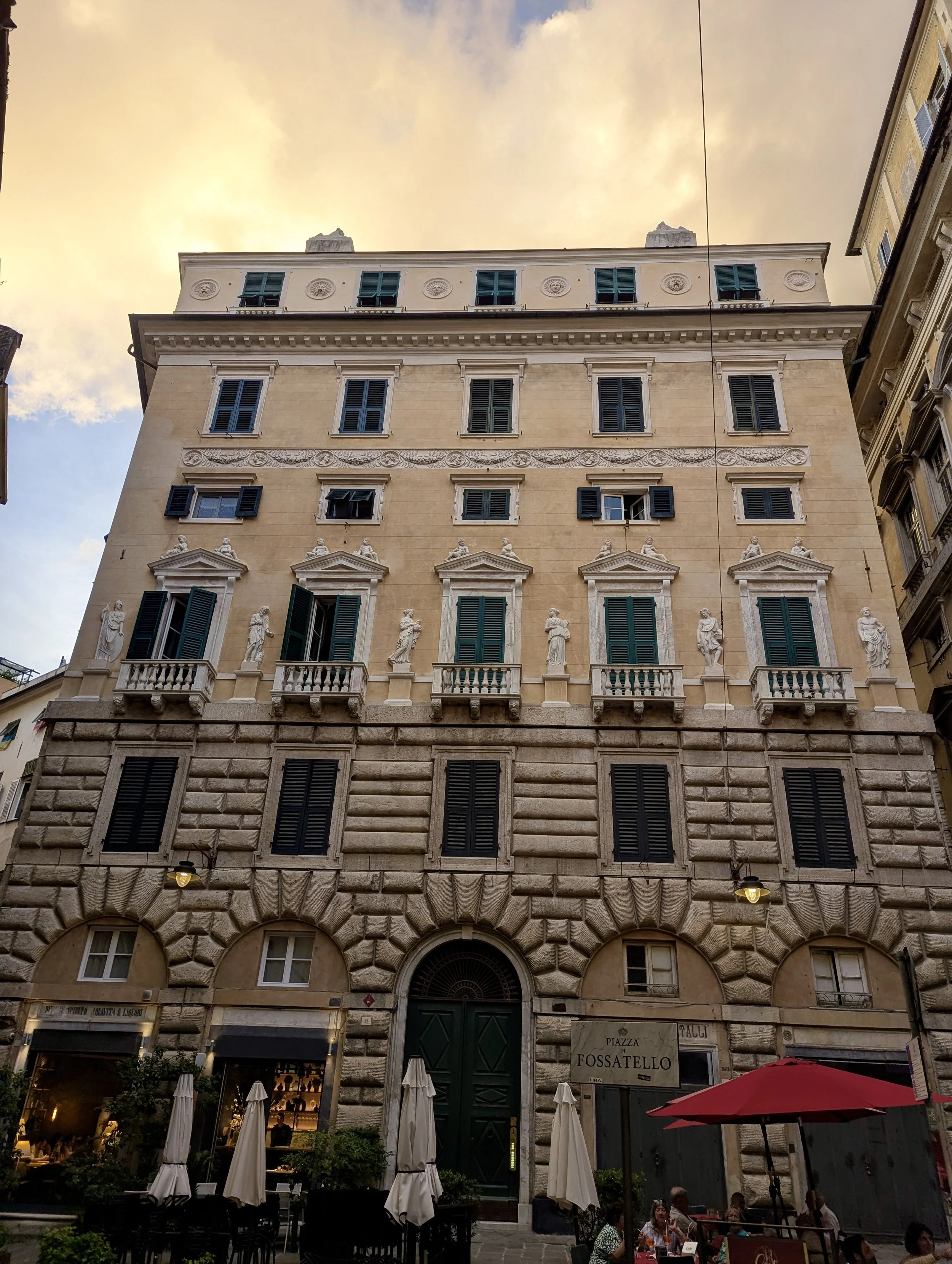
Sleep: We stayed three nights and four days in an attic AirBNB with a fantastic rooftop deck just off of Piazza Fossatello in the Centro Storico - walkable, centrally located, and fantastic, it was a perfect place to stay to explore the city.
Repeat: Absolutely, we did NOT spend enough time here - a very late arrival meant only two full days (one of them a Sunday when a lot of places were closed) and a morning to explore, which was not nearly enough time to enjoy everything that Genova has to offer.
Why Genova?
Genova (or Genoa) is the capital city of Liguria, and the busiest port city in Italy. It’s also one of the oldest continuously inhabited cities in the world (since roughly the fifth or fourth millennium BC). It has a lot of claims to fame, ranging from the birthplace of Cristoforo Colombo (fact) to the birthplace of blue jeans (this claim seems a little less certain, as I’ve also heard that jeans were invented in Nîmes, France - denim = de Nîmes, so who knows who’s right?).
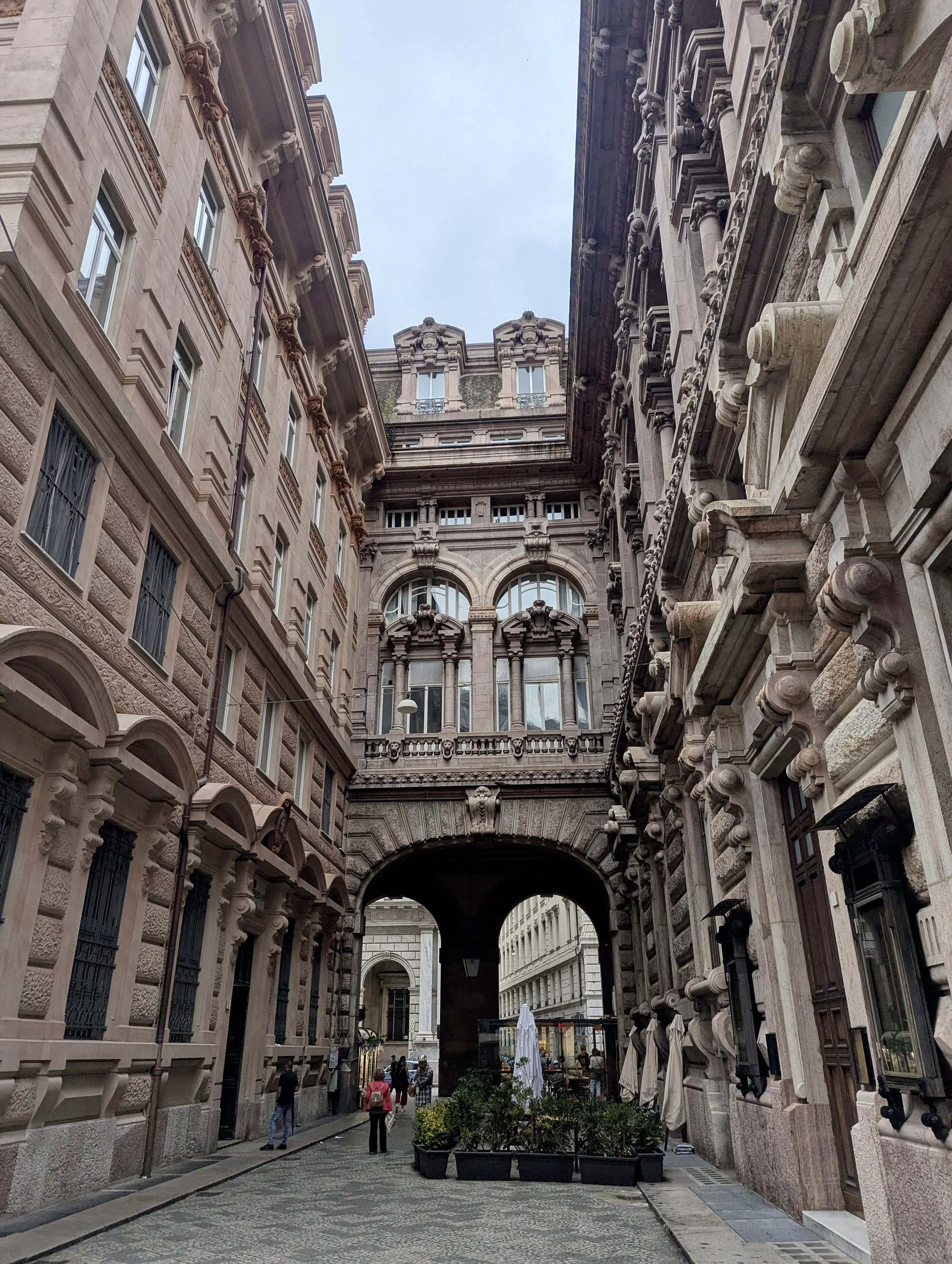
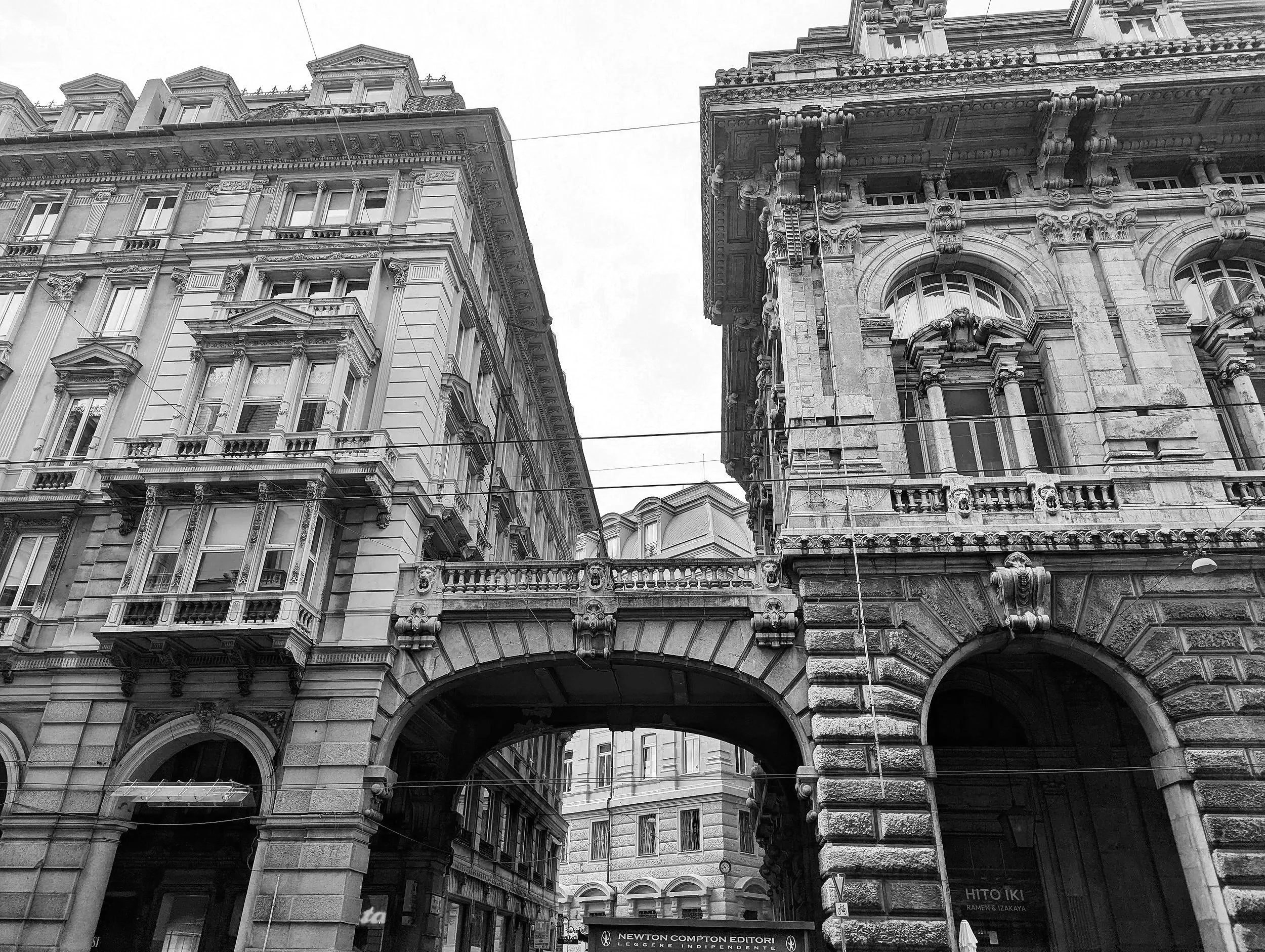
Beginning in the Middle Ages, Genova was a major player in trade, and a lot of wealth was amassed in the region as its power grew and its territory expanded. In the 15th and 16th centuries, it was home to two of the world’s earliest banks. As rich people tend to do, the wealthy Genovese built grand houses, and to this day there are one hundred fourteen palazzi throughout the city that are virtually unchanged, and forty-two that are UNESCO World Heritage sites. These are mostly located along Via Garibaldi (formerly known as Strada Nuova - new street).
Genova’s period of decline started in the 17th century: it lost Corsica to France, Napoleon invaded and defeated the army, and claimed the republic for France, and after his downfall, it was annexed by the Kingdom of Sardegna.
After the Italian Risorgimento in 1861 (the joining of the many disparate states and regions of the peninsula to create of the kingdom of Italy as we know it today) Genova reasserted itself as an important port, bringing back some of its earlier power and importance in the world of shipping and banking.
At the dawn of the twentieth century, Genova’s tide was turning. World War II caused a lot of damage from over fifty Allied bombings since it was a major target due to the port and the shipyards, 75% of which were destroyed, not to mention over 10,000 buildings, 70 churches, and 130 historic palazzi. Rebuilding post-war seemed an insurmountable task, but Genova was instrumental in Italy’s economic recovery and modernization, representing one side of the “industrial triangle” with Milano and Torino as the other two sides.
Most people visiting Liguria or the Italian Riviera bypass Genova for Porto Fino, Sestri Levante, or Le Cinque Terre - that’s if they even venture off Italy’s Big Three trail (Venice, Rome, and Florence). The exception is, of course, cruisers. Being a large port city, Genova is a popular cruise stop, and the giant ship that was in port when we visited increased the tourist foot traffic significantly.
This was our first trip to Italy after spending over a month traveling all over the country on our honeymoon in 2010. On that trip we’d visited Cinque Terre and really enjoyed it, but I wanted to do something different this time. While I definitely wanted to visit Liguria (pesto) I was really more interested in Genova’s unique blend of grand and gritty, not to mention the ease of getting there from Corsica via ferry.
What We Did
Centro Storico, Maddelena
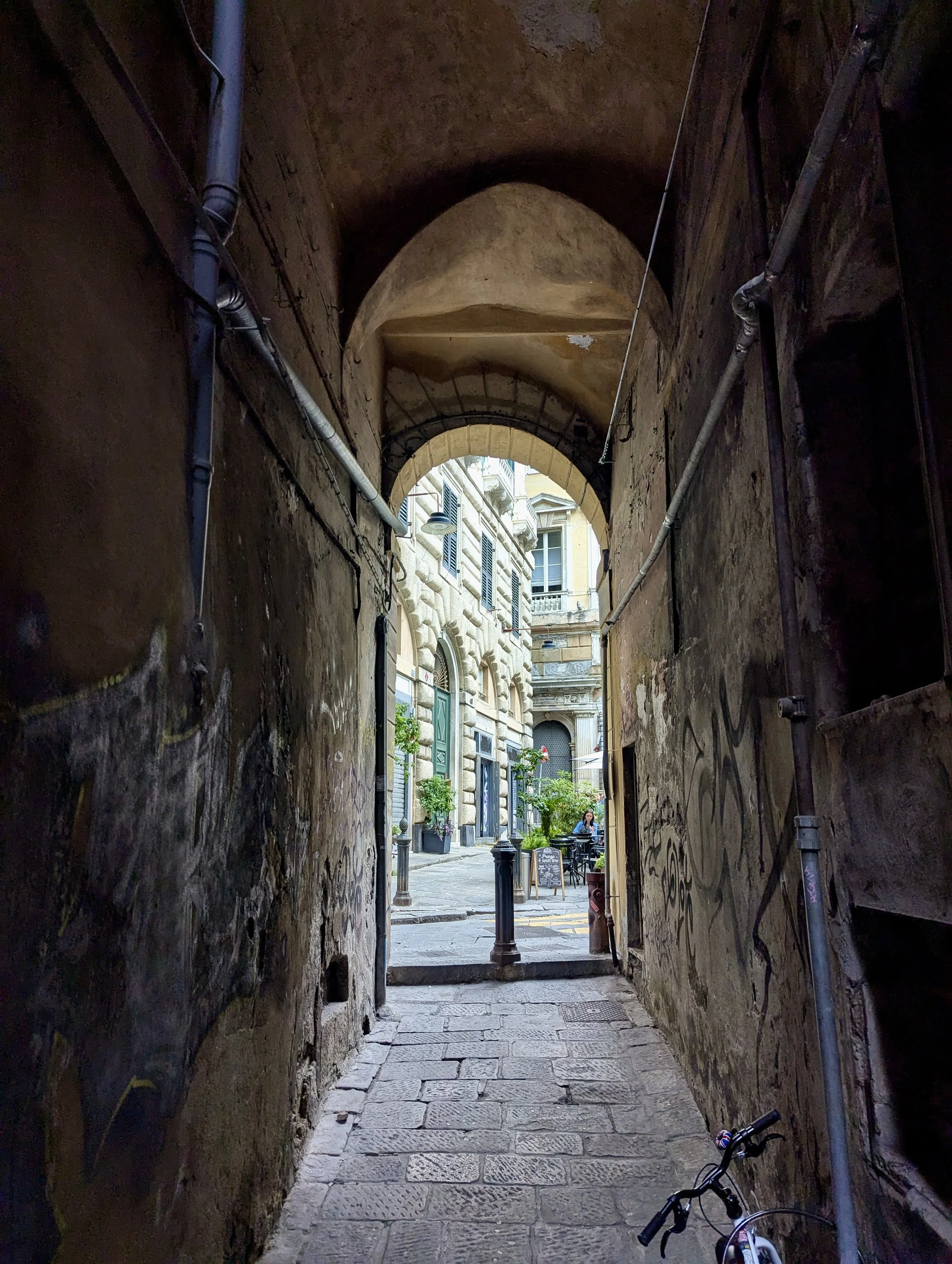
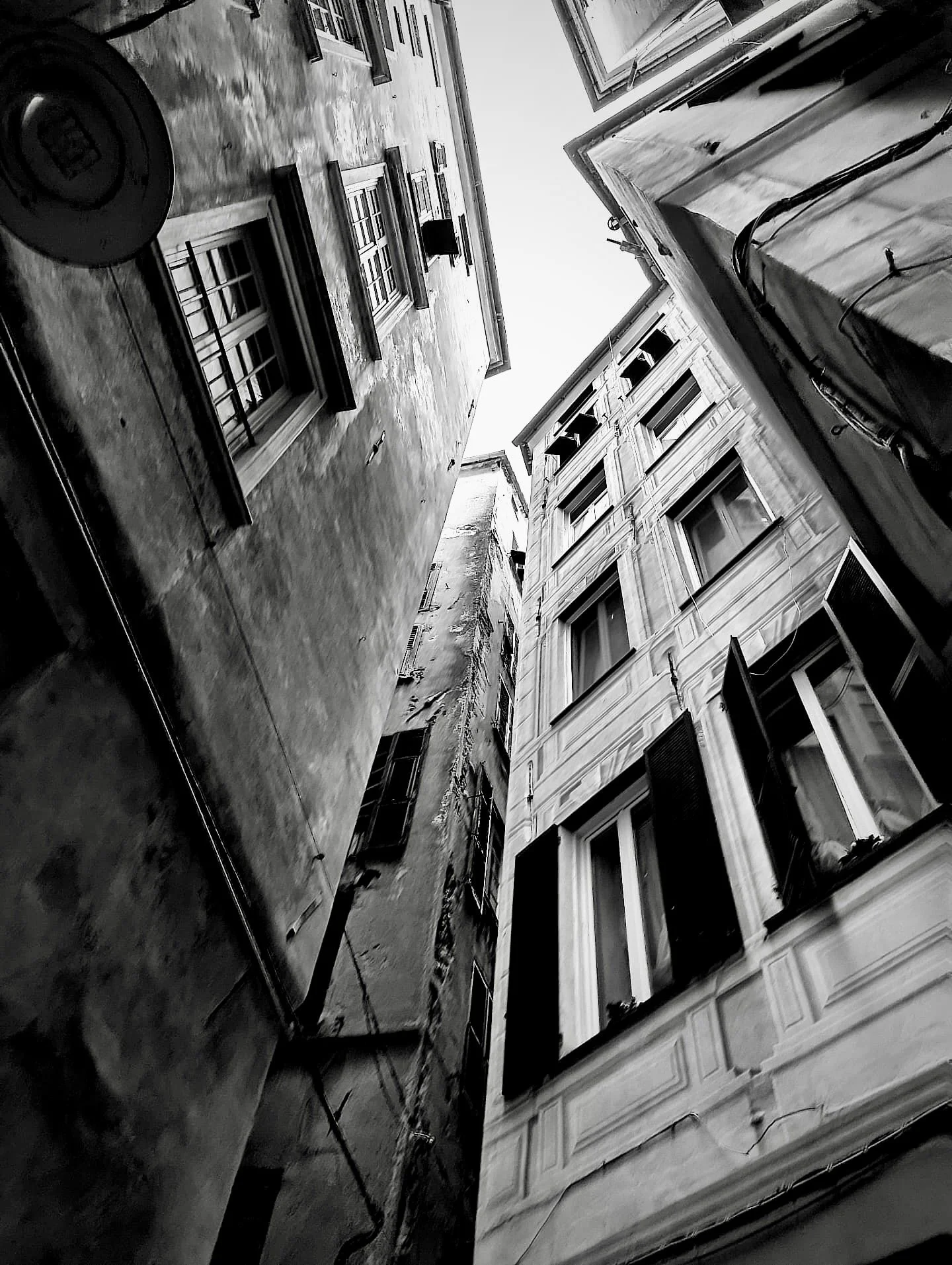
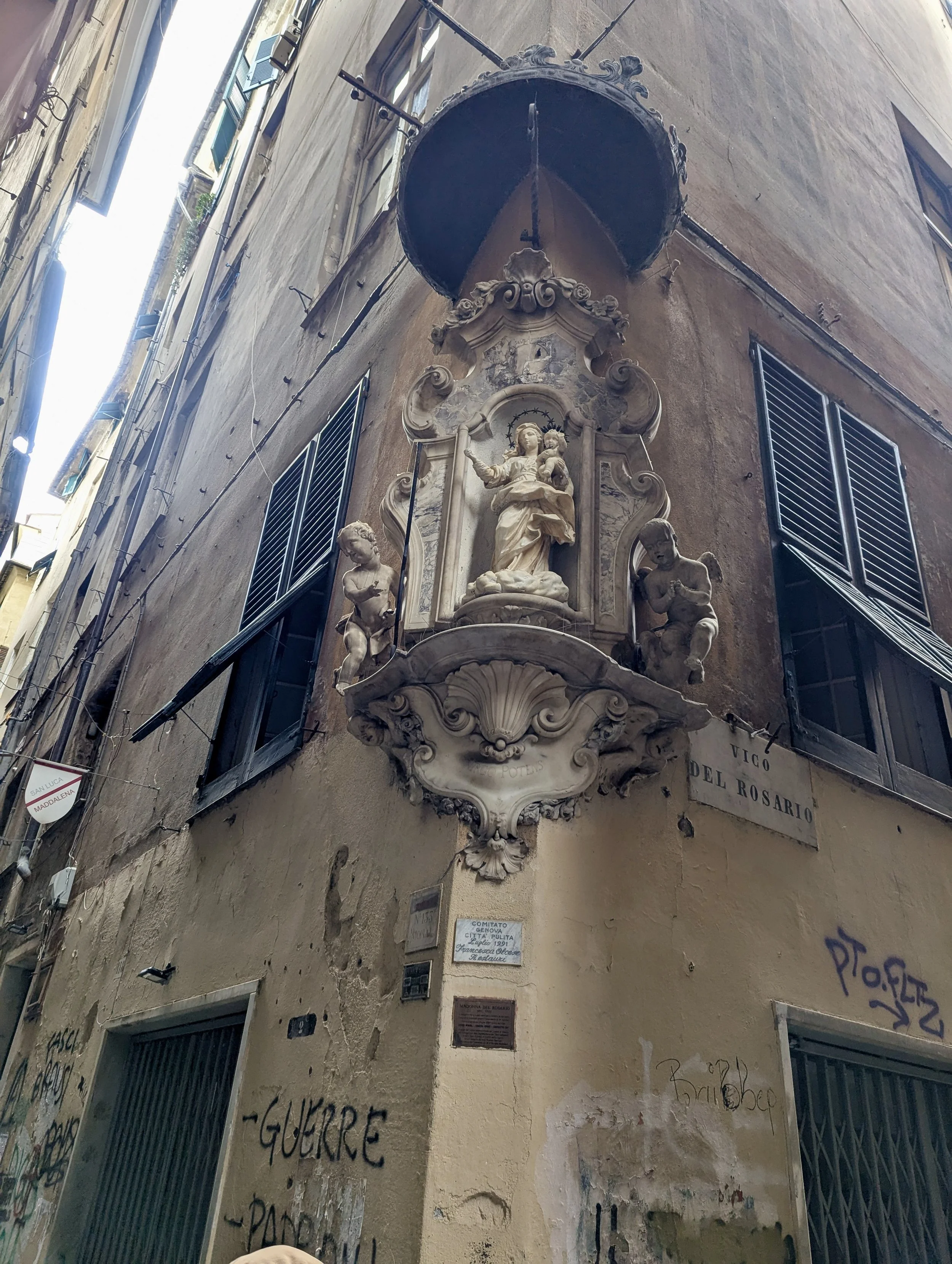
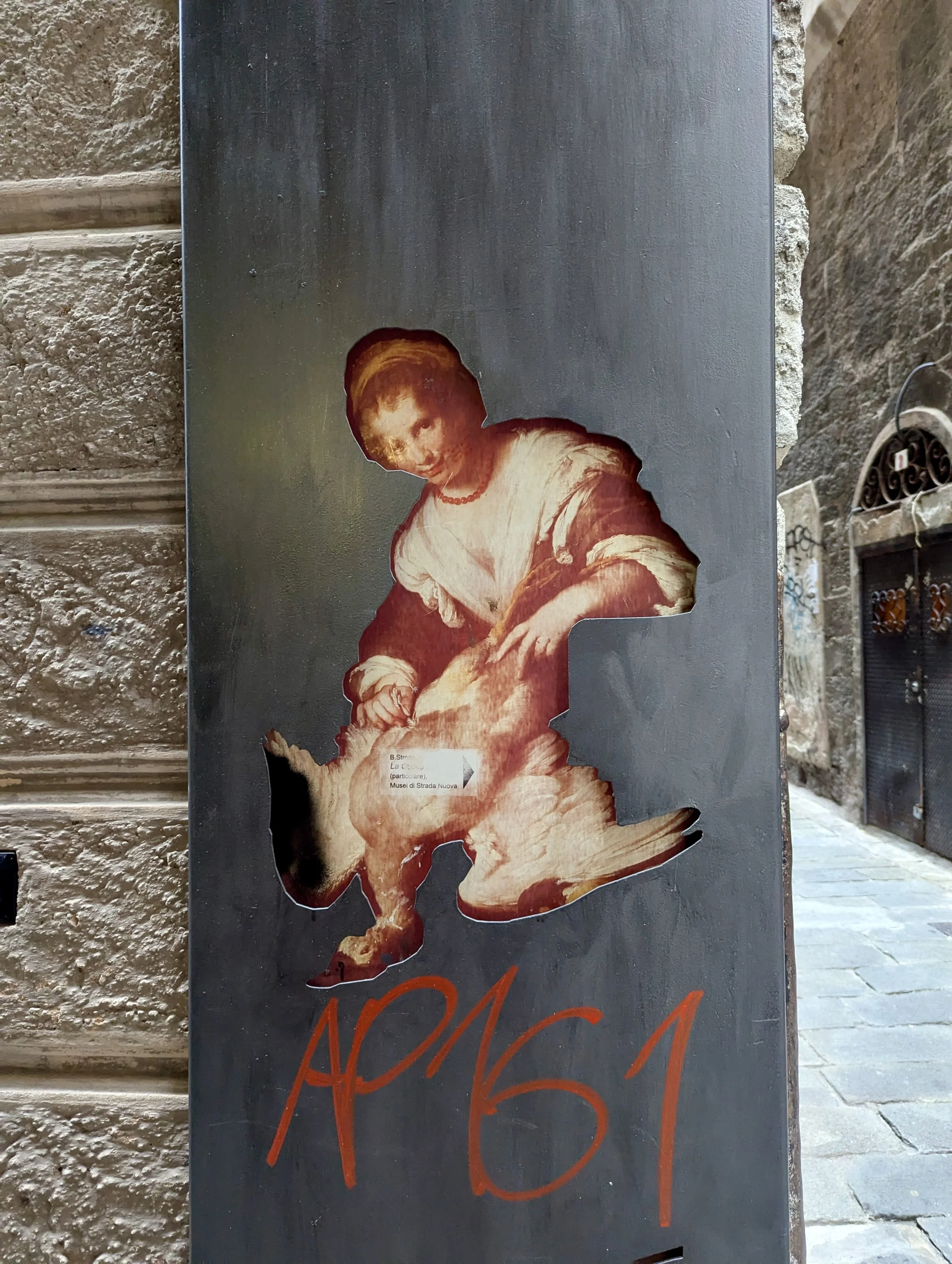
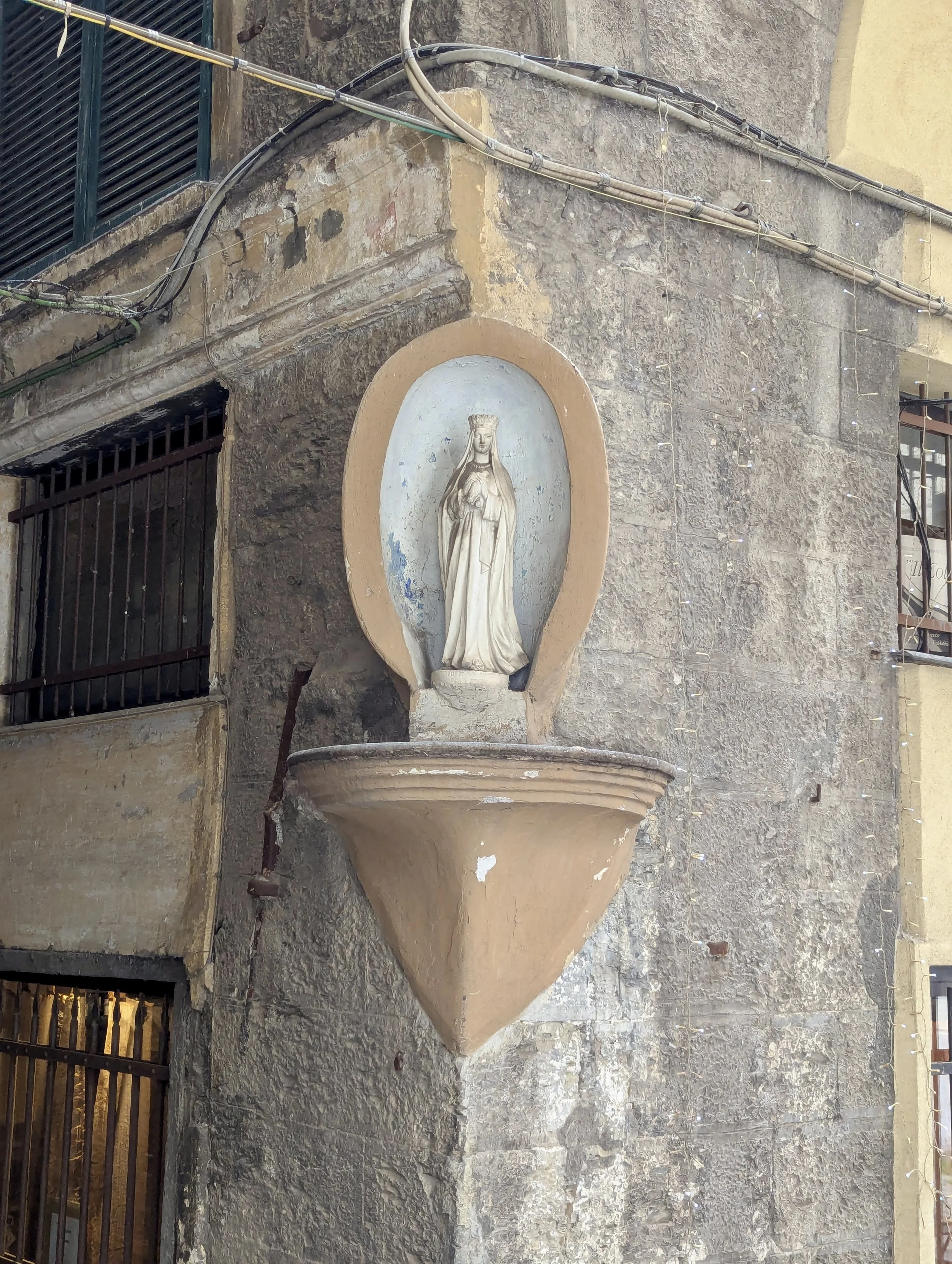
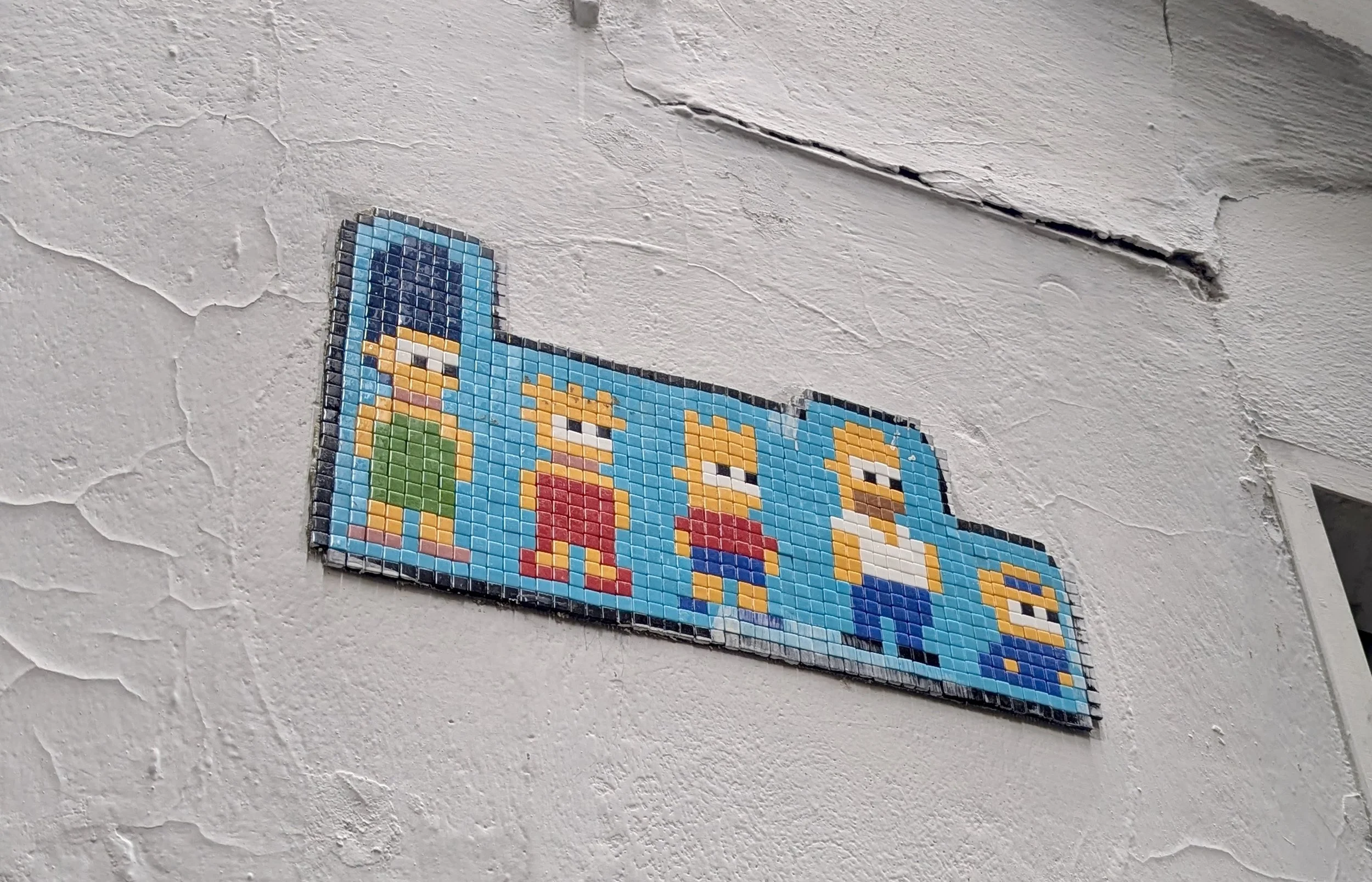
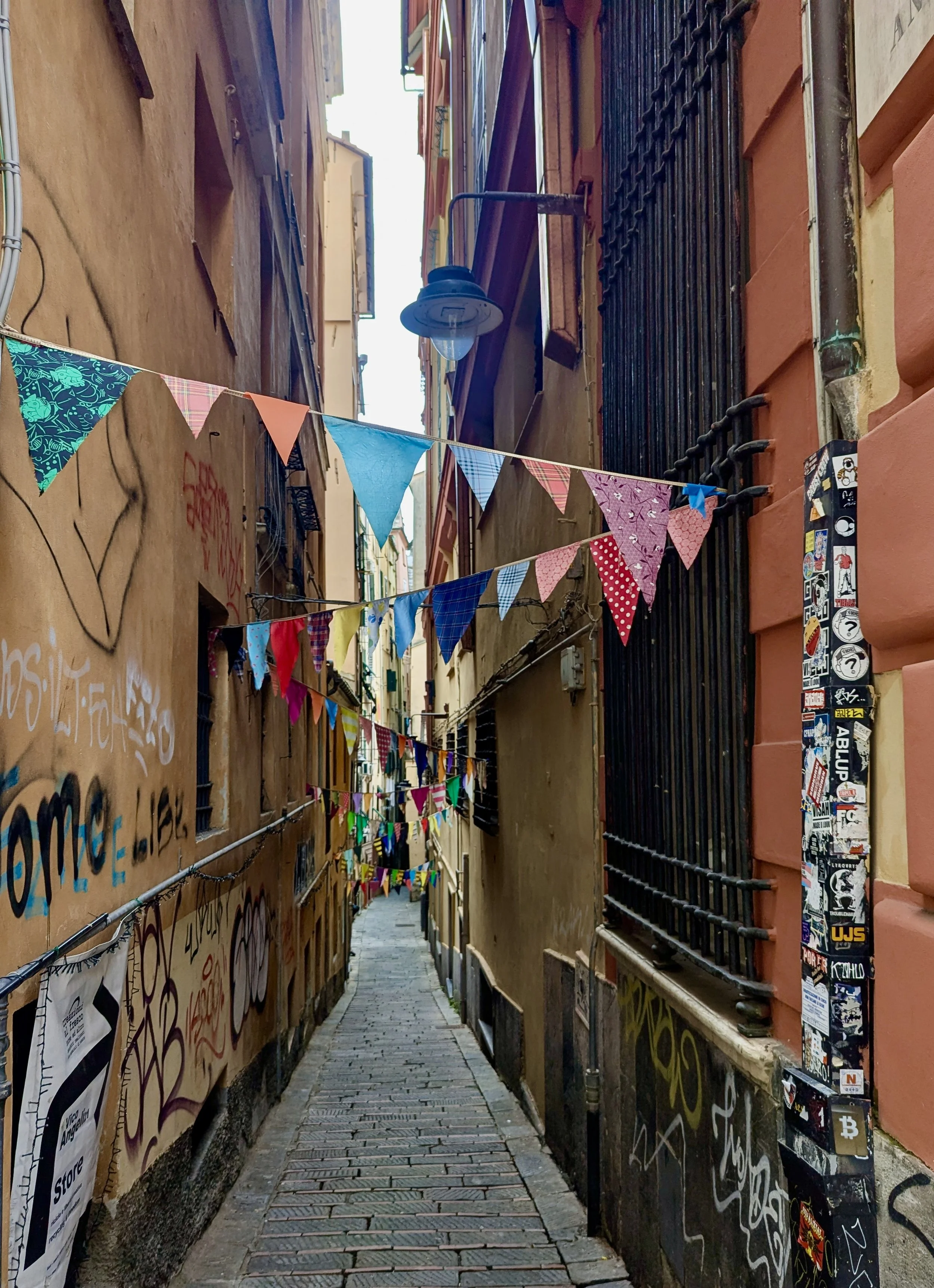
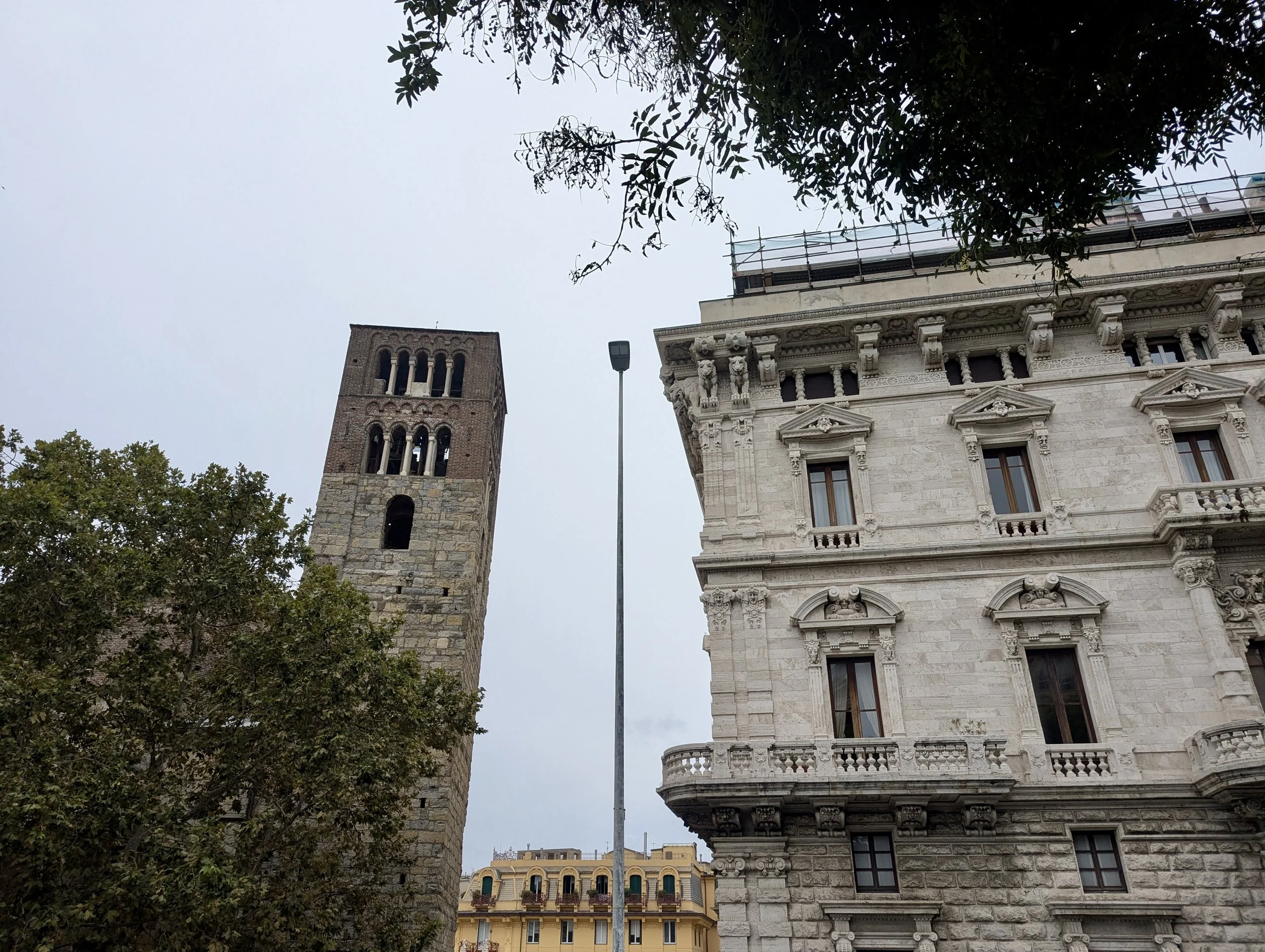
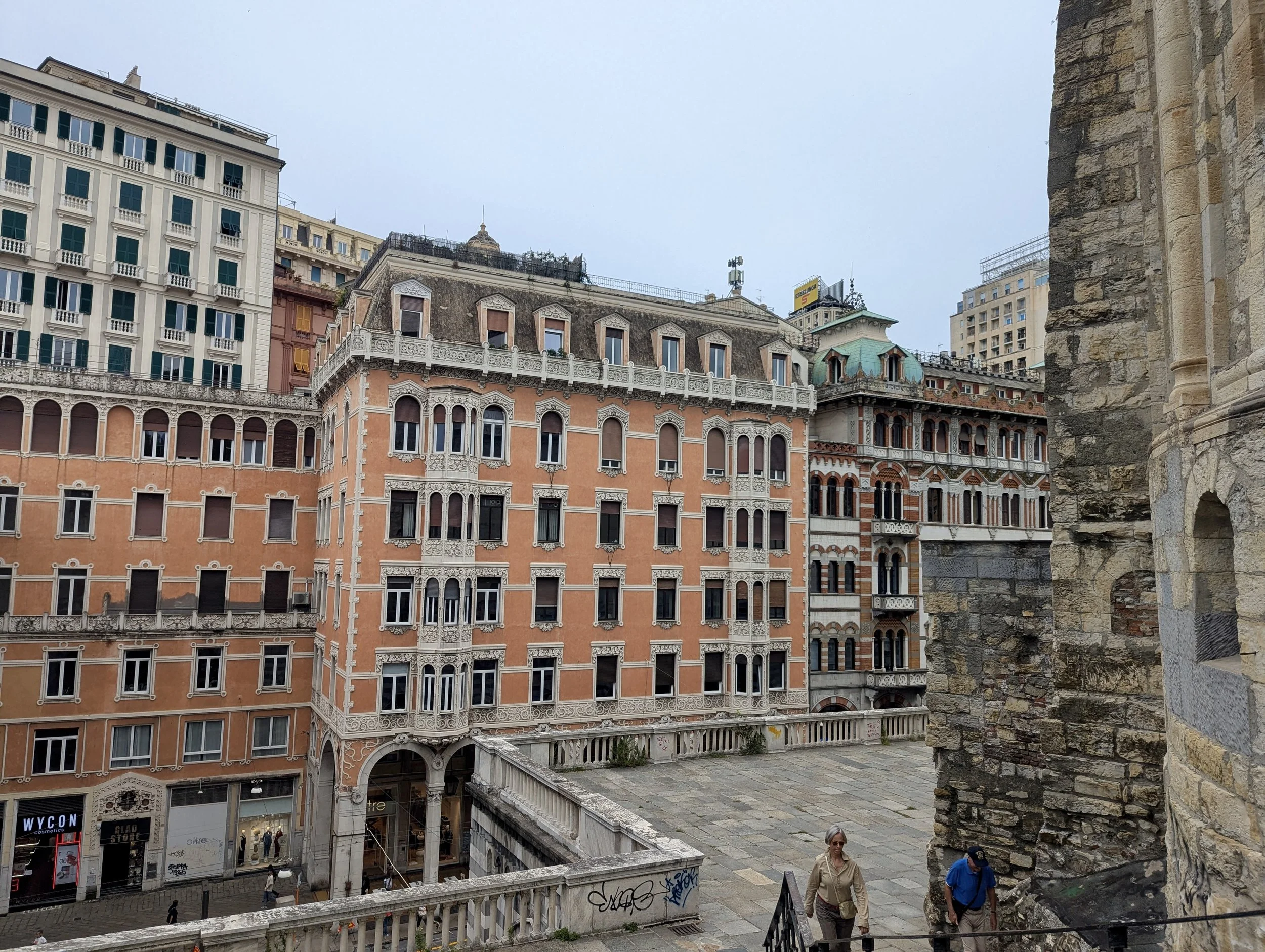
The narrow, winding, medieval streets are wonderfully preserved and managed to escape damage from the heavy bombings the city suffered during WWII. Wandering the narrow caruggi (alleyways) feels like going back in time, and while some of the wider streets can be a little busy it’s easy to get off the beaten track. Expect to get at least a little lost, it’s part of the charm, and enjoy the details - murals, graffiti, niches with saints, and the absence of cars. Other than the contents of the shops and the attire of the people, it’s virtually unchanged from when it was built.
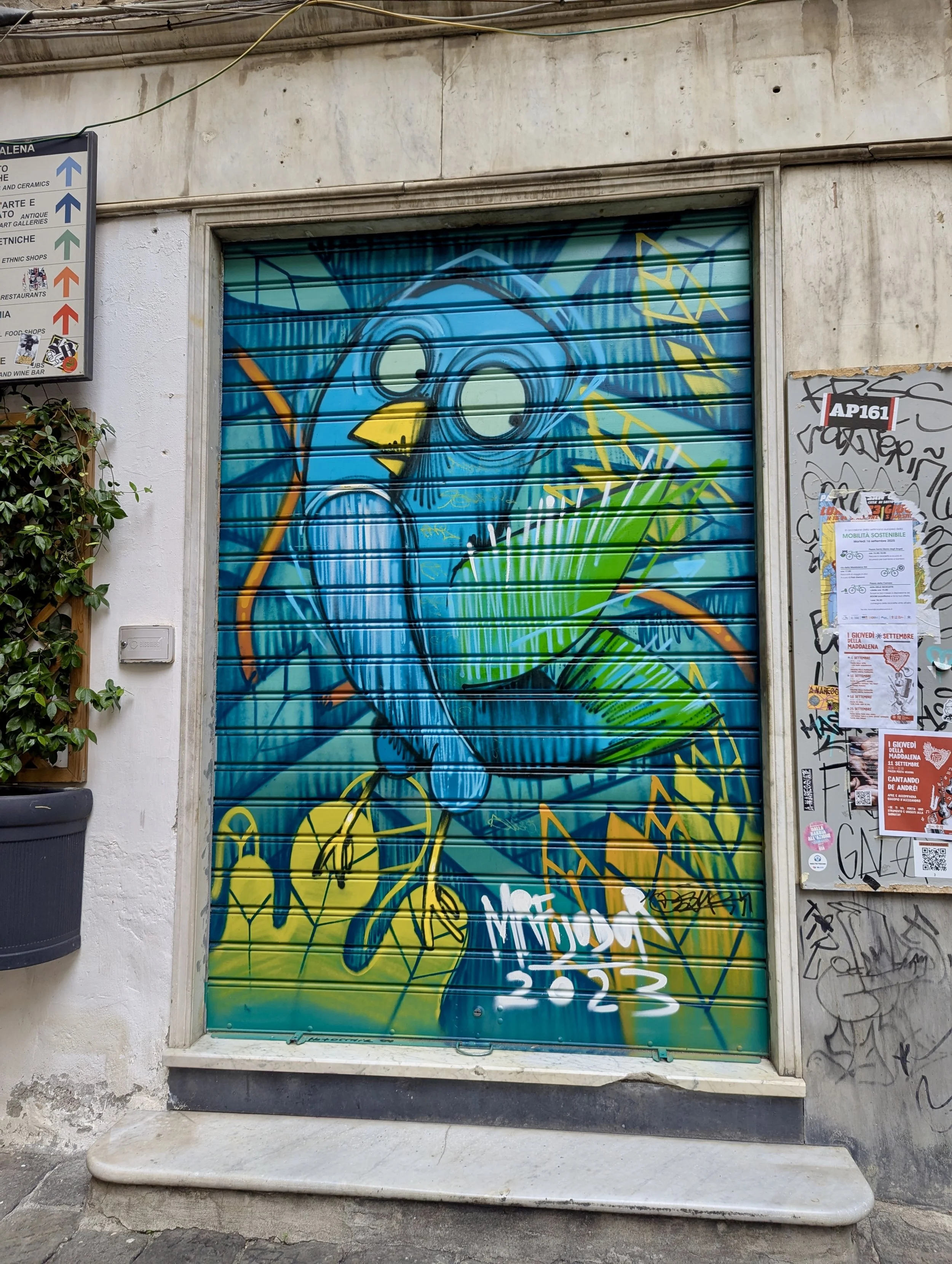
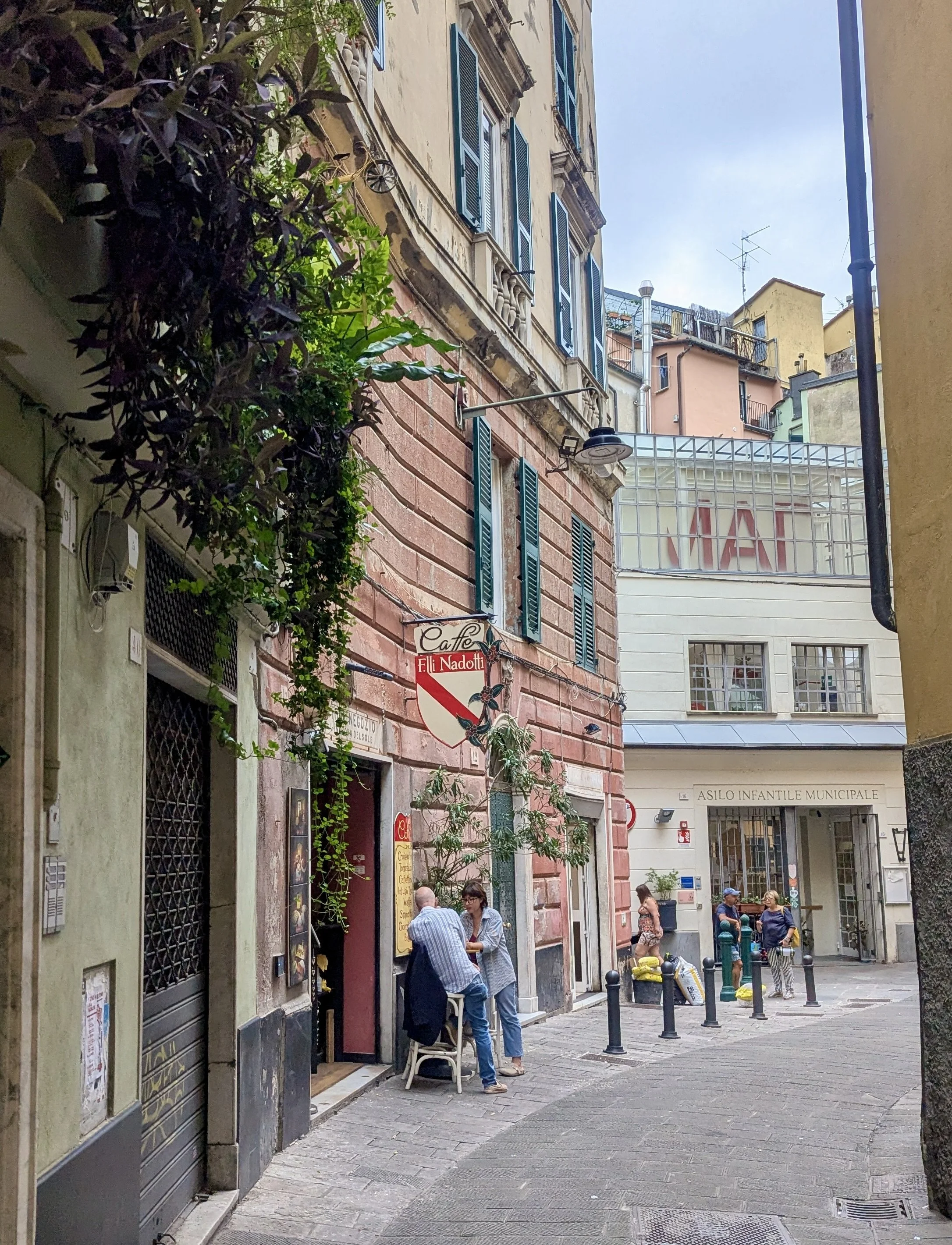
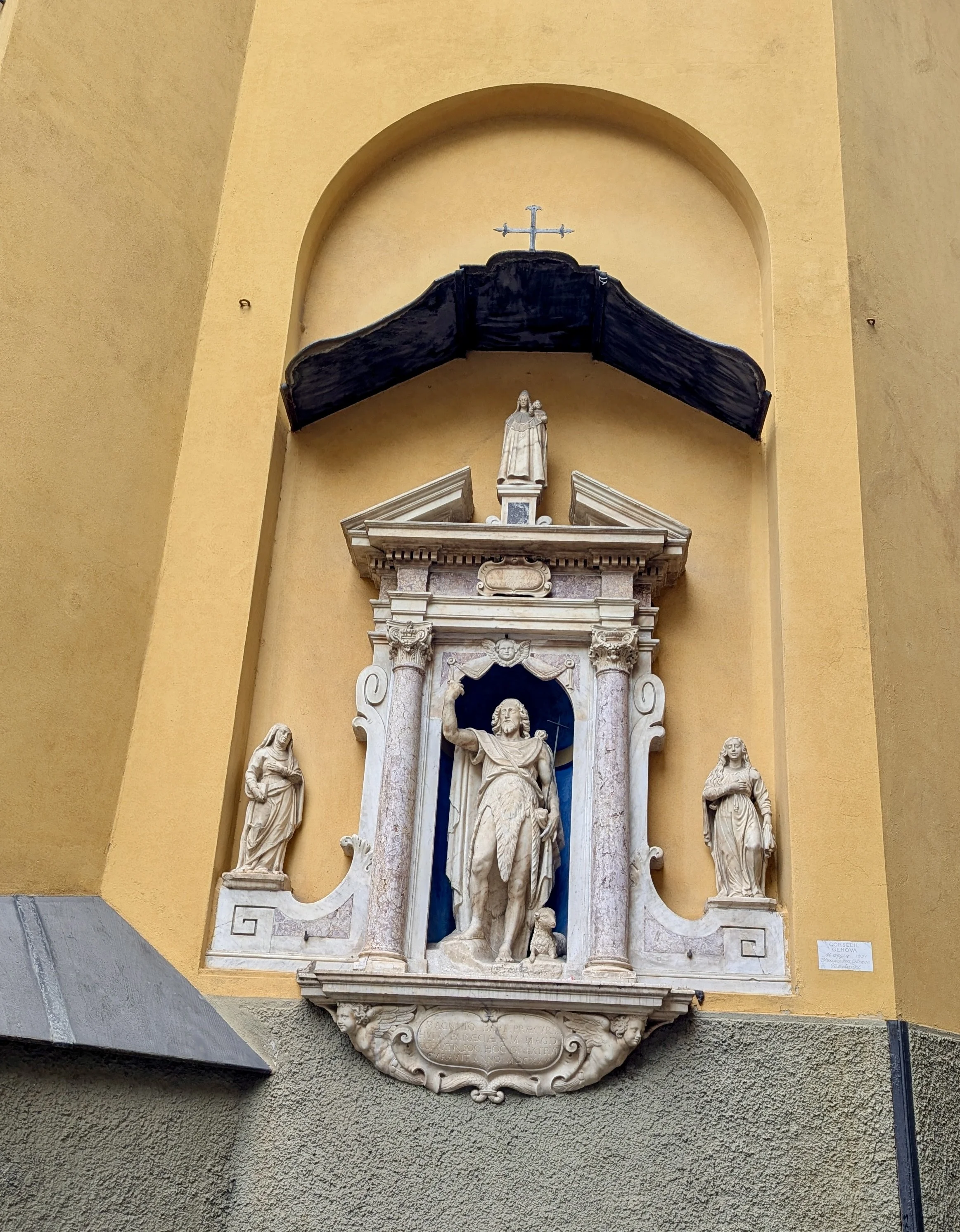
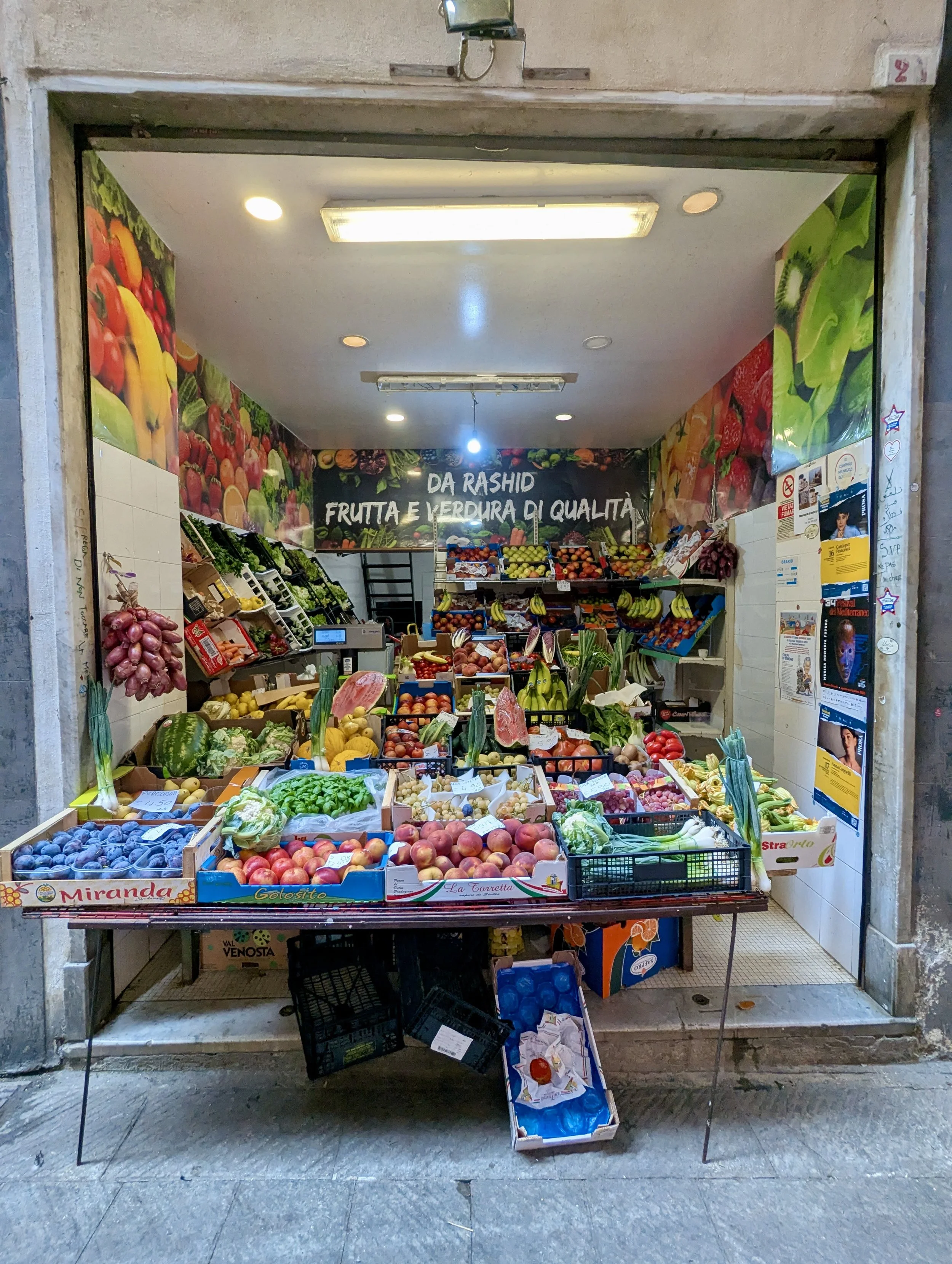
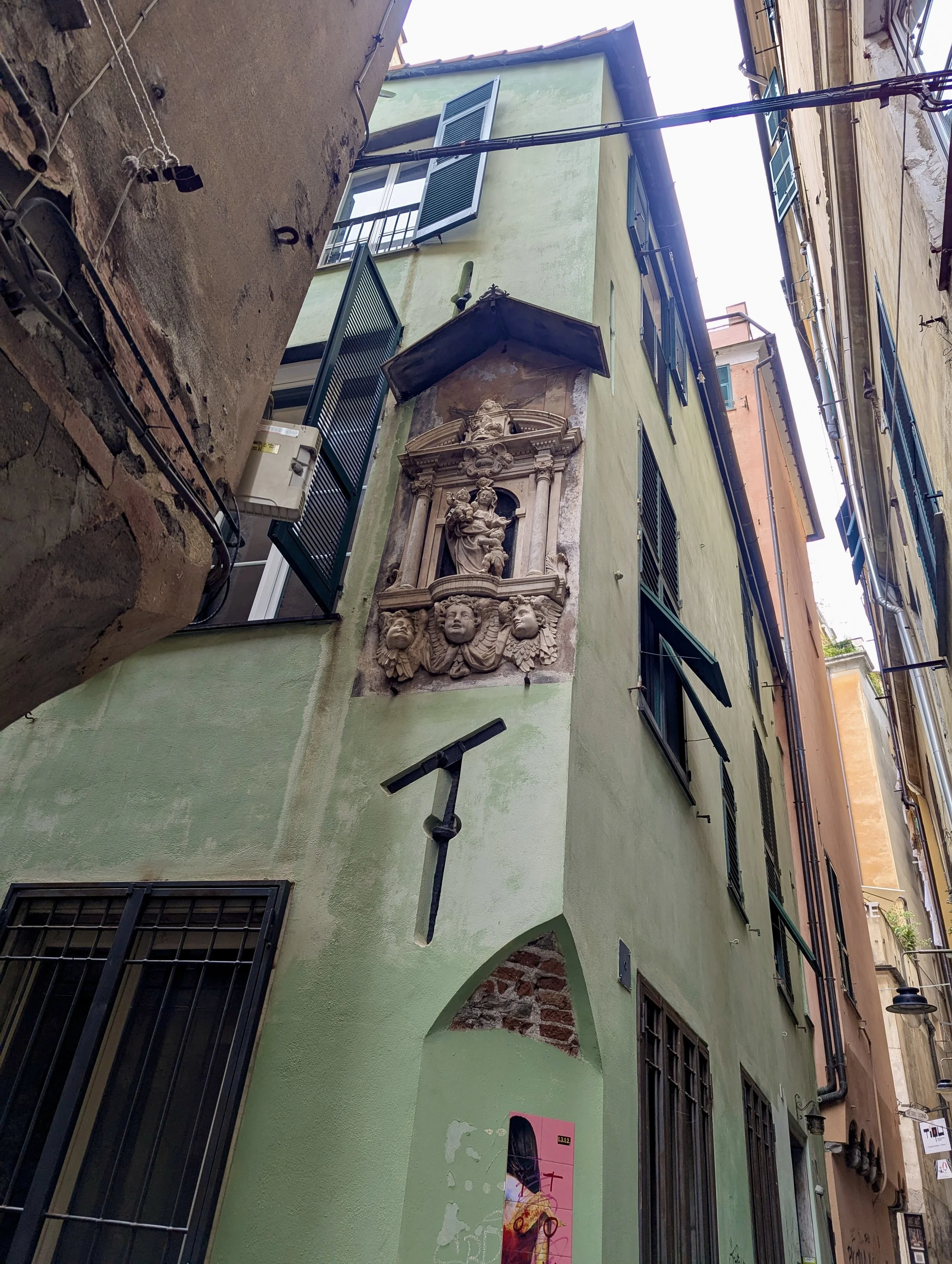
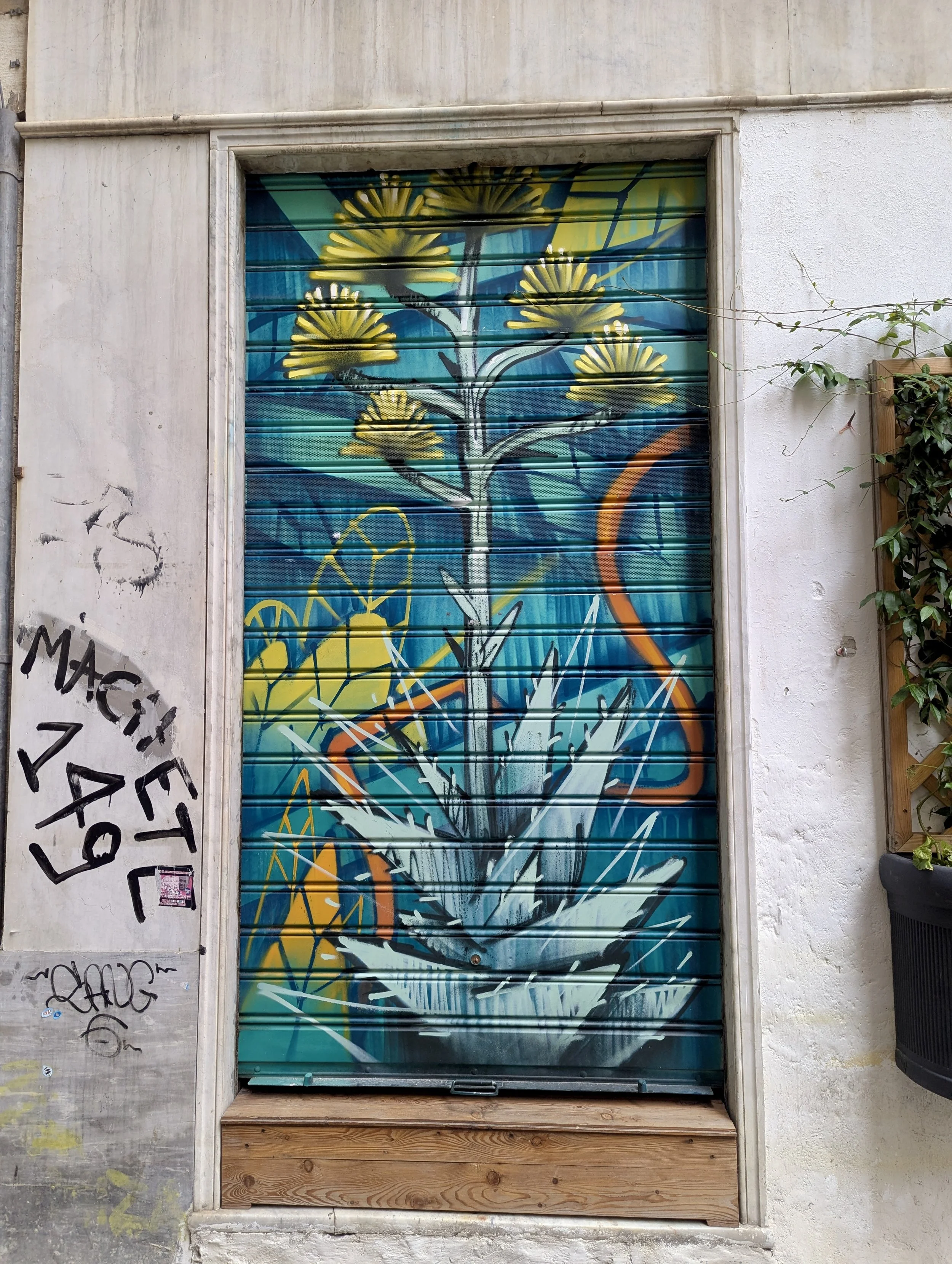
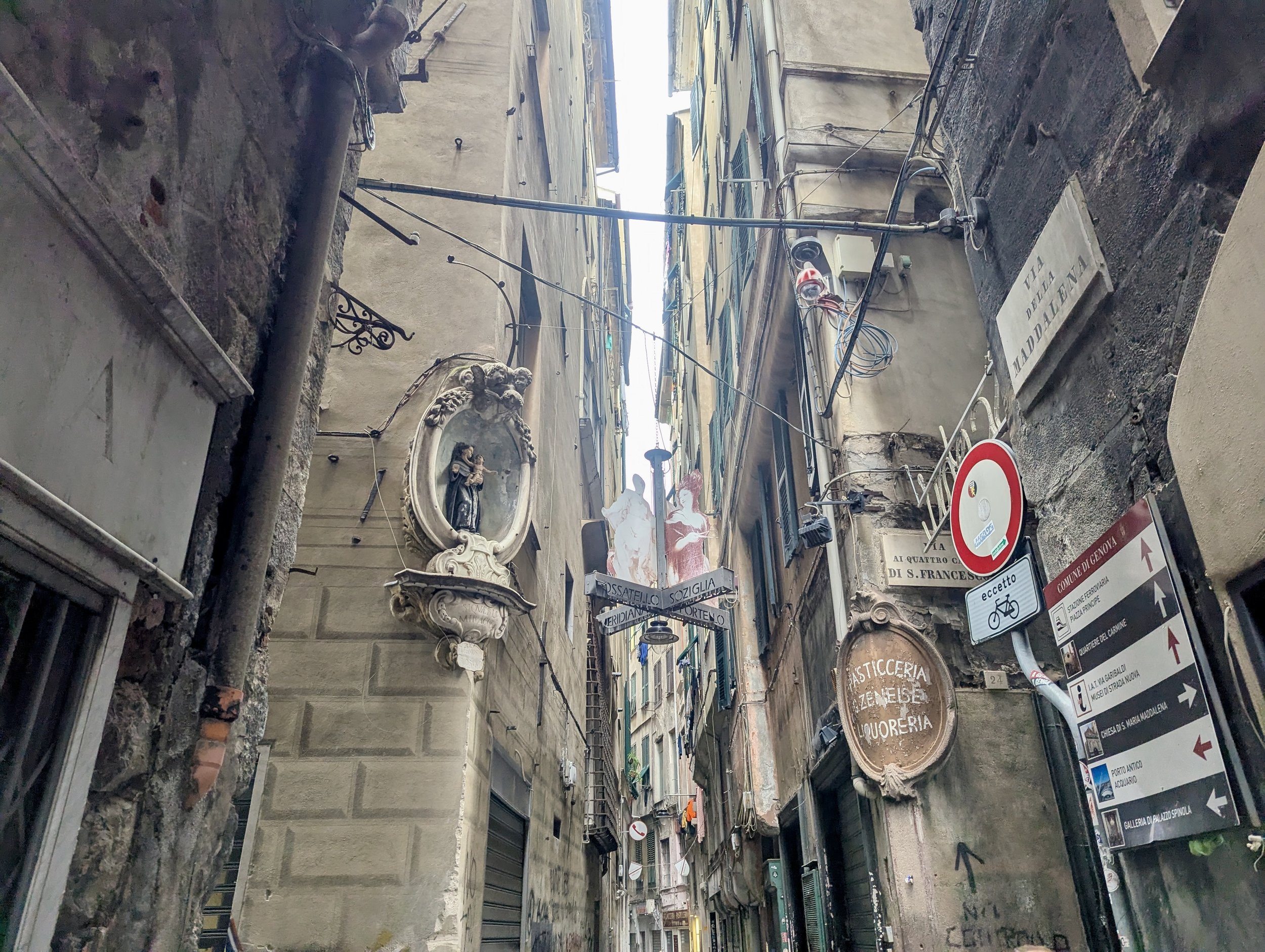
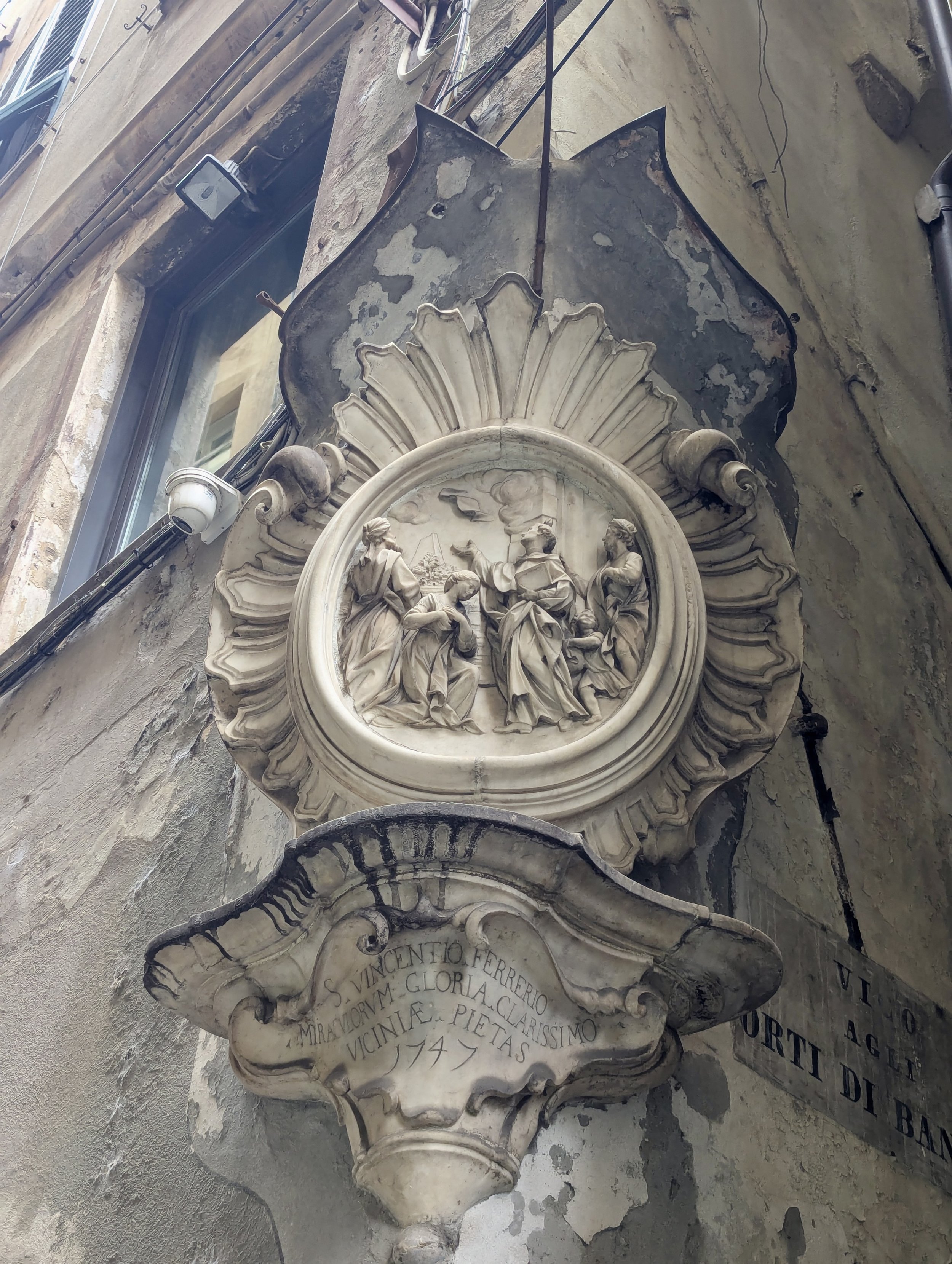
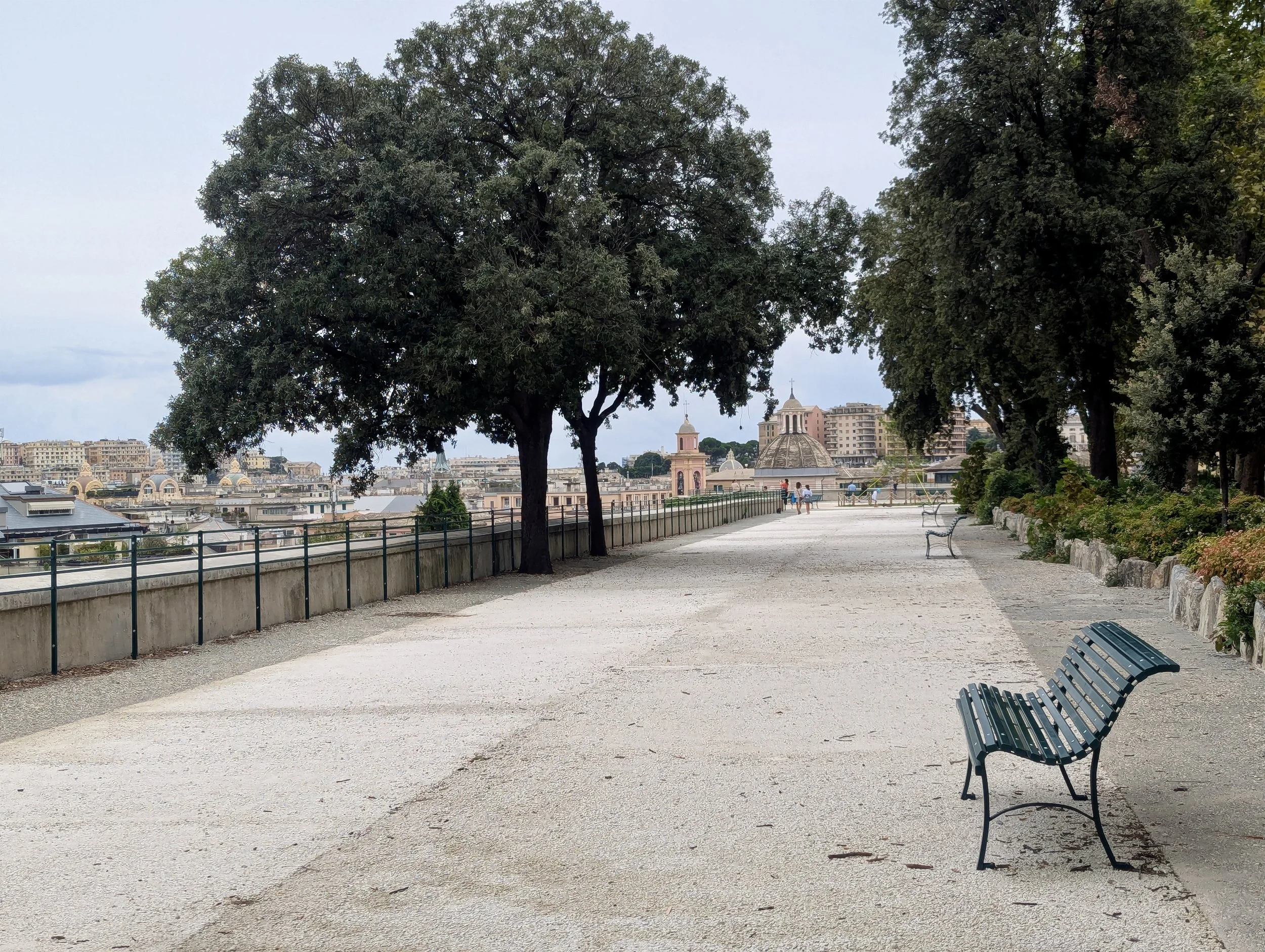
Spianata dell'Acquasola (park) Viale IV Novembre
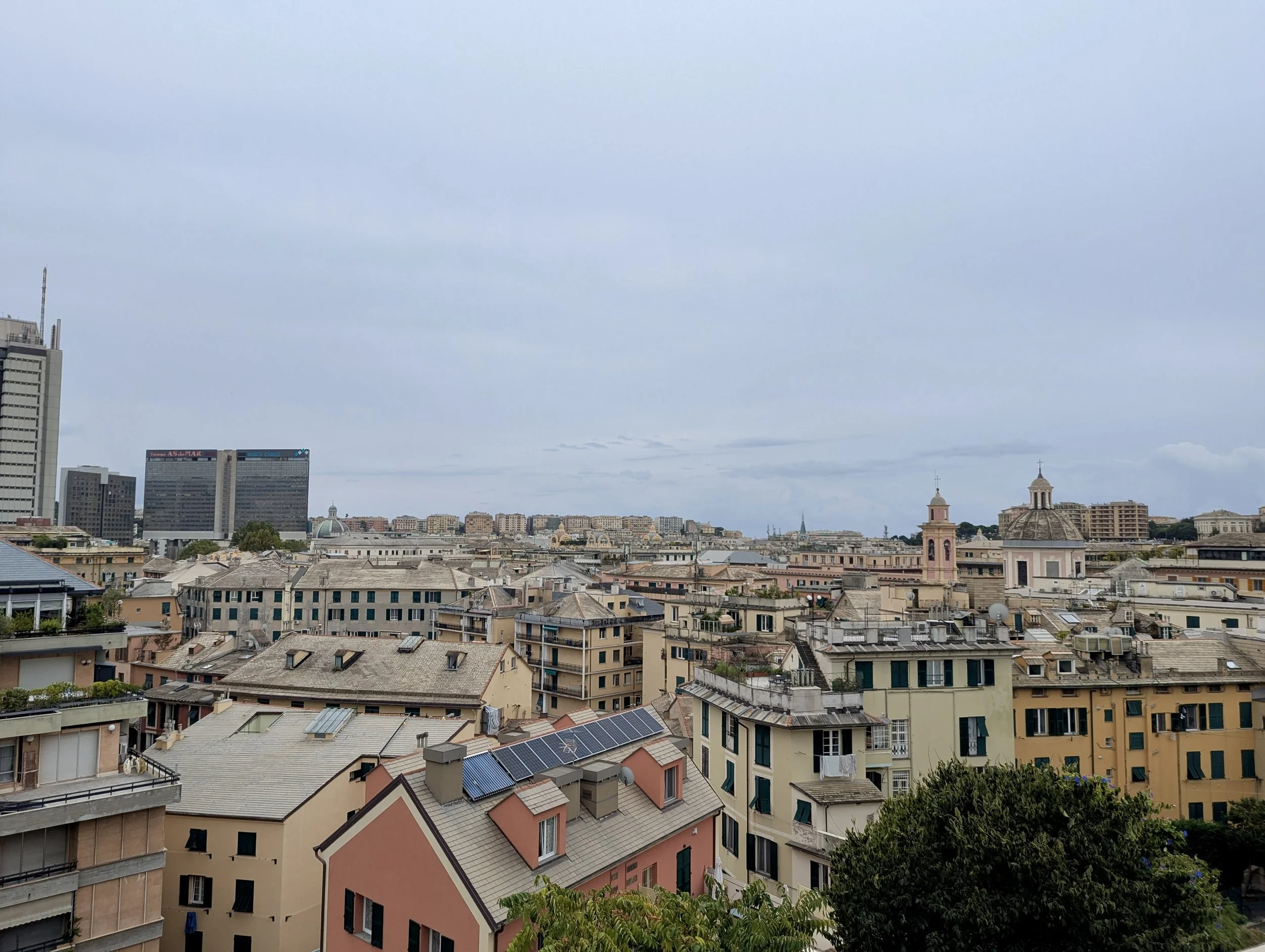
There’s very little green space in Genova’s metropolitan area; you have to literally head for the hills to find trees. This is one of two larger parks, and it was easy to reach after exploring the Mercato Orientale. Quiet and calm on a cloudy Saturday afternoon, it was a nice spot to grab a view of the city.
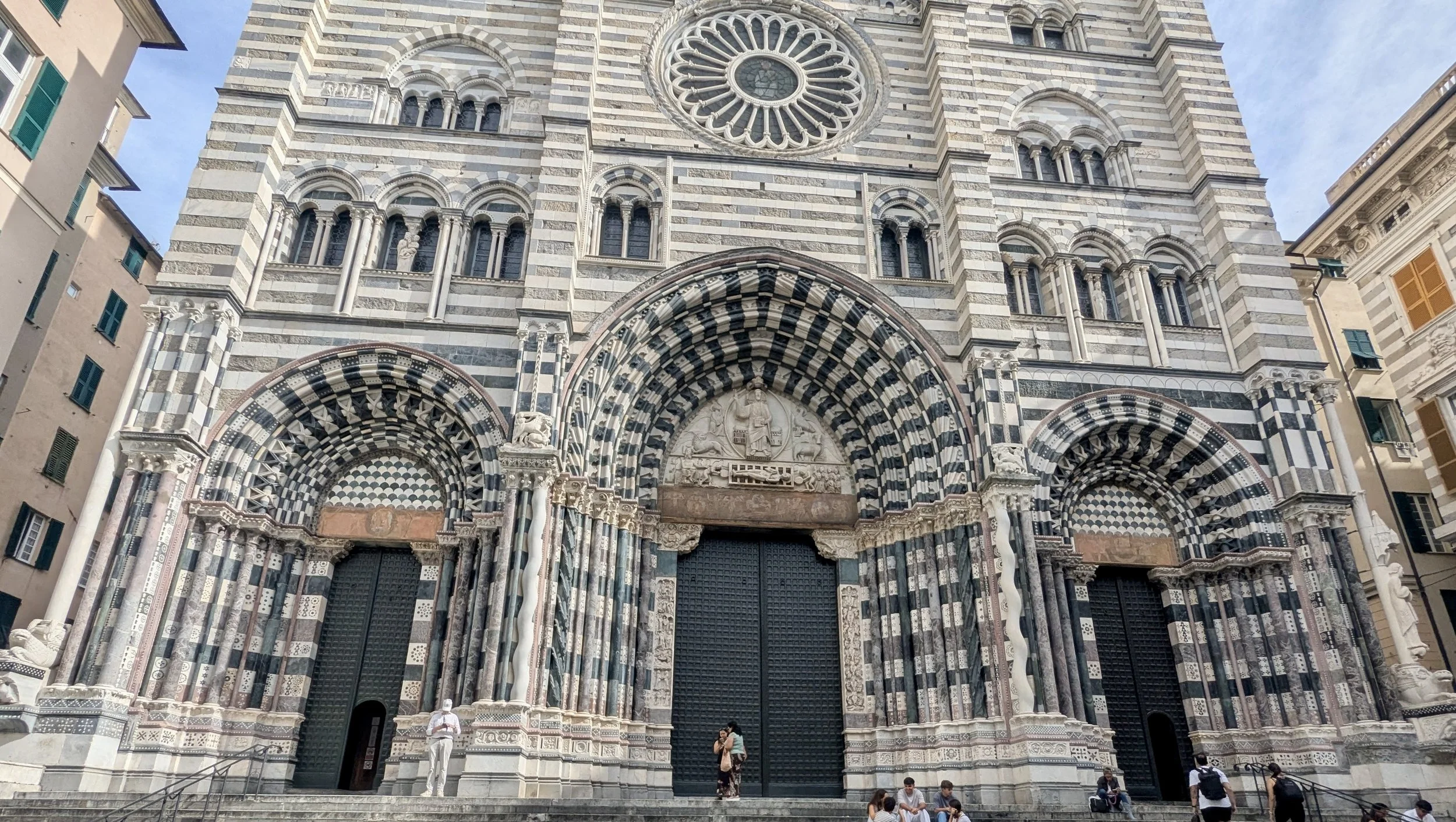
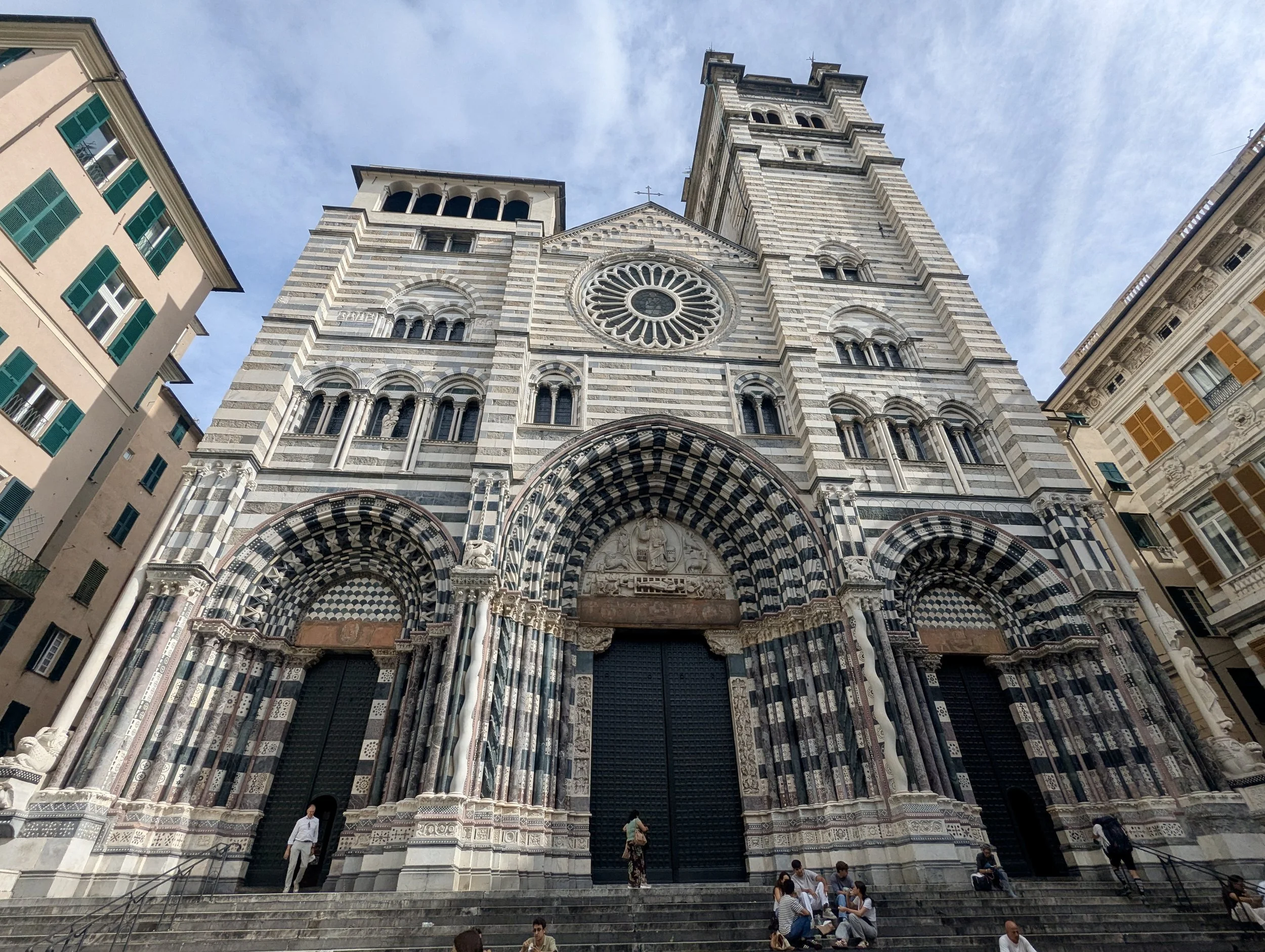
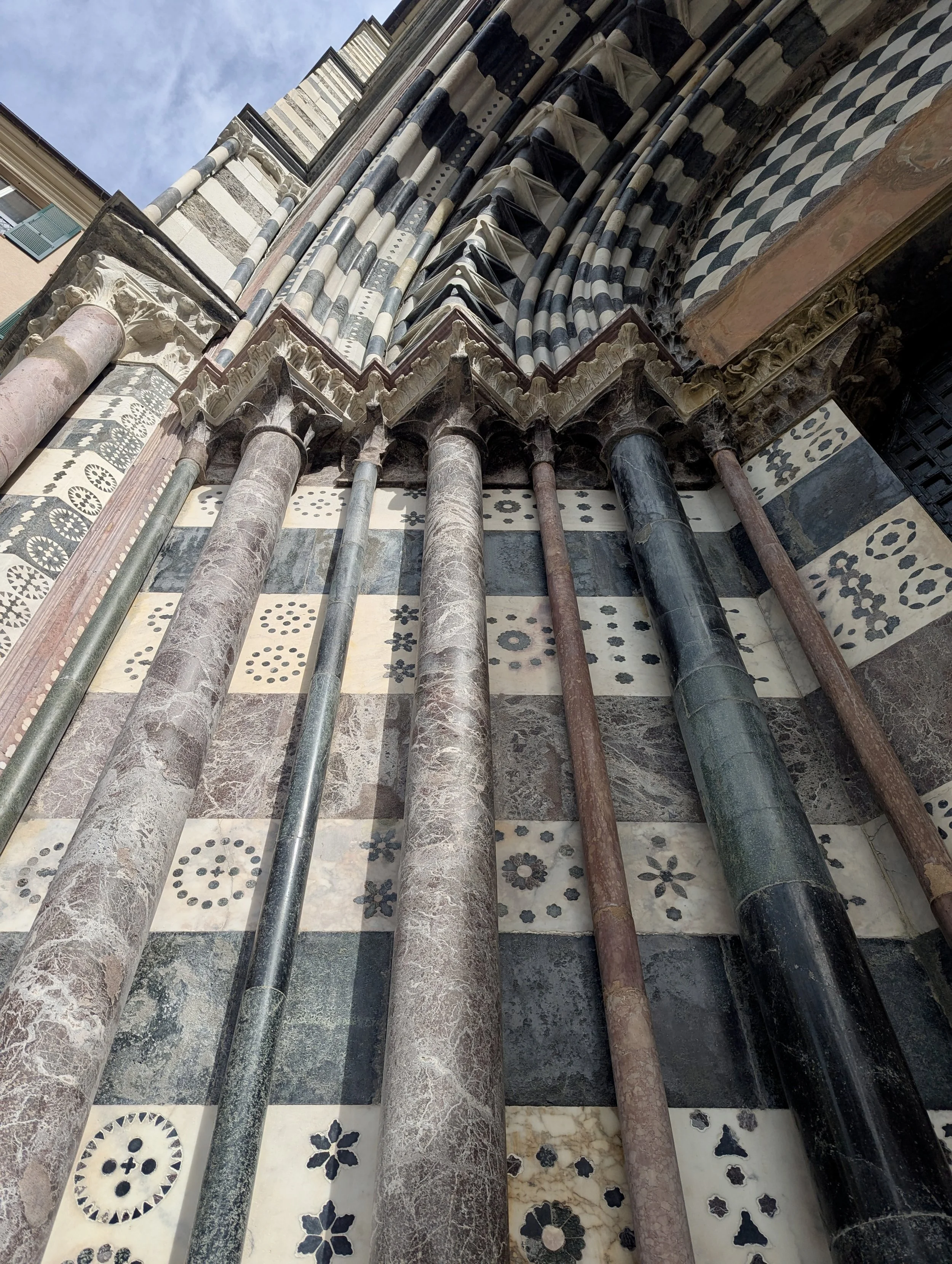
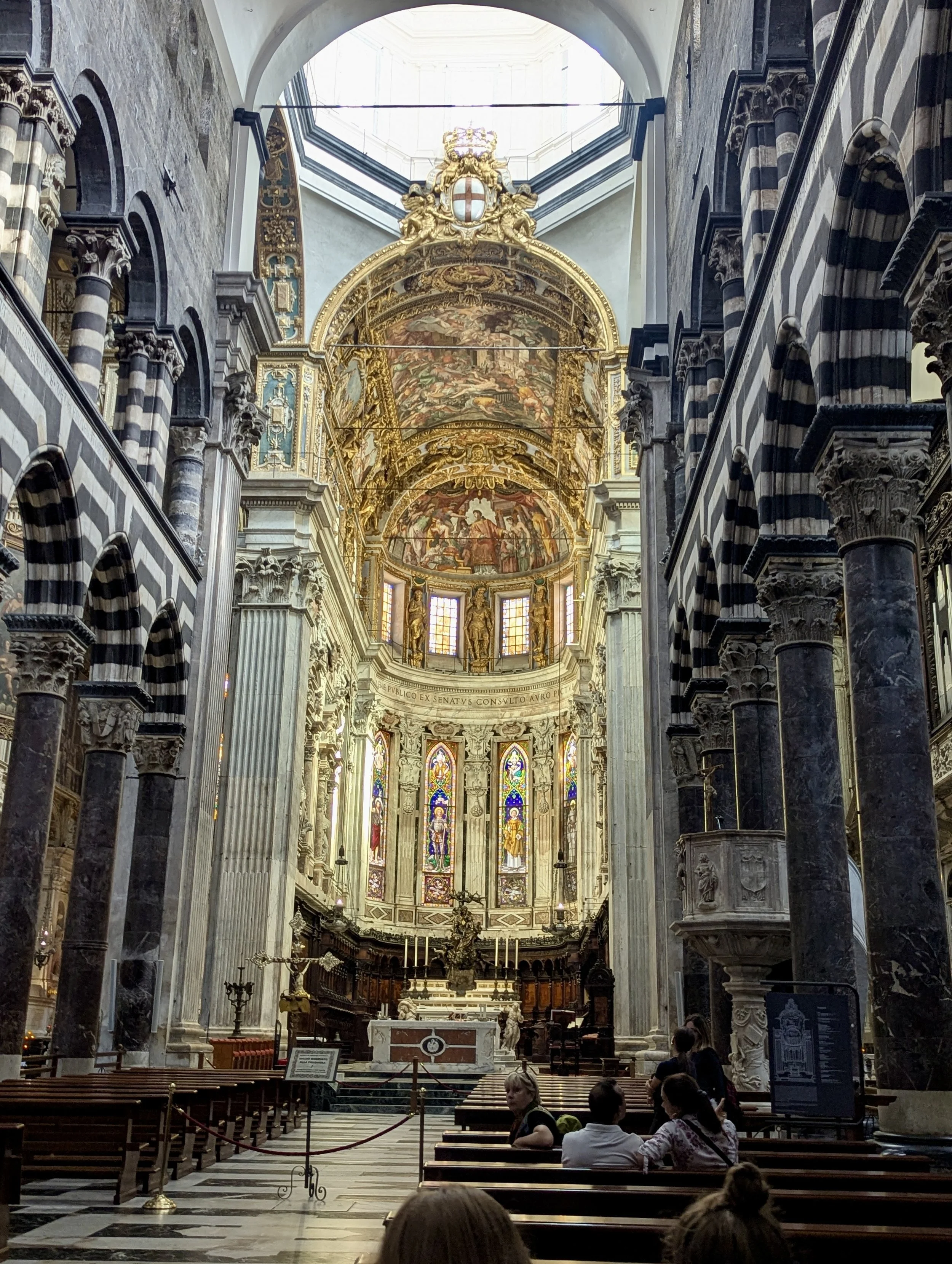
Cattedrale di San Lorenzo Piazza S. Lorenzo,
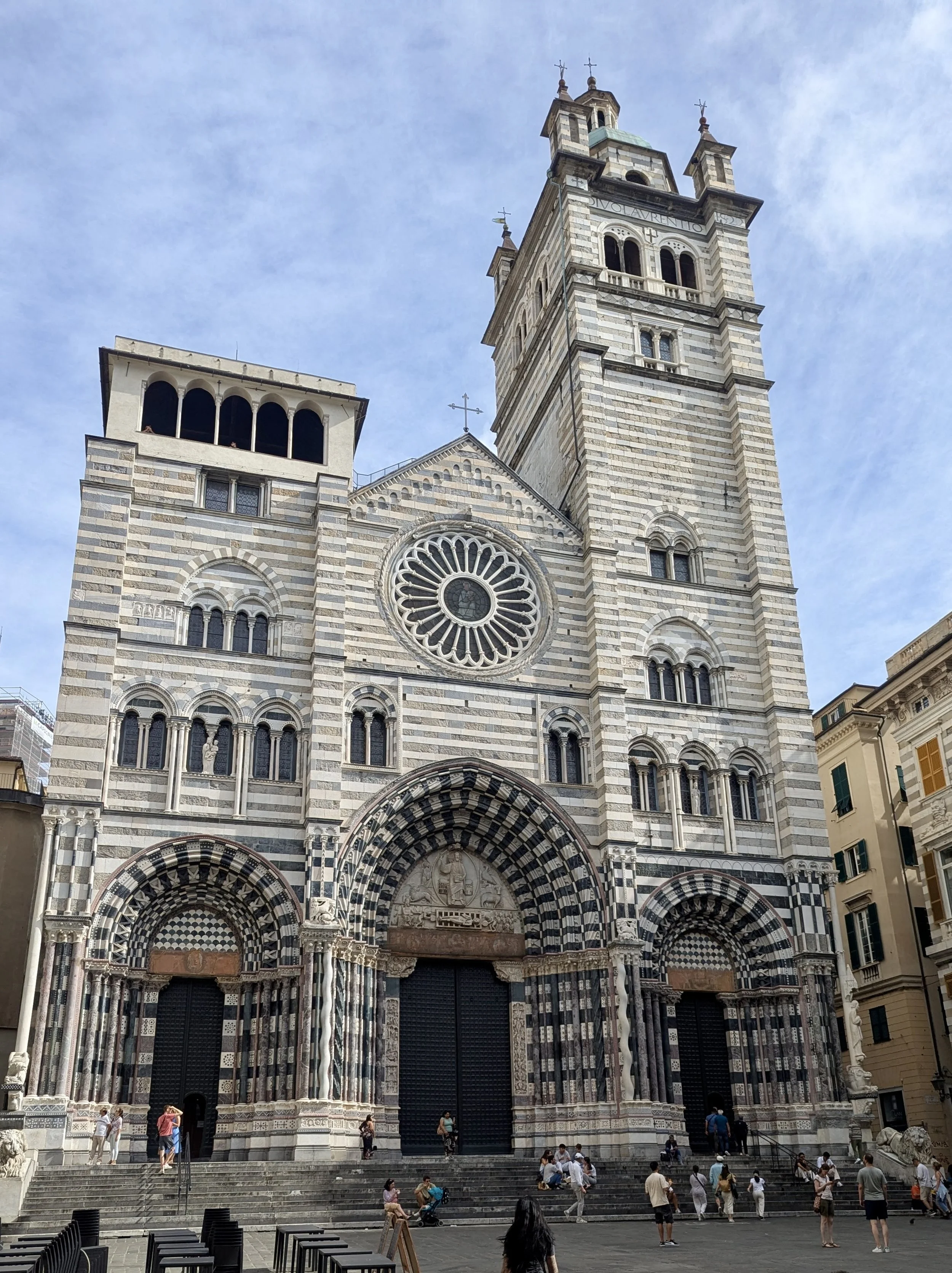
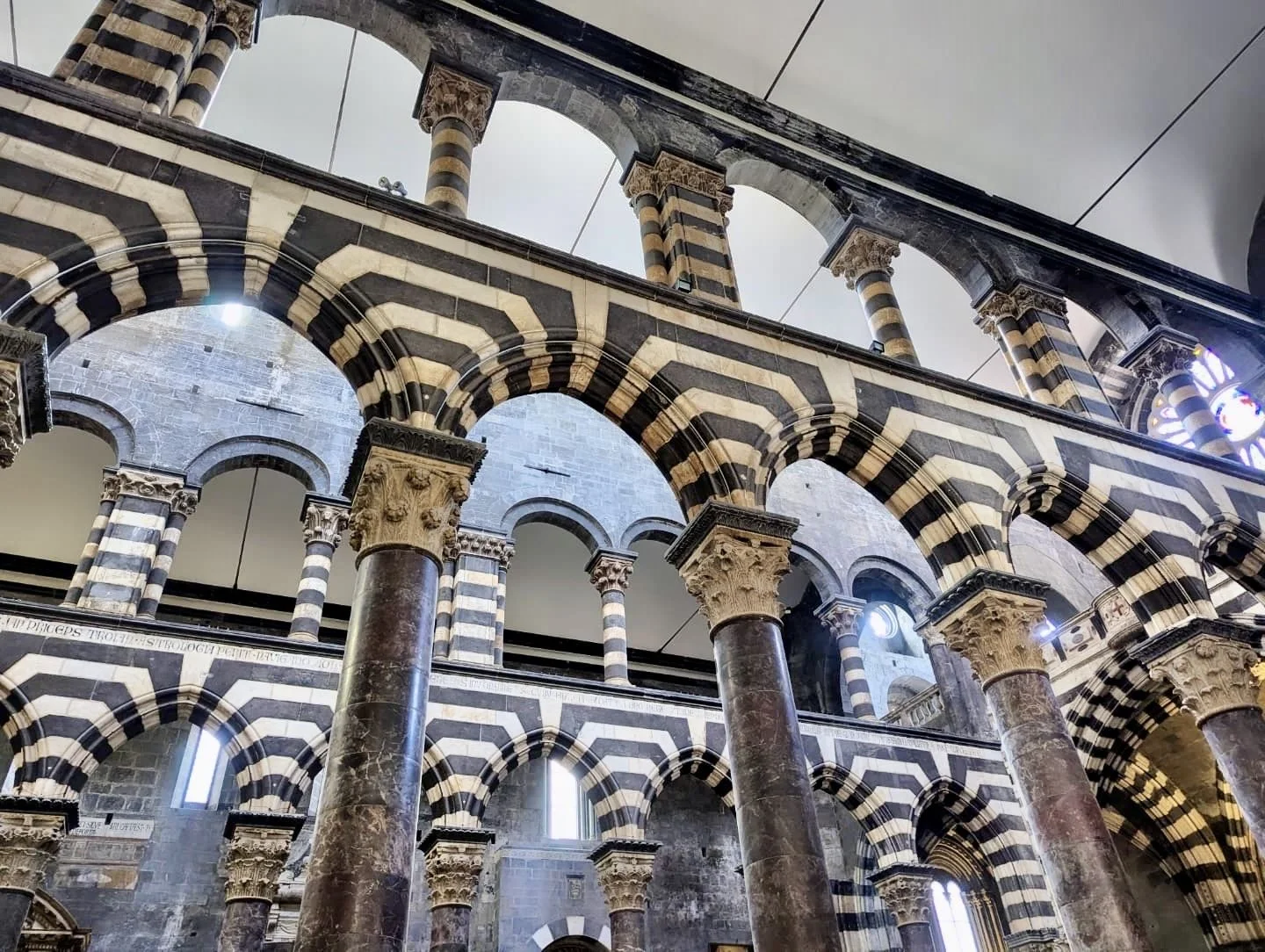
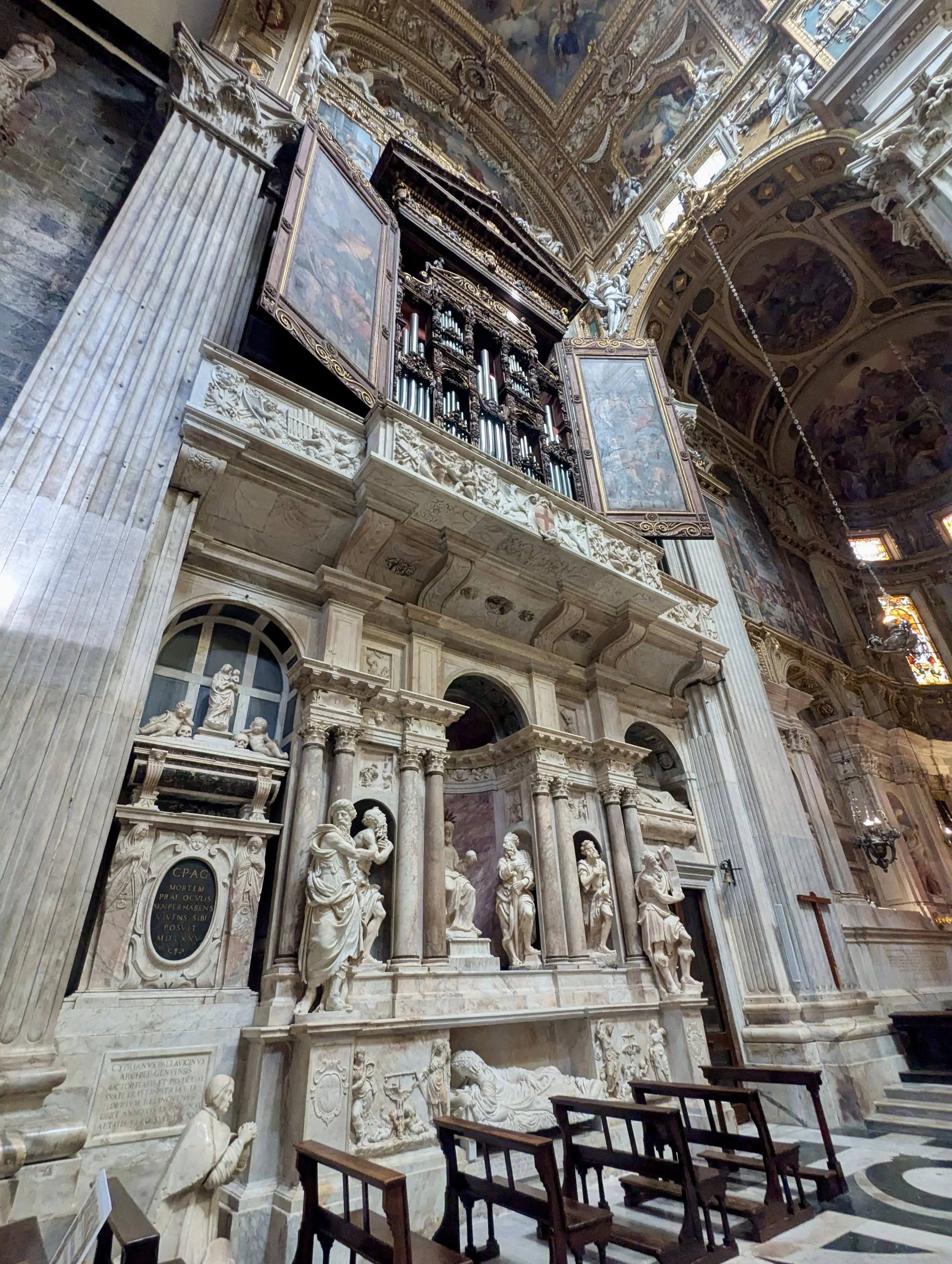
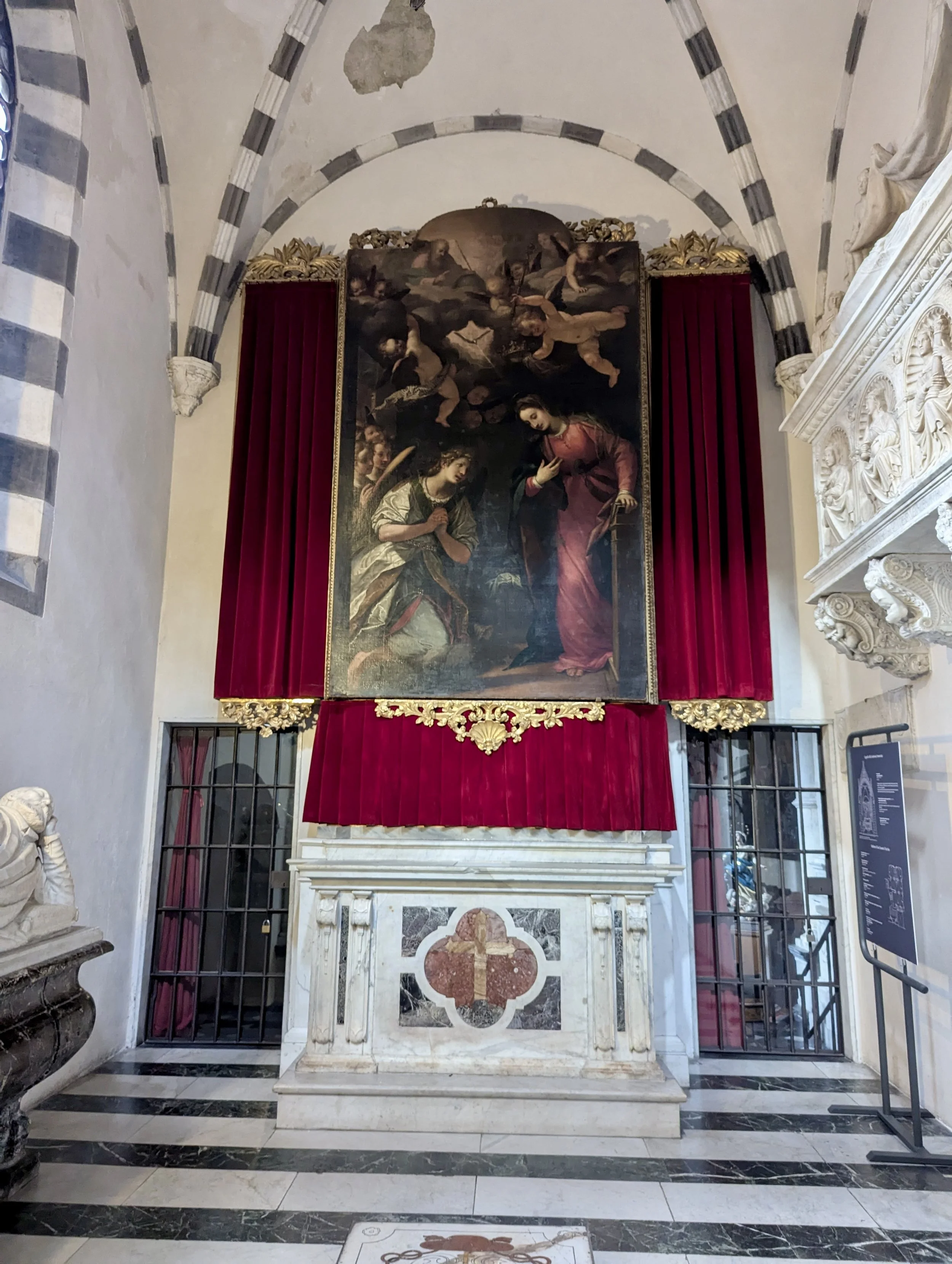
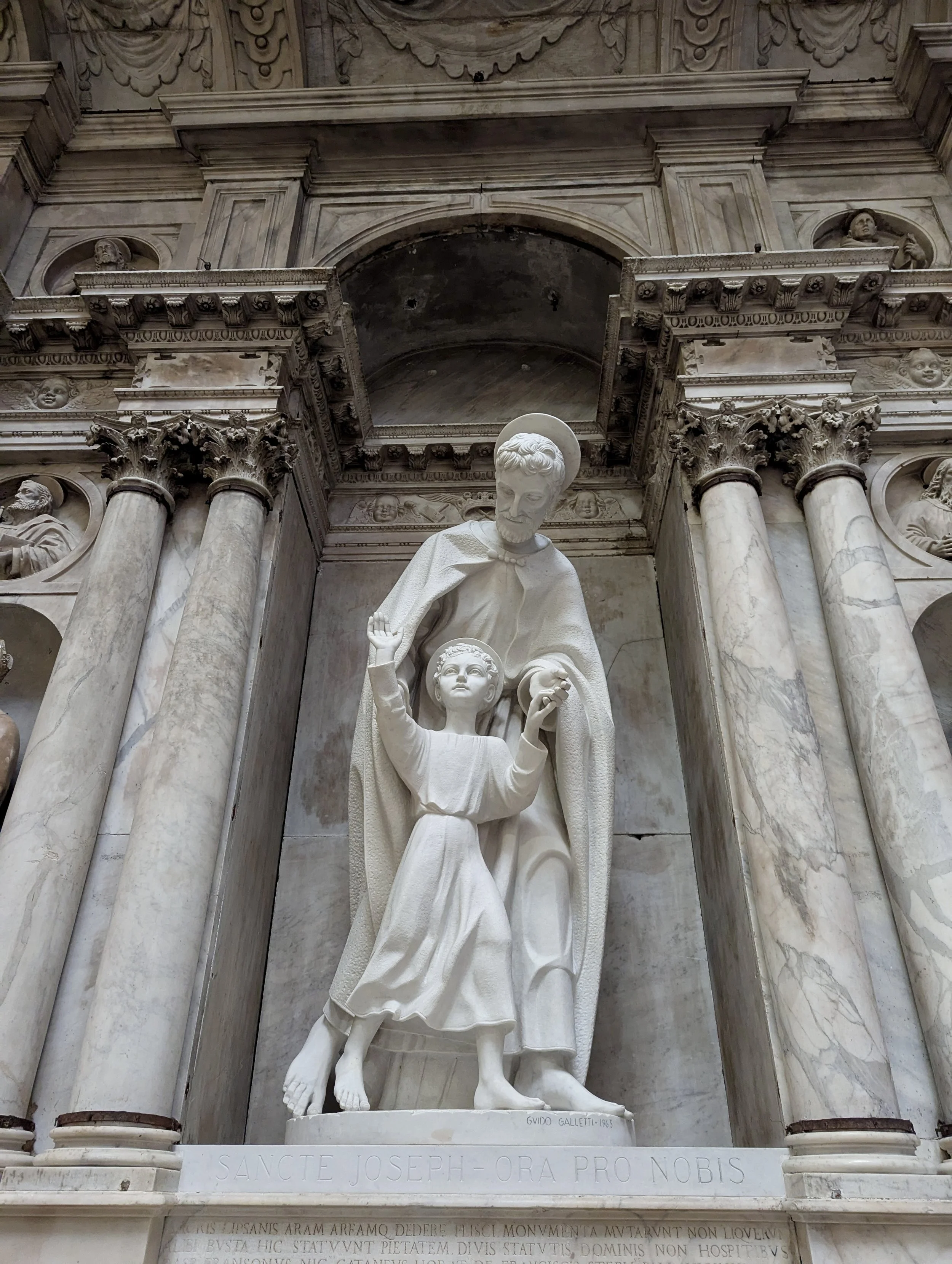
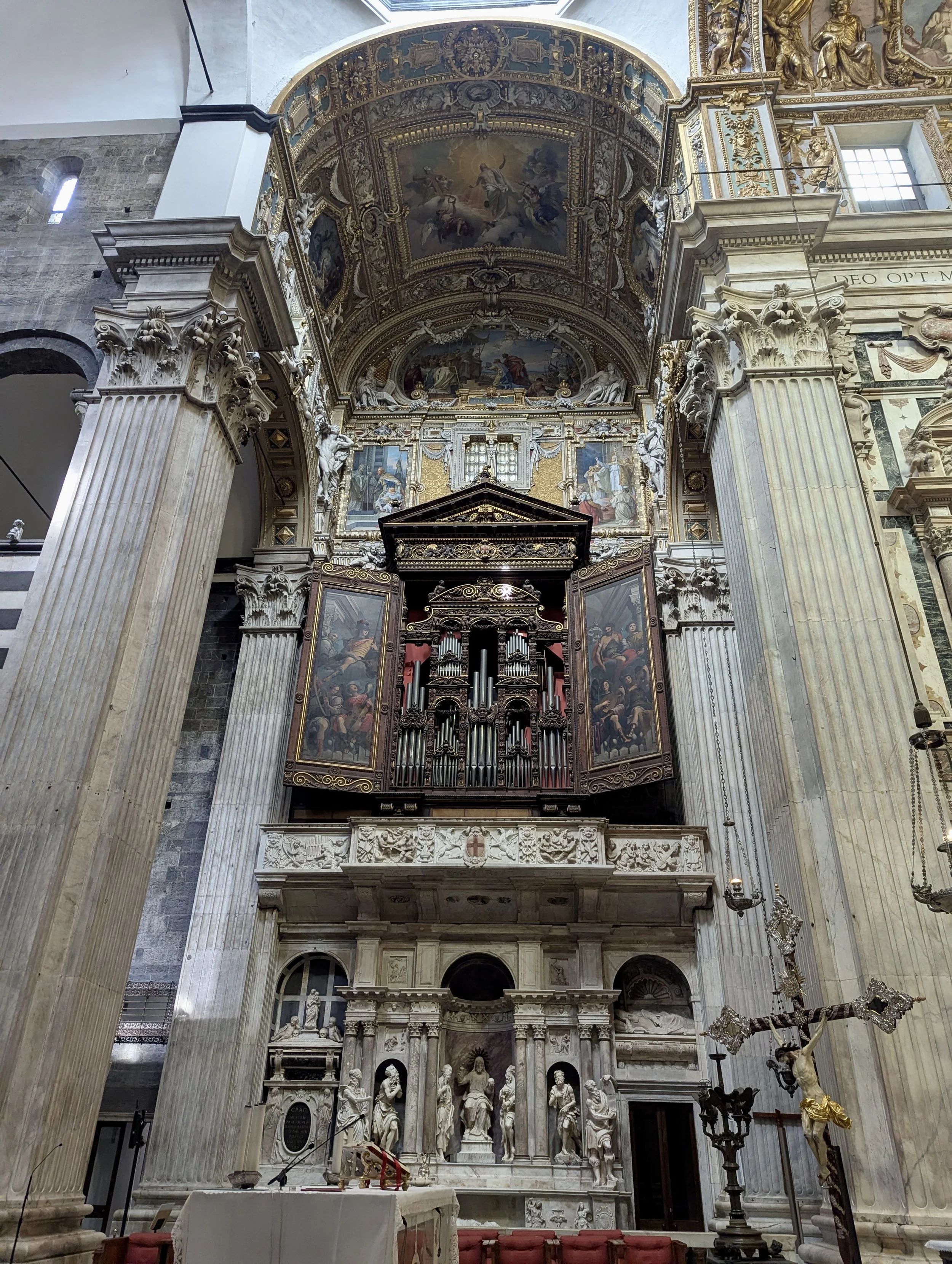
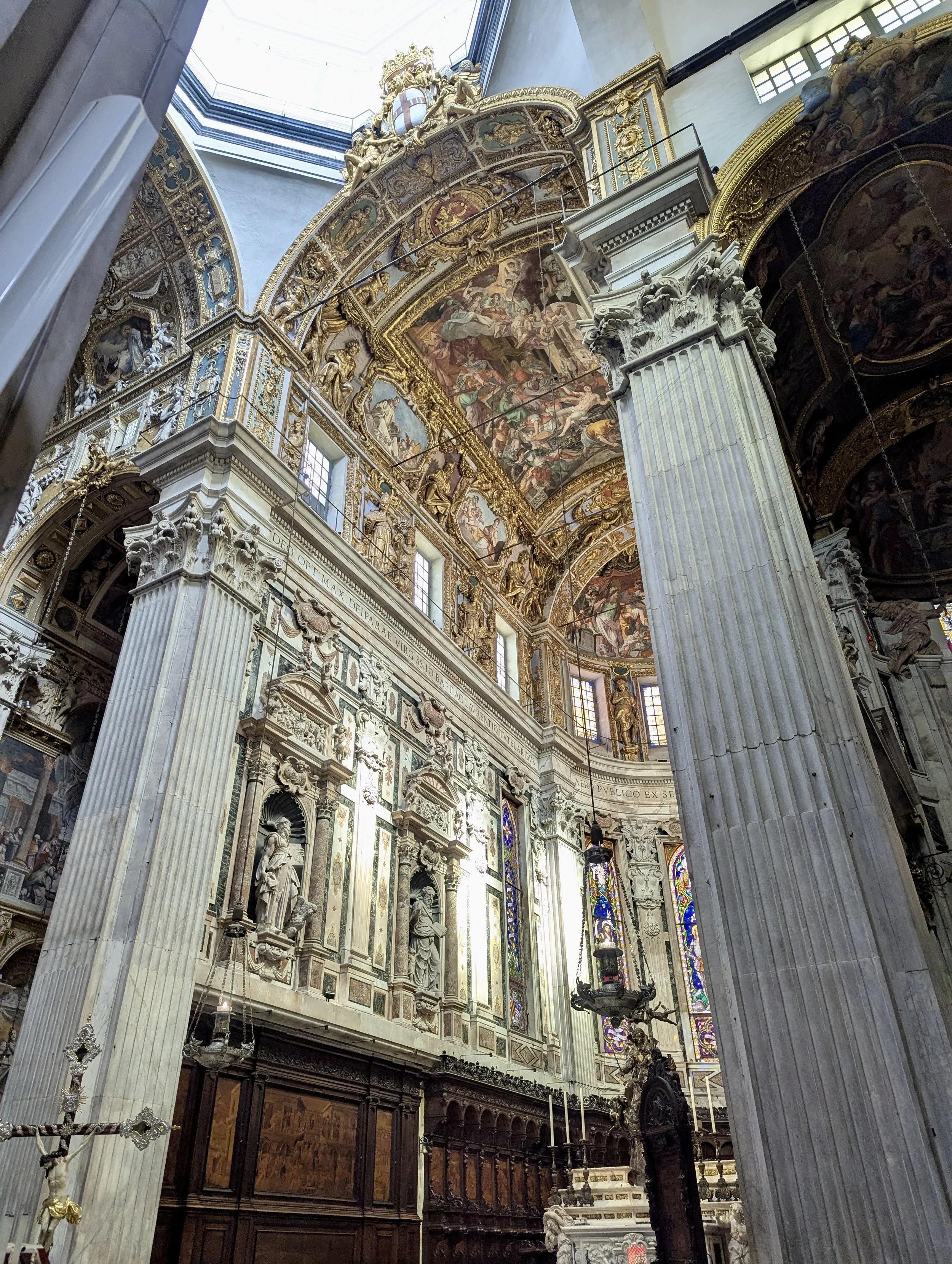
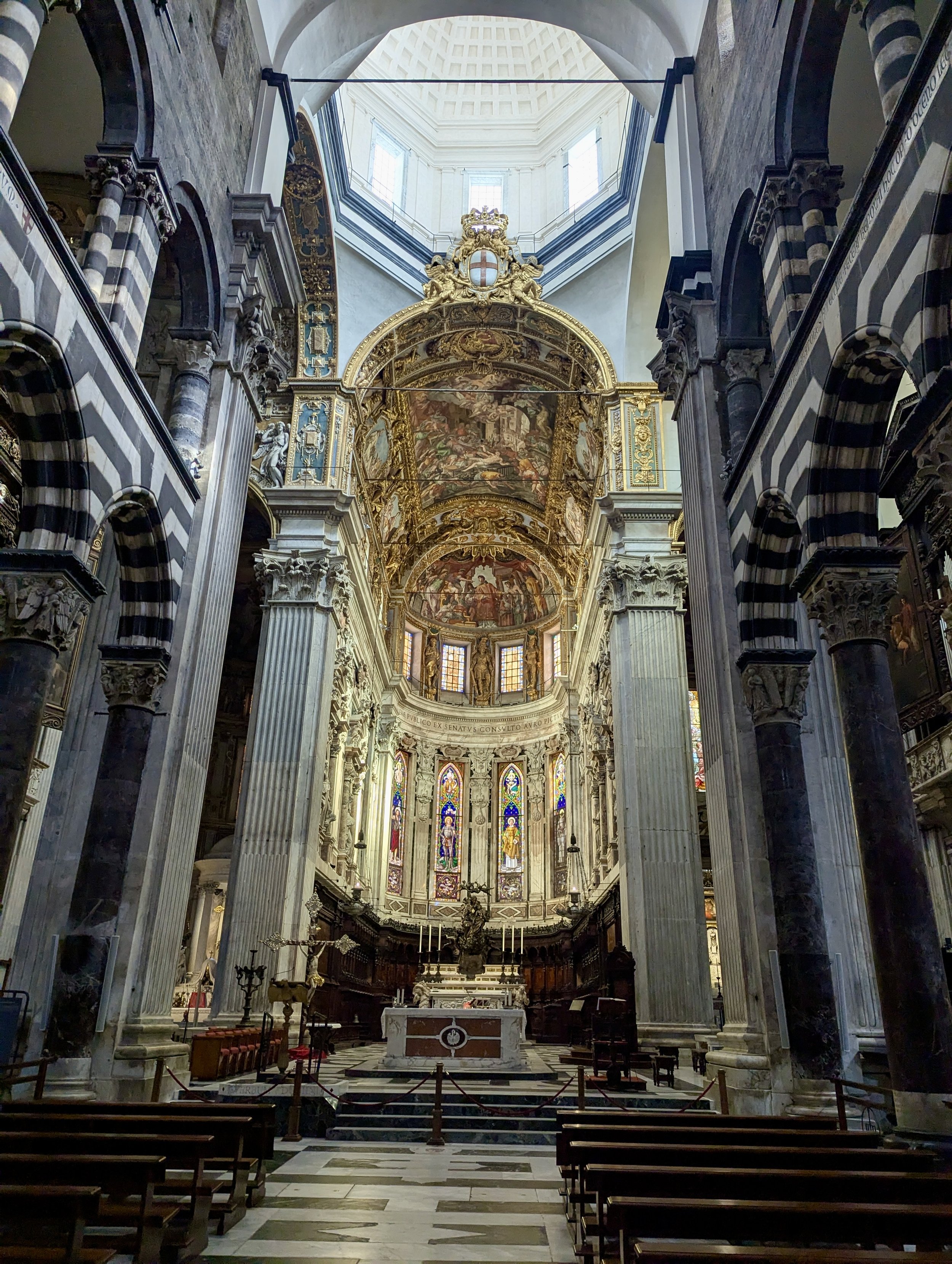
The cathedral is the central church in Genova, and it’s got a lot of fascinating stuff going on. The striped marble was only allowed to be used by permit (Italian bureaucracy is nothing new) and it’s used to great effect here, both for the exterior and interior. The marble, frescos, paintings, altars, and sculptures are all beautiful works of art, and
While this is one of the unmissable sights in town, we almost missed it. While it’s free to visit, and open daily, there’s also an unusual three-hour midday closure that’s awkward to work around. Plus, we only had two full days in town, and one of them was Sunday, which is always a tricky day to try to visit a church, due to, well, mass. It’s important to remember, you may be trying to visit a church because it’s a beautiful building or it has an artwork that you want to see, but first and foremost, it’s an active, in use church, with services and weddings and funerals and all the other church activities. With that in mind, Sunday’s not the best day to try to visit, since tourists aren’t welcome during services (unless you wish to attend, then of course, grab a pew) as it is NOT cool to walk around snapping pictures while a priest is speaking.
Righi
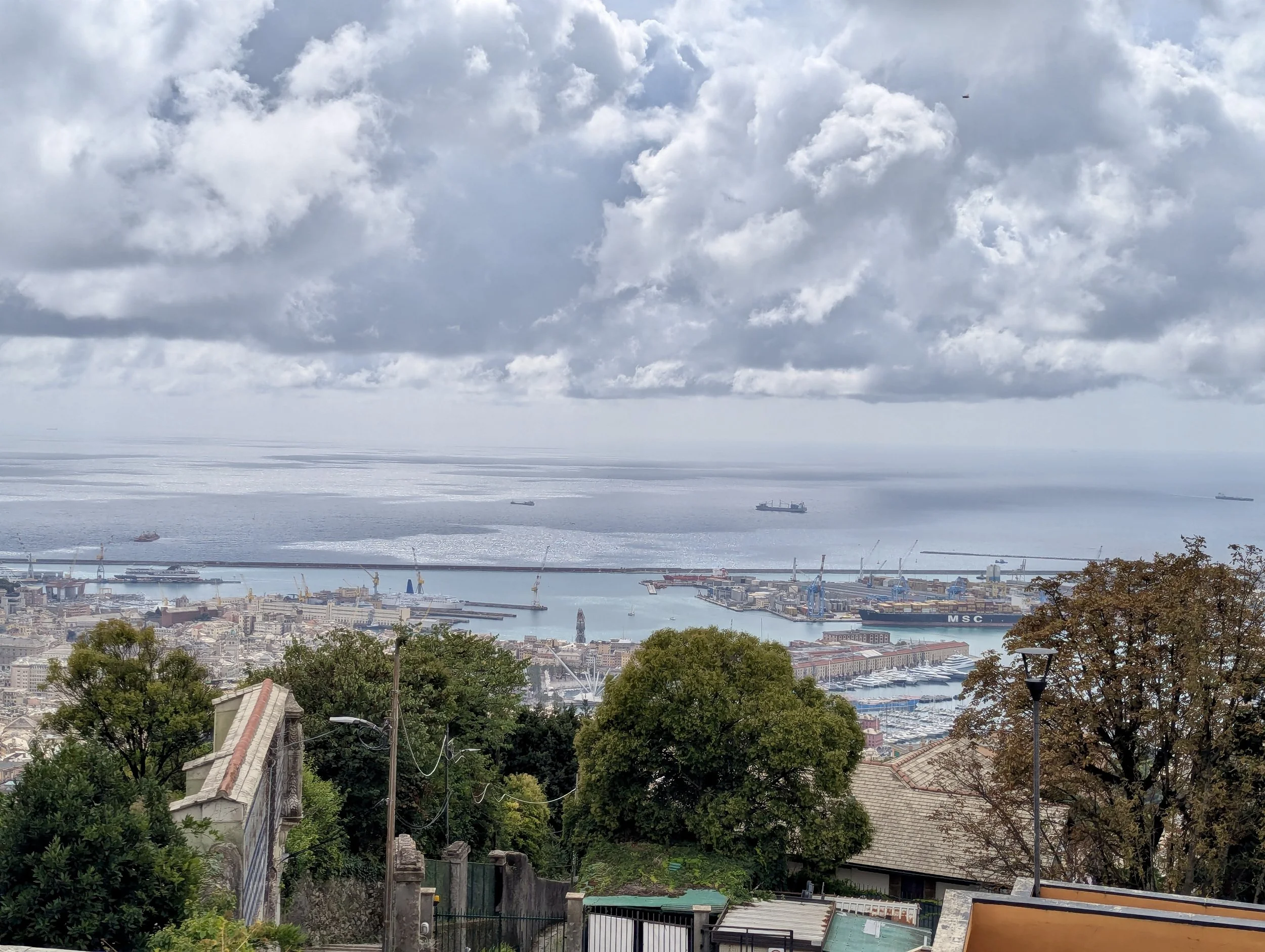
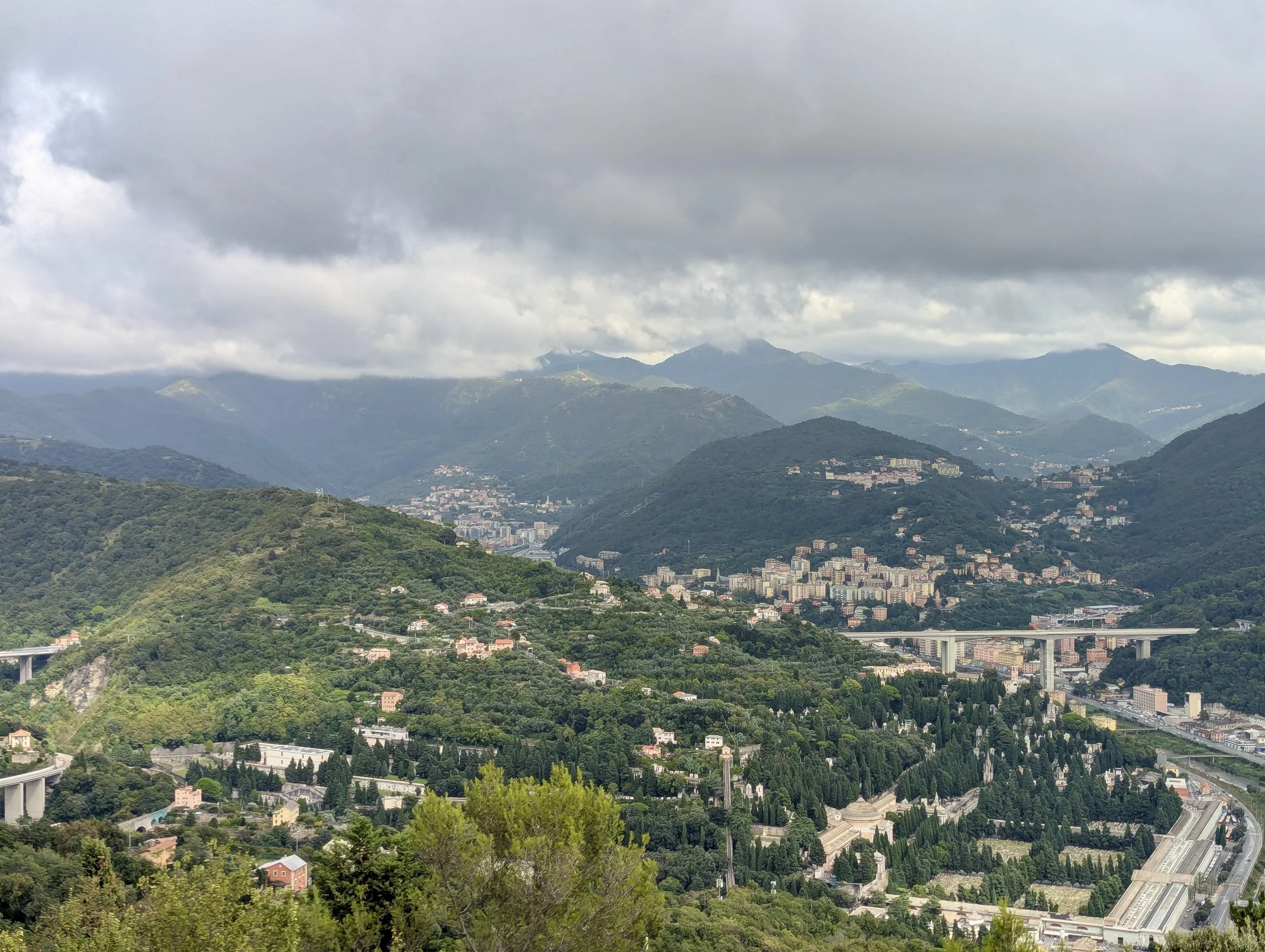
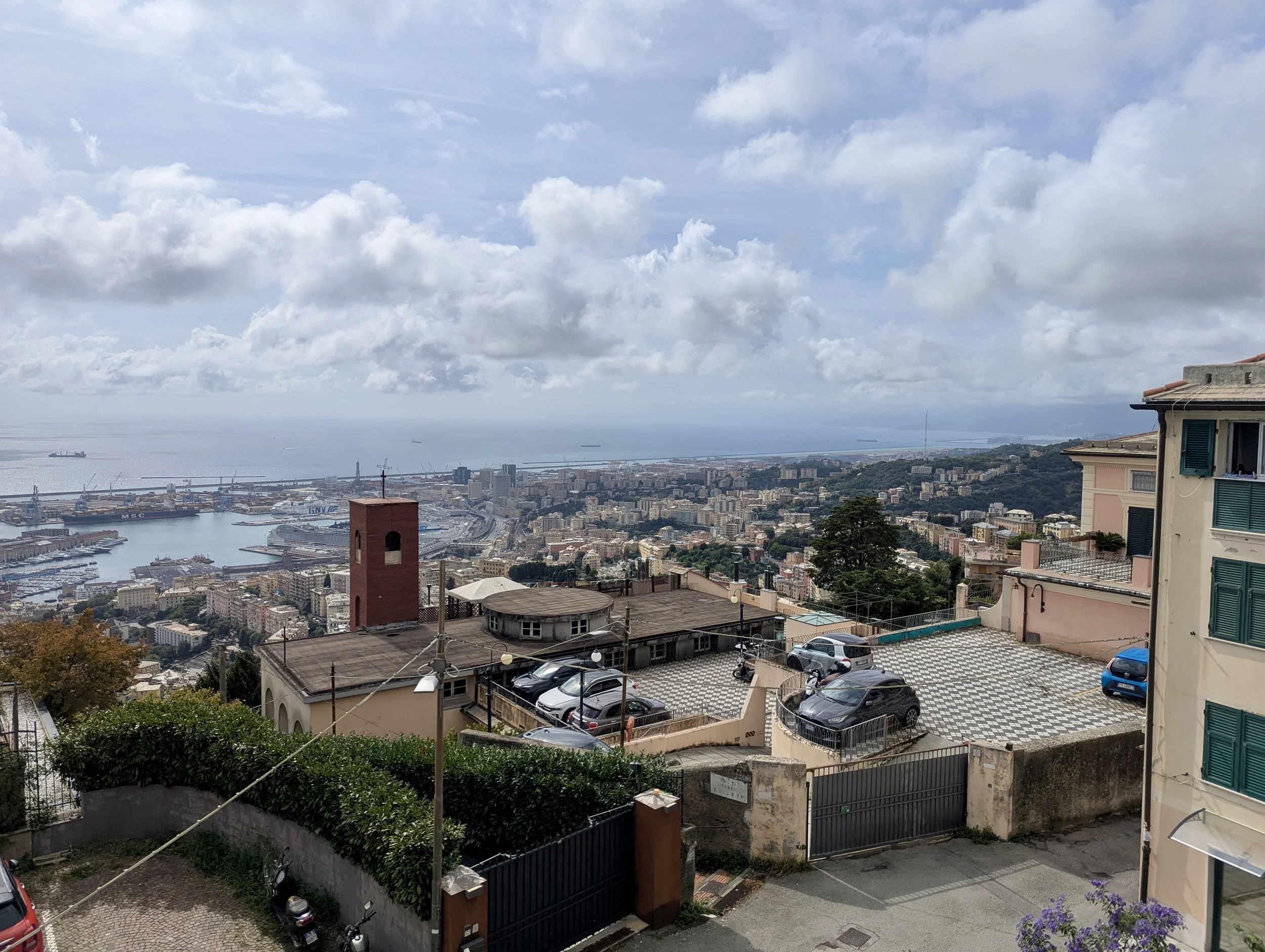
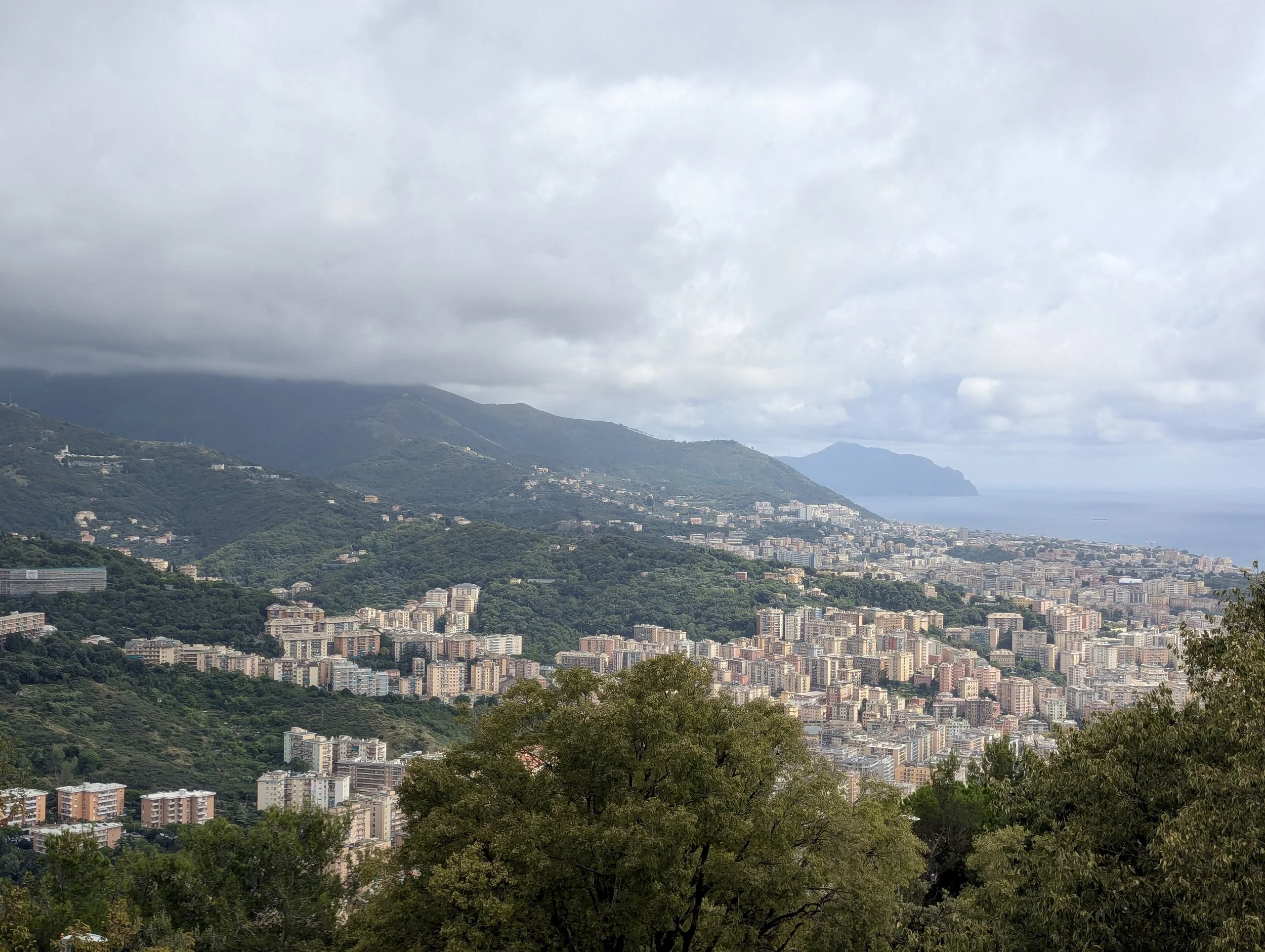
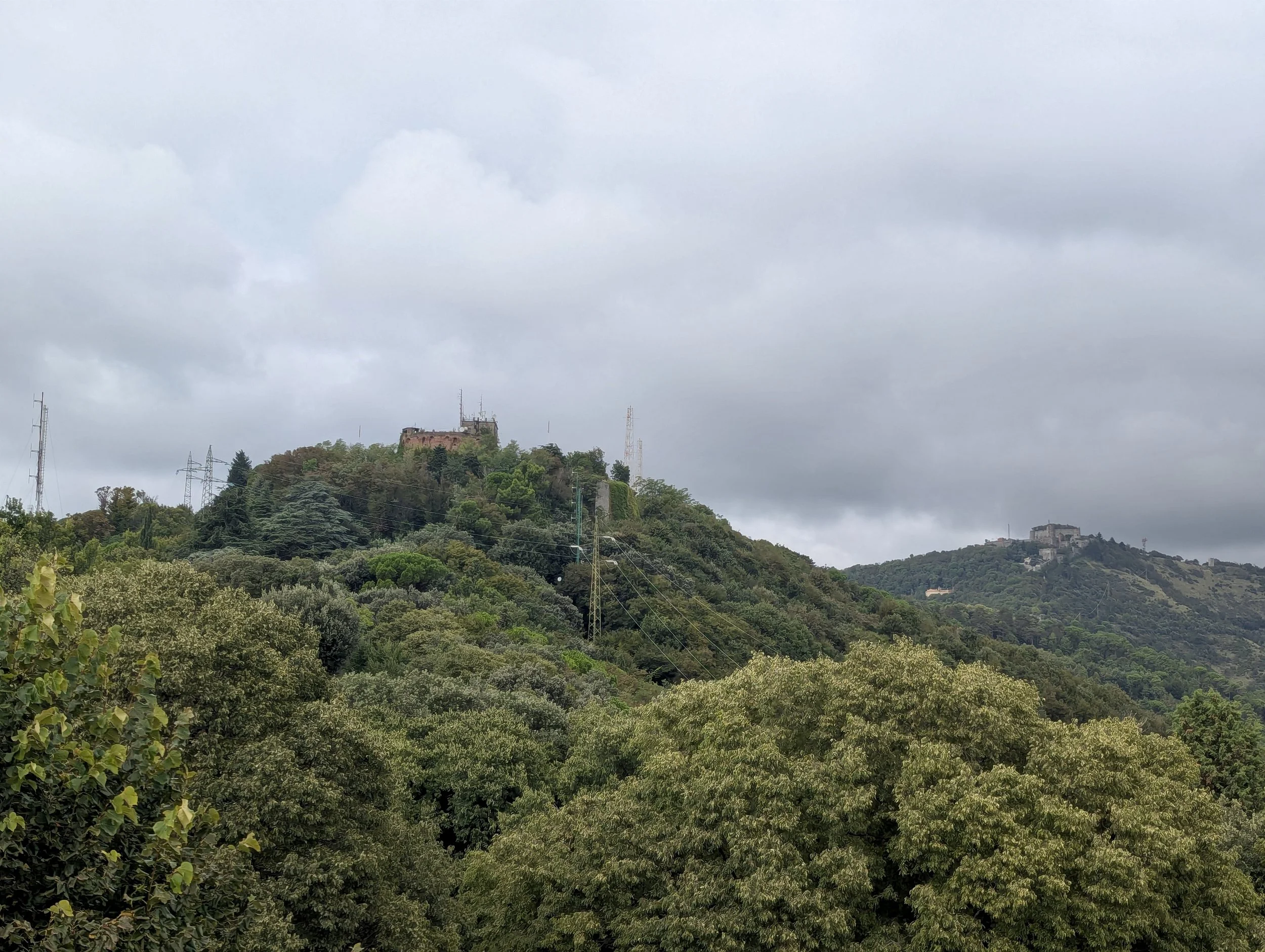
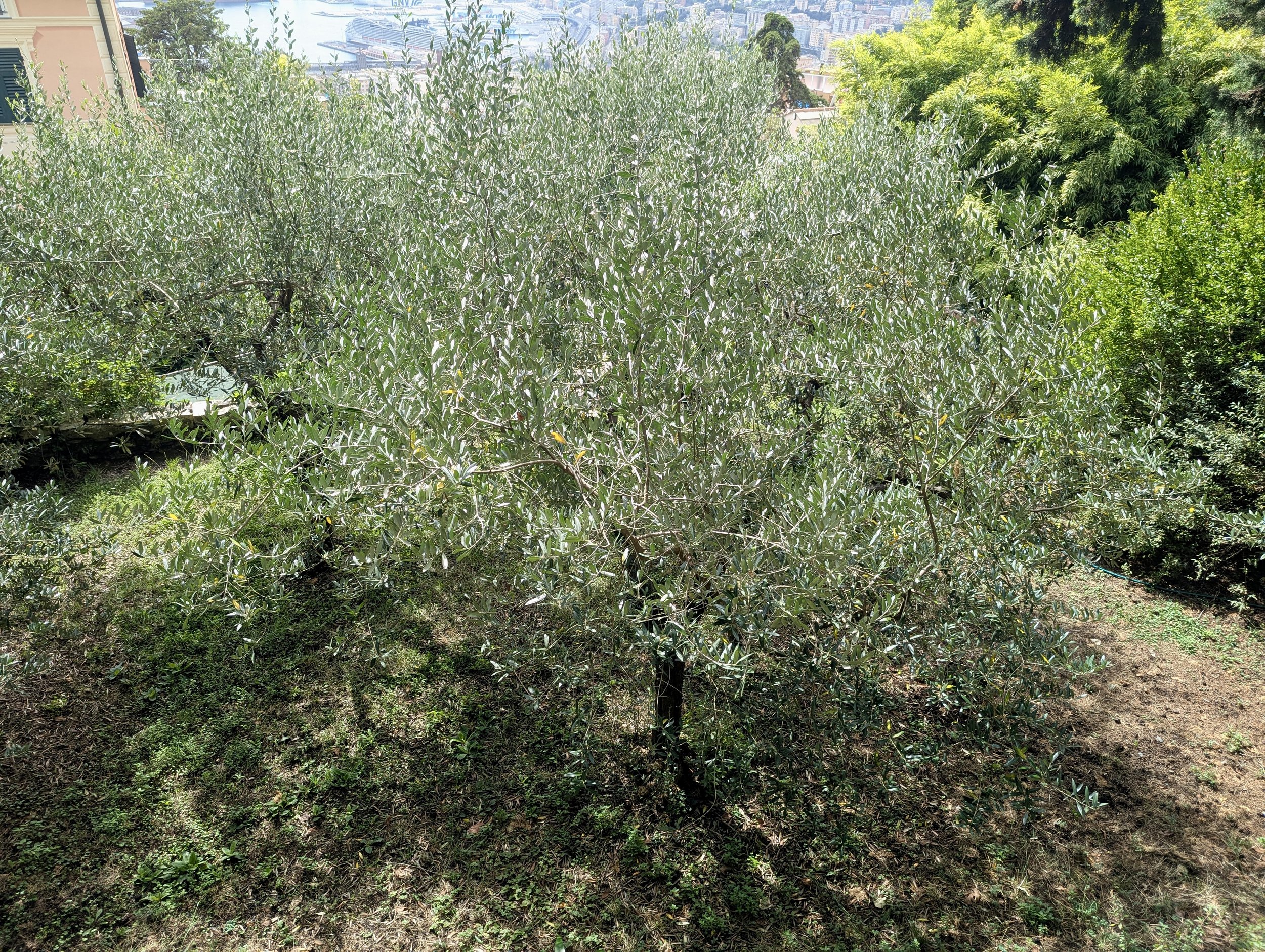
Genova slopes steeply uphill from the sea, and there are several funicolare that can chug their way uphill to get you to some really remarkable views with very little effort or expense. We decided to take the Zecca-Righi funicolare, and it was absolutely worth the trip. If you want to venture deeper into the mountains there are trailheads for hiking nearby, ruins of old fortresses, plus a large park, with more hiking and excellent views.
We restricted ourselves to just walking to the top of the structure housing the funicolare, plus a wander down the road before grabbing the funicolare back into town. If you had less than an hour that you wanted to dedicate to the trip you could easily make it work.
Piazza del Ferrari & Via XX Settembre, San Vincenzo
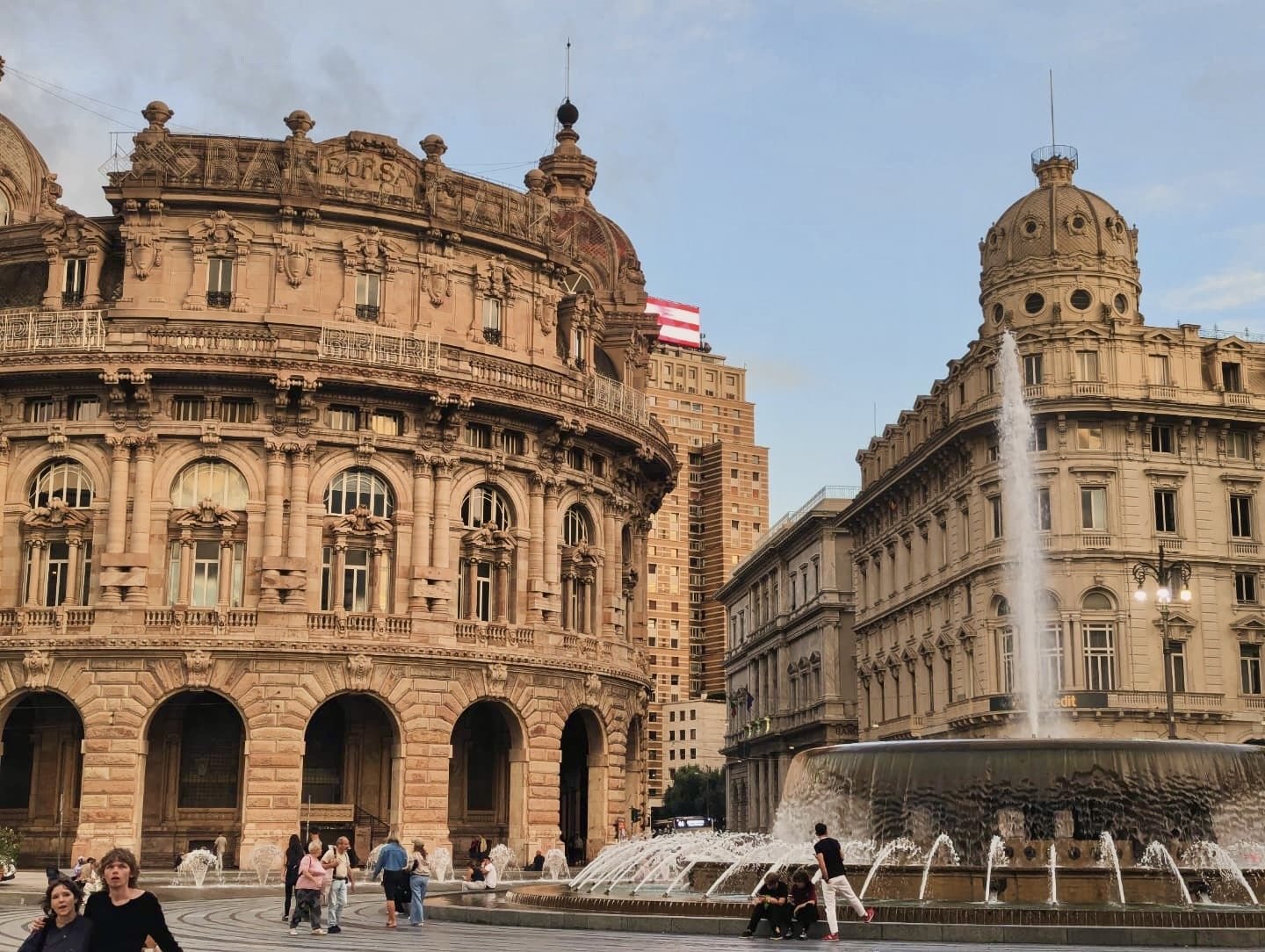
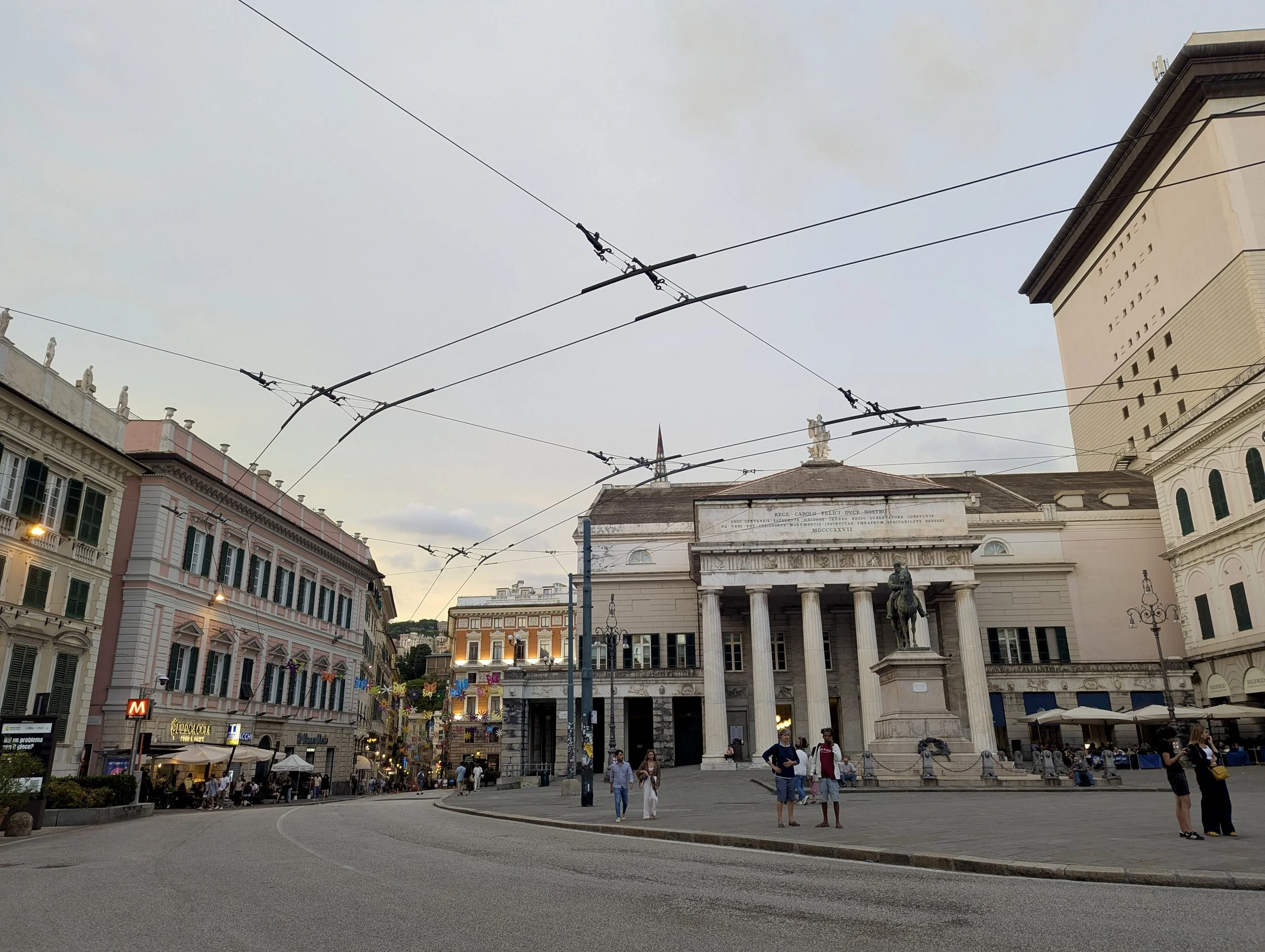
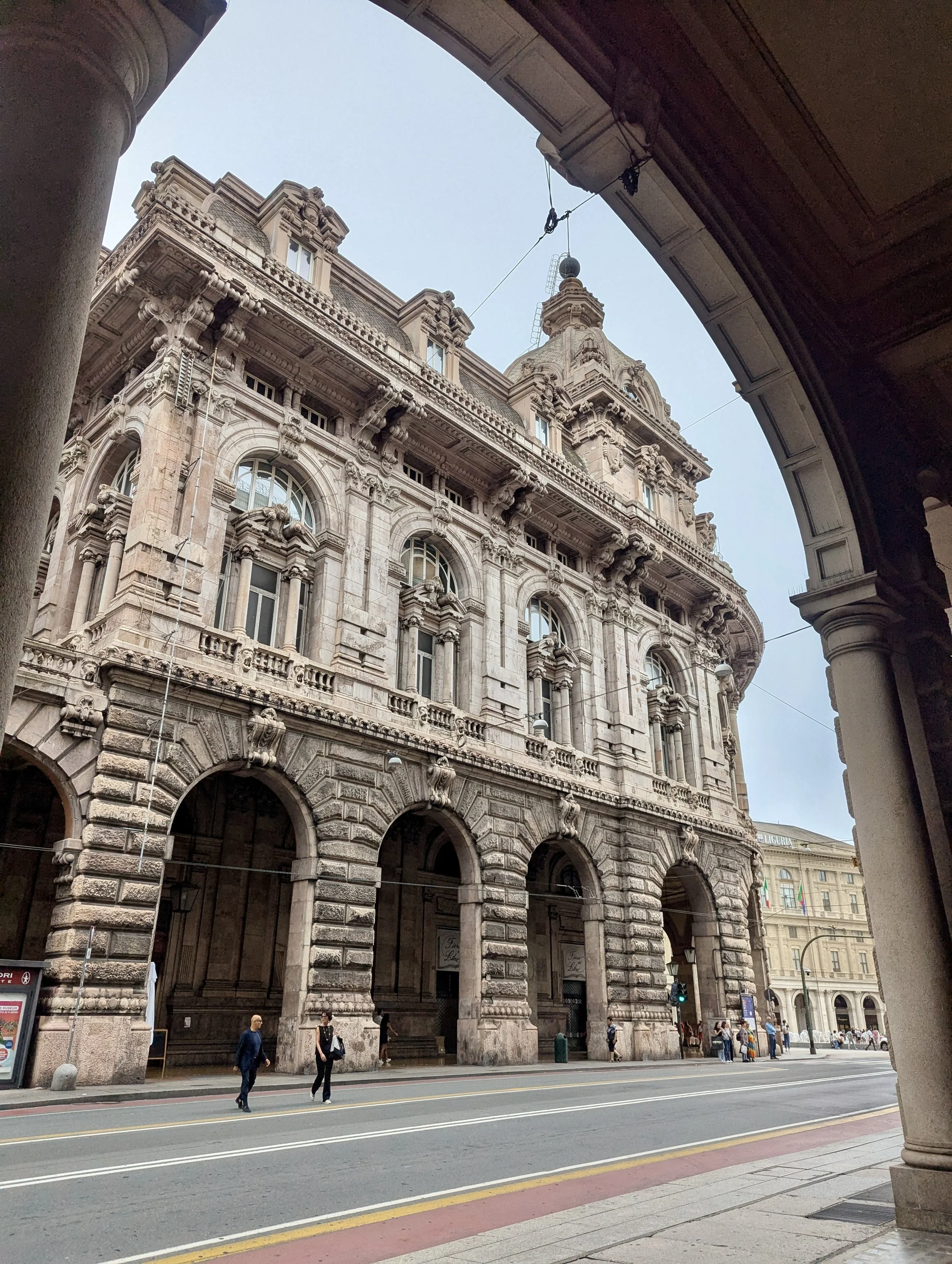
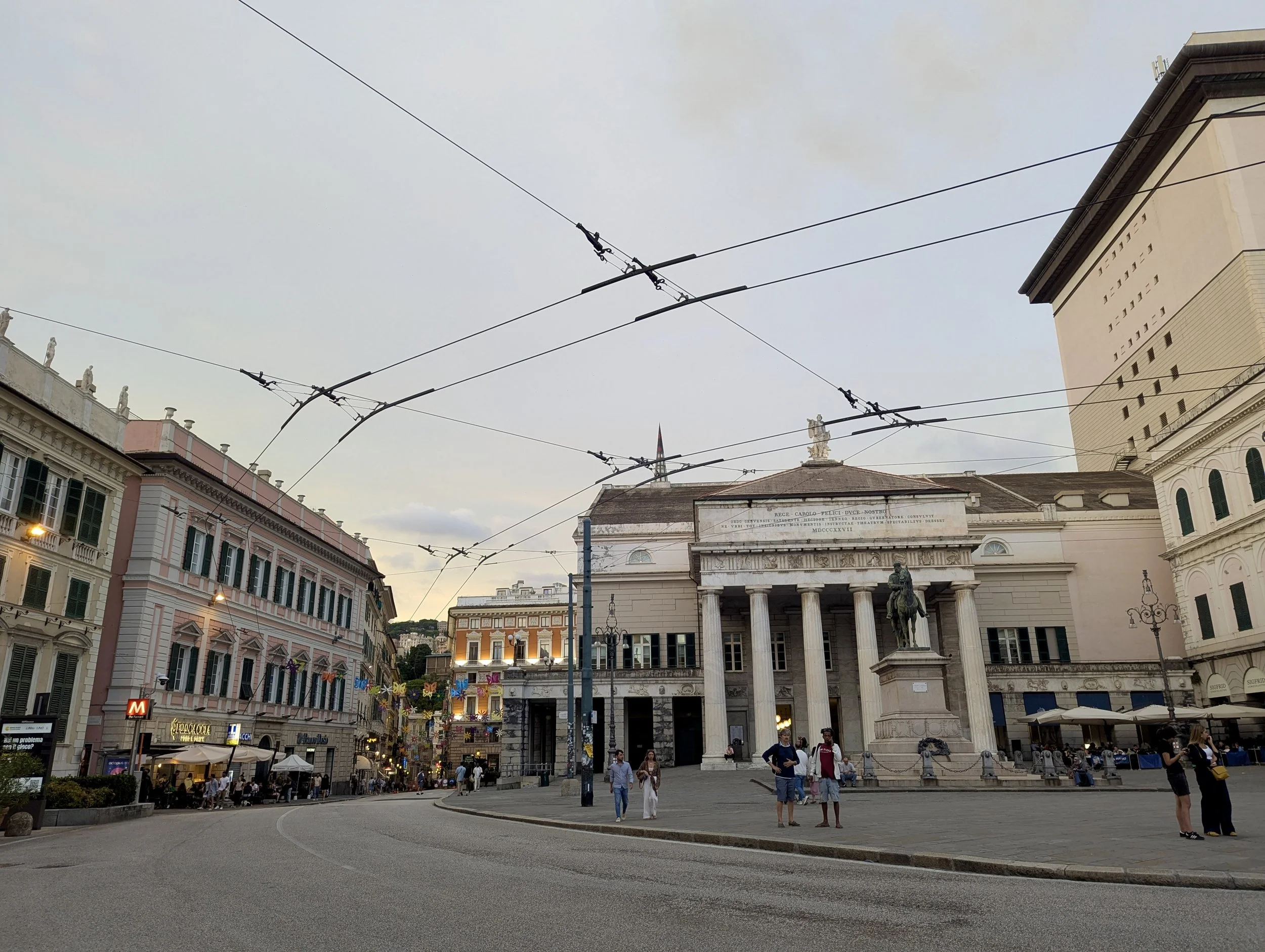
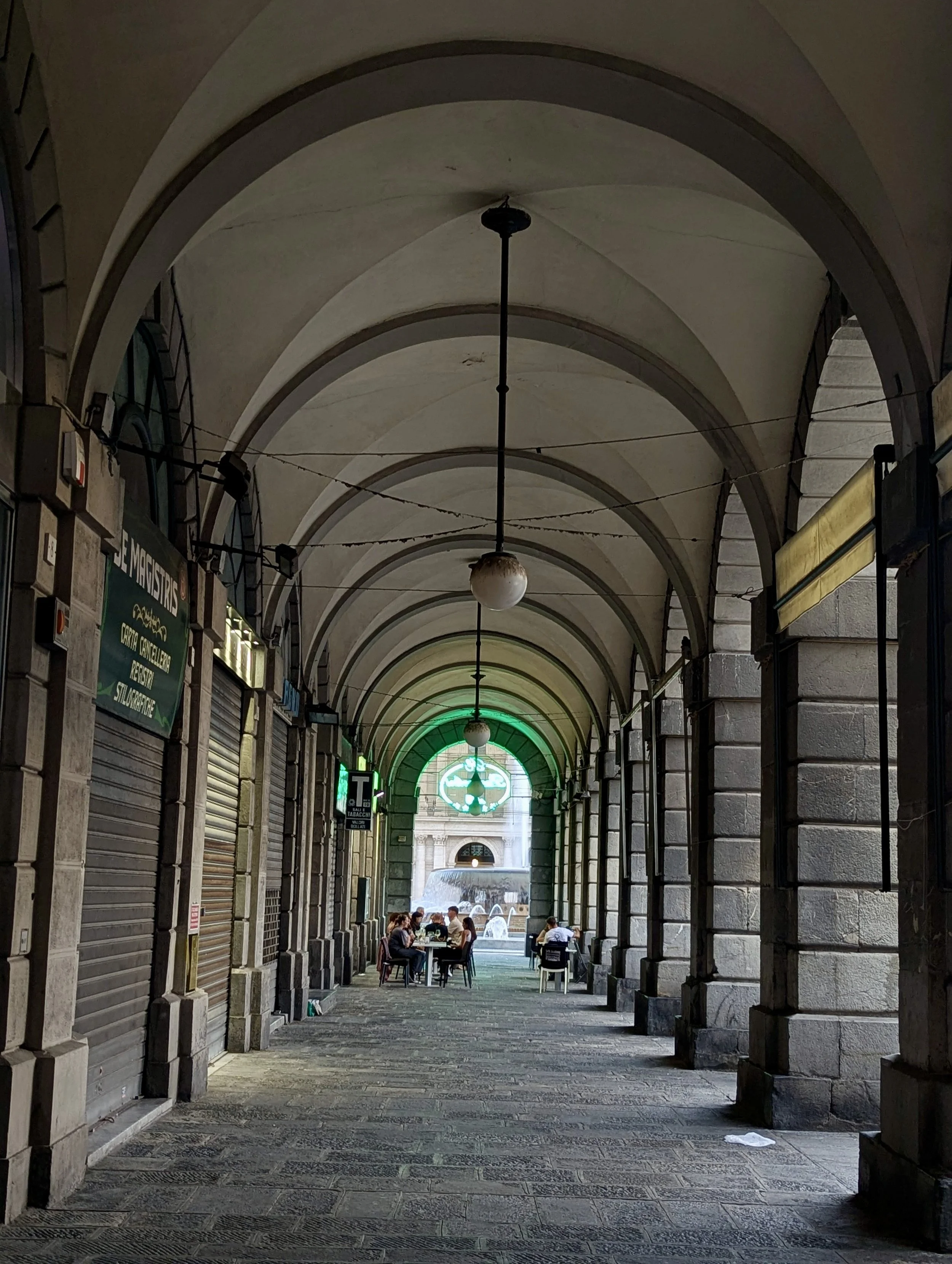
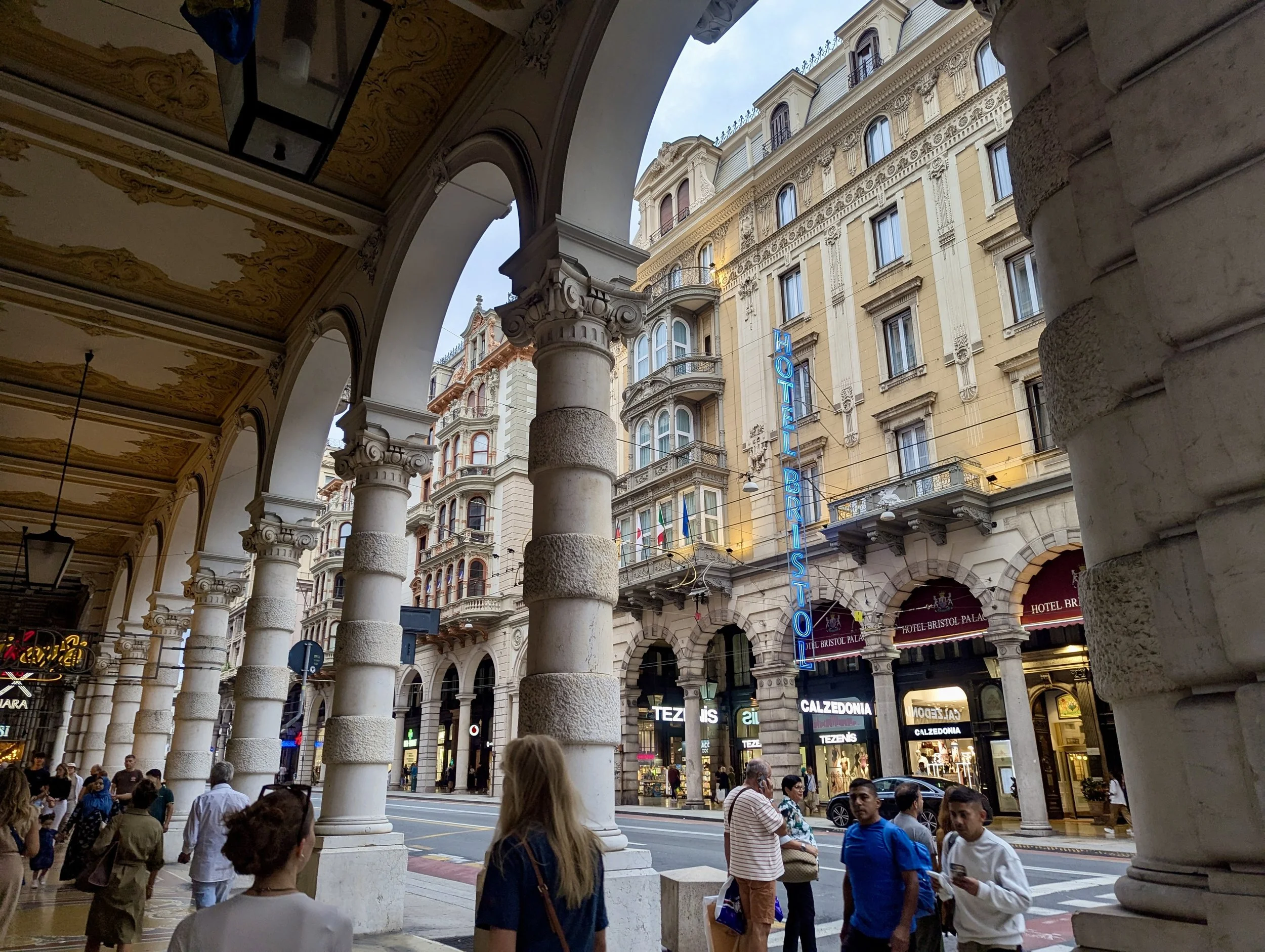
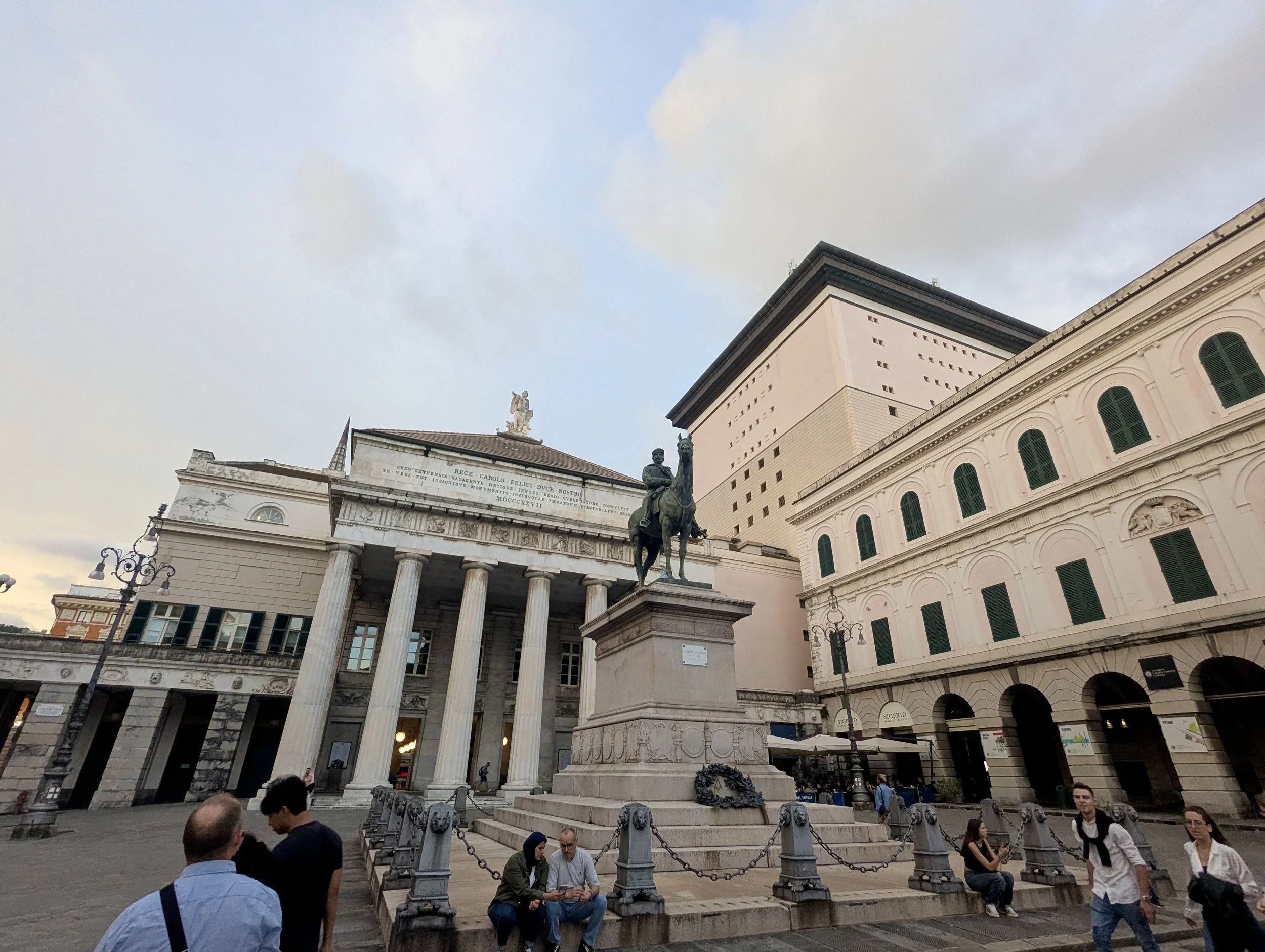
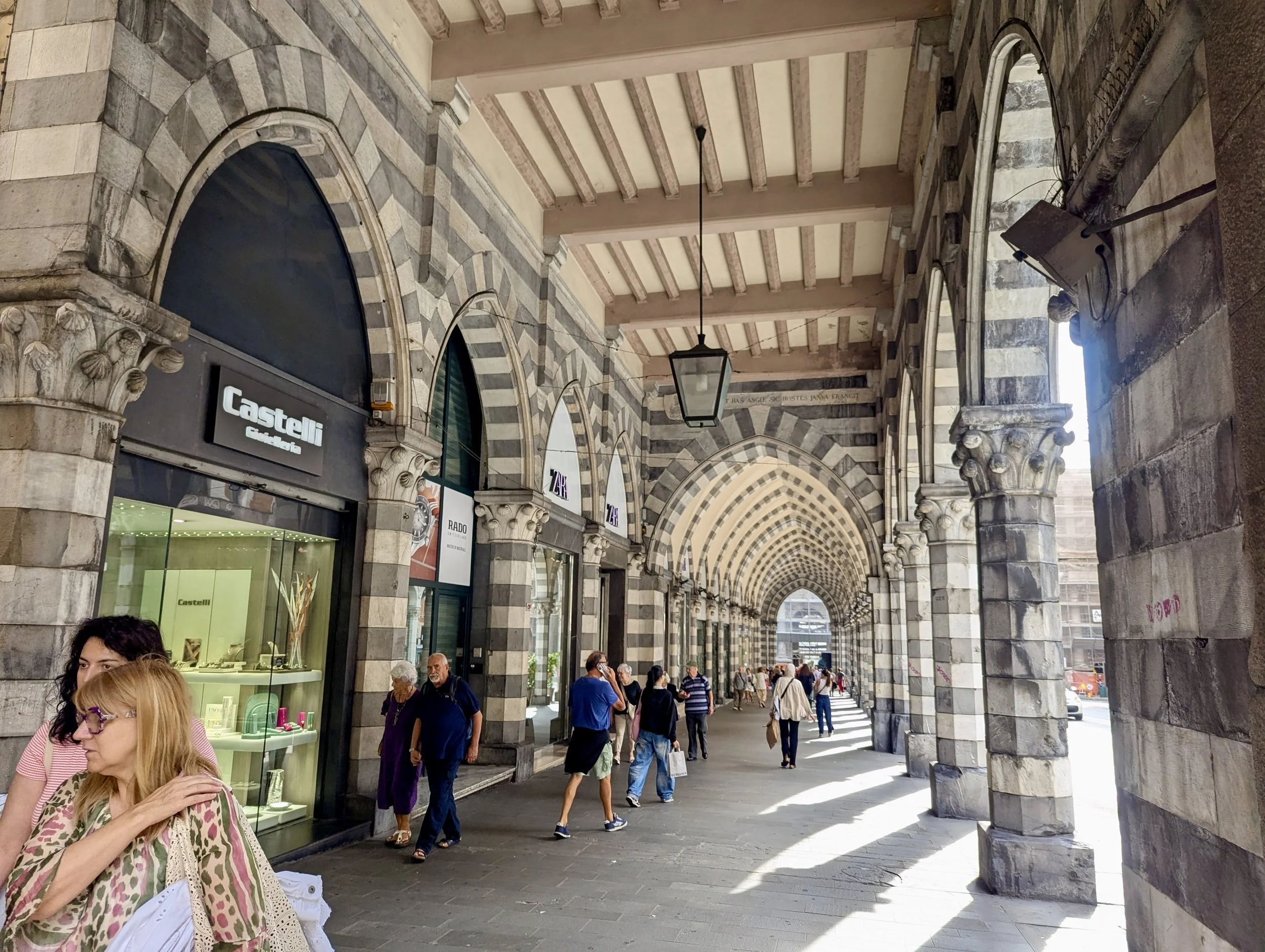
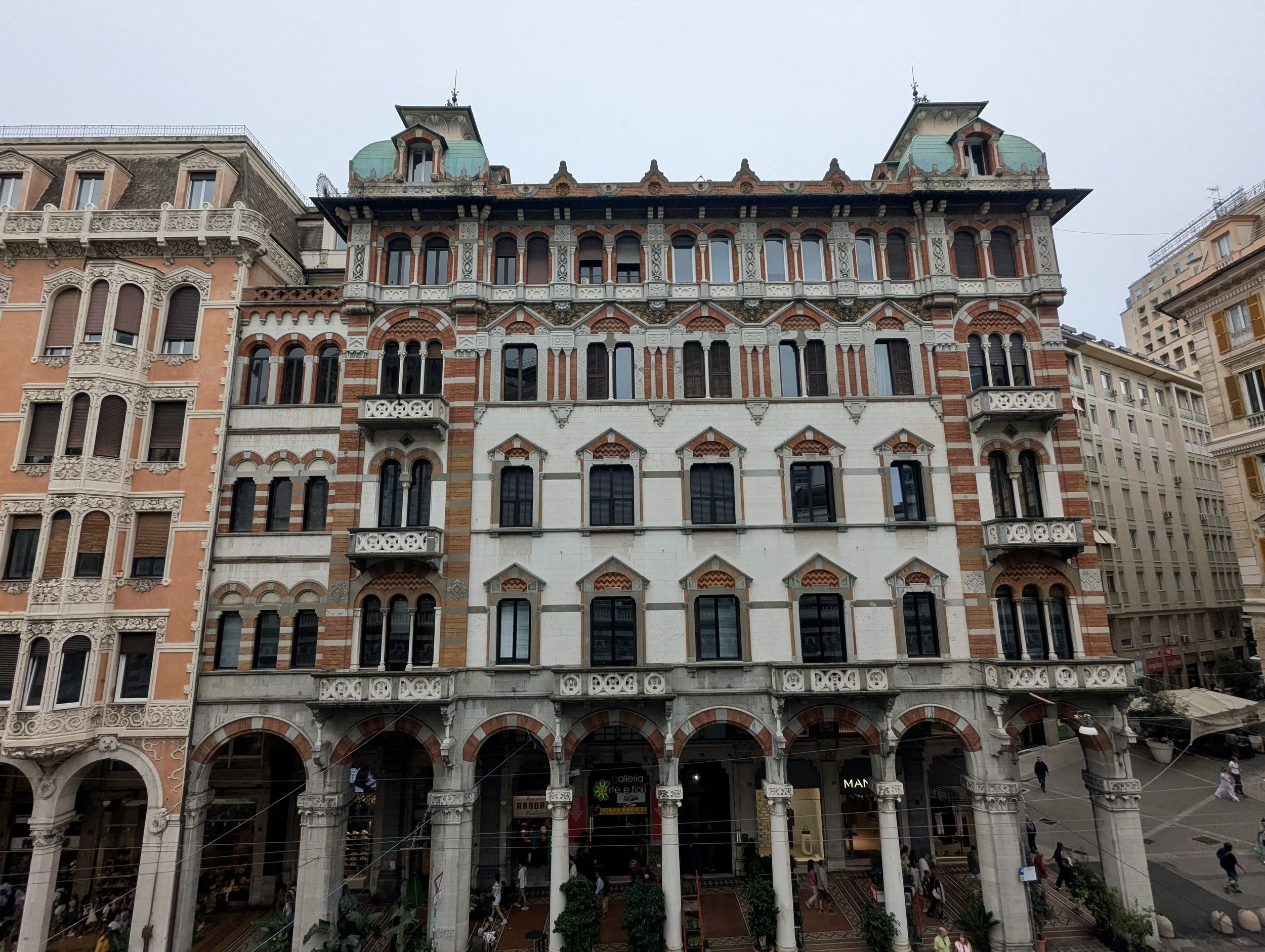
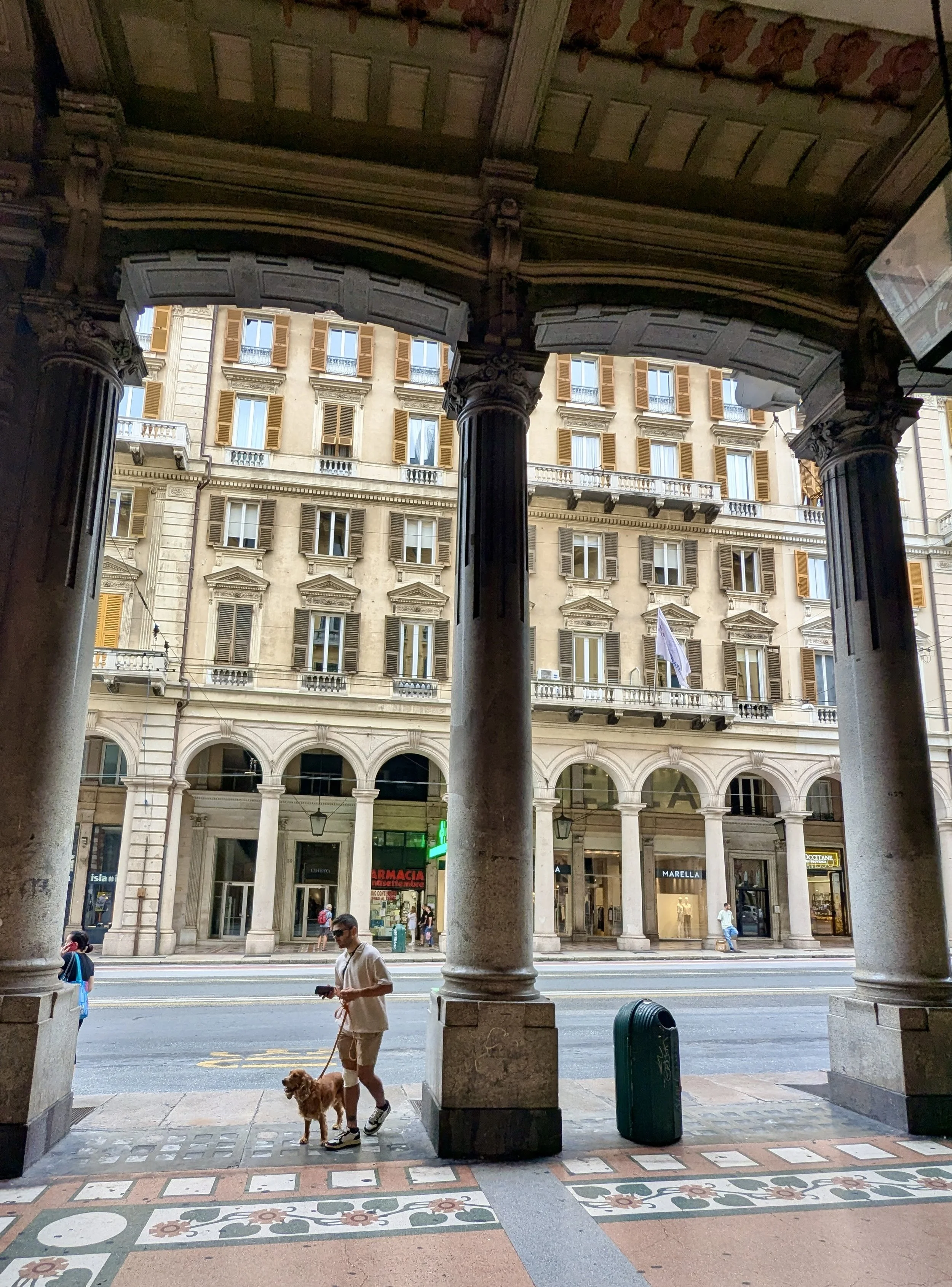
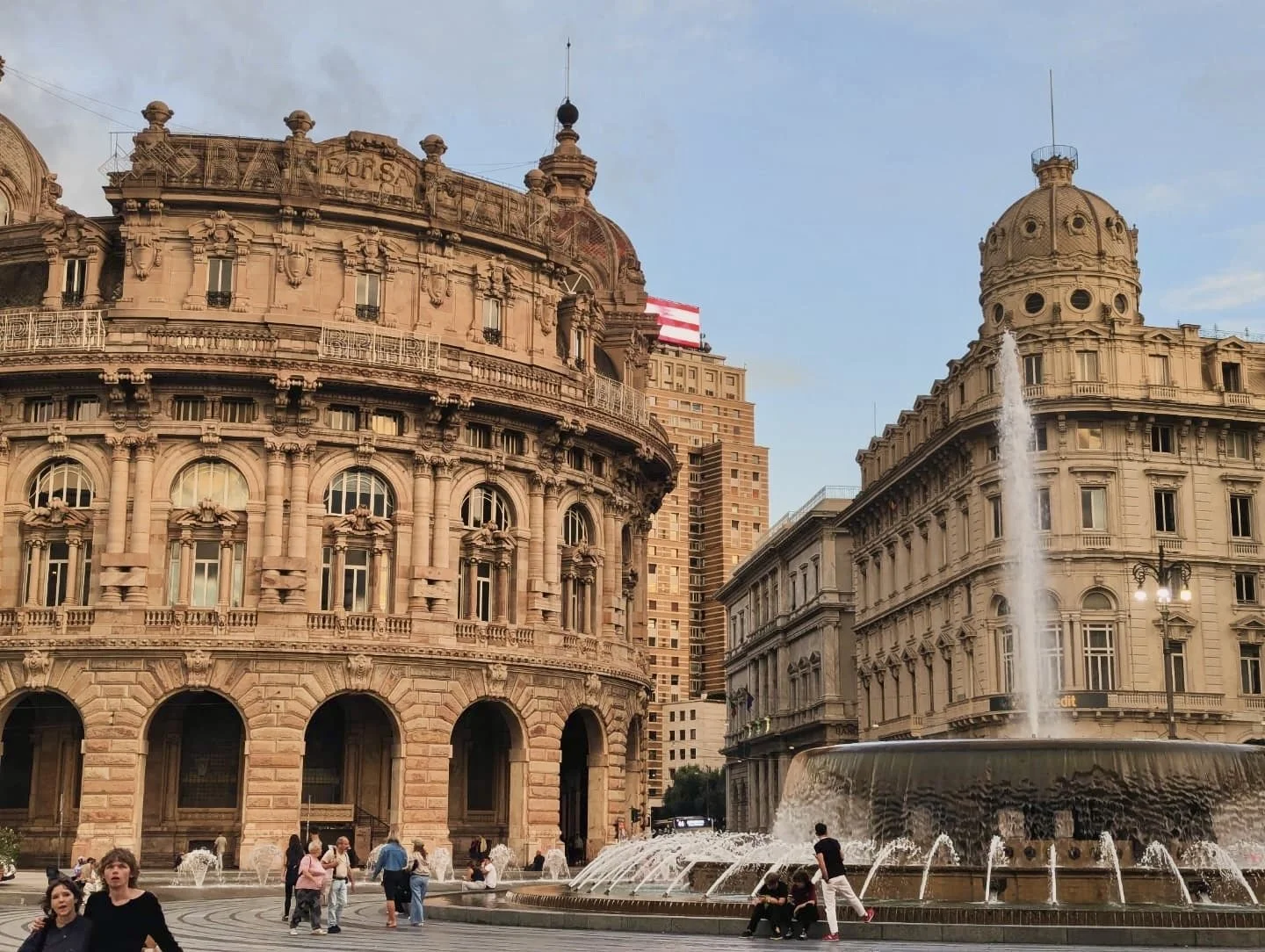
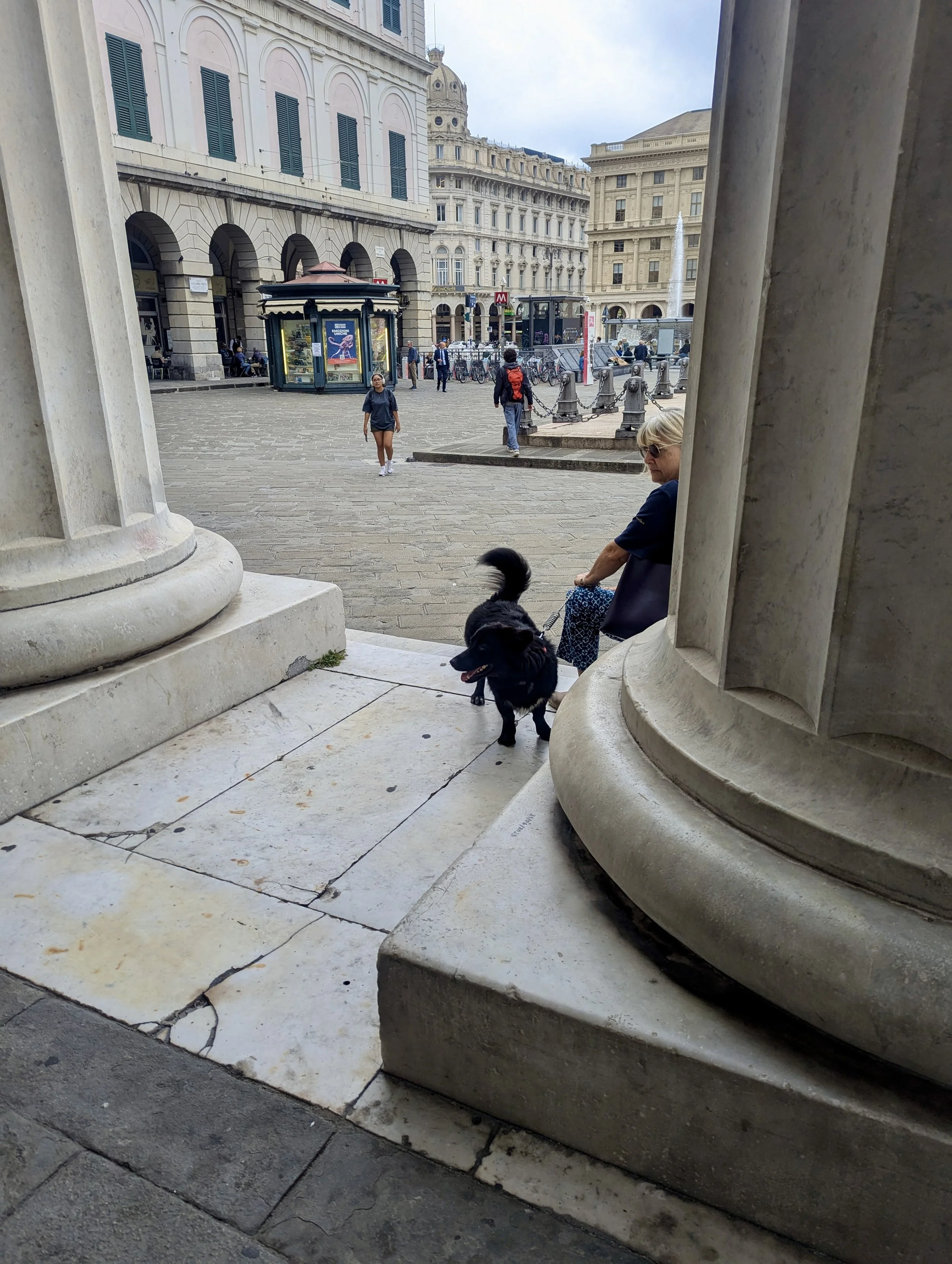
The Piazza del Ferrari is the heart of Genova, with its large, open square featuring a brass fountain from the 1930s, the GIGANTIC Opera Carlo Felice, a Metro stop, and lots of buses. It is ringed with grand buildings and borders the winding medieval caruggi of the Centro Storico and the grand porticos of Via XX Settembre, the main shopping street of the city. It is grand, opulent, and a beautiful place to stroll, with the porticos offering protection from all kinds of weather.
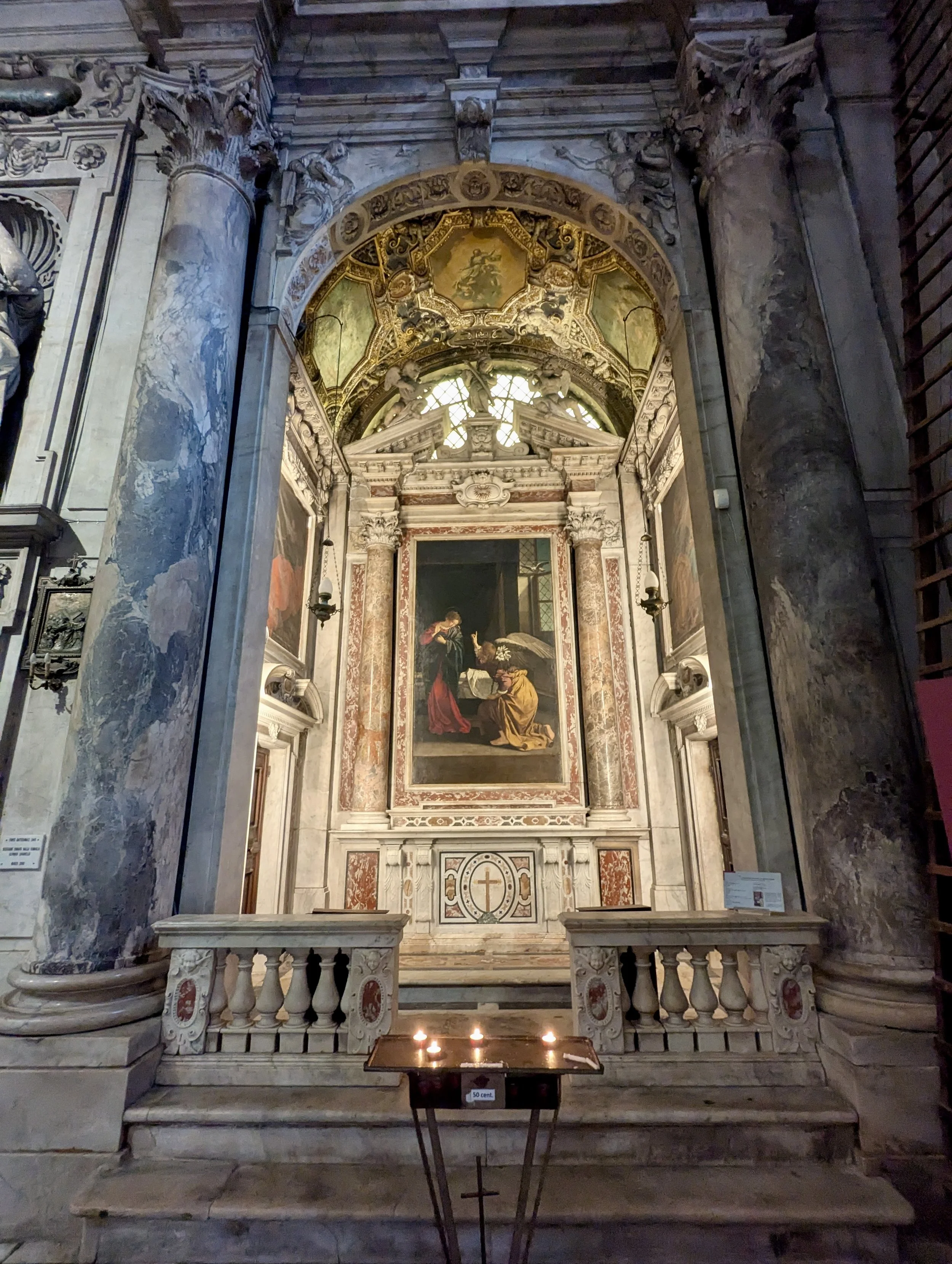
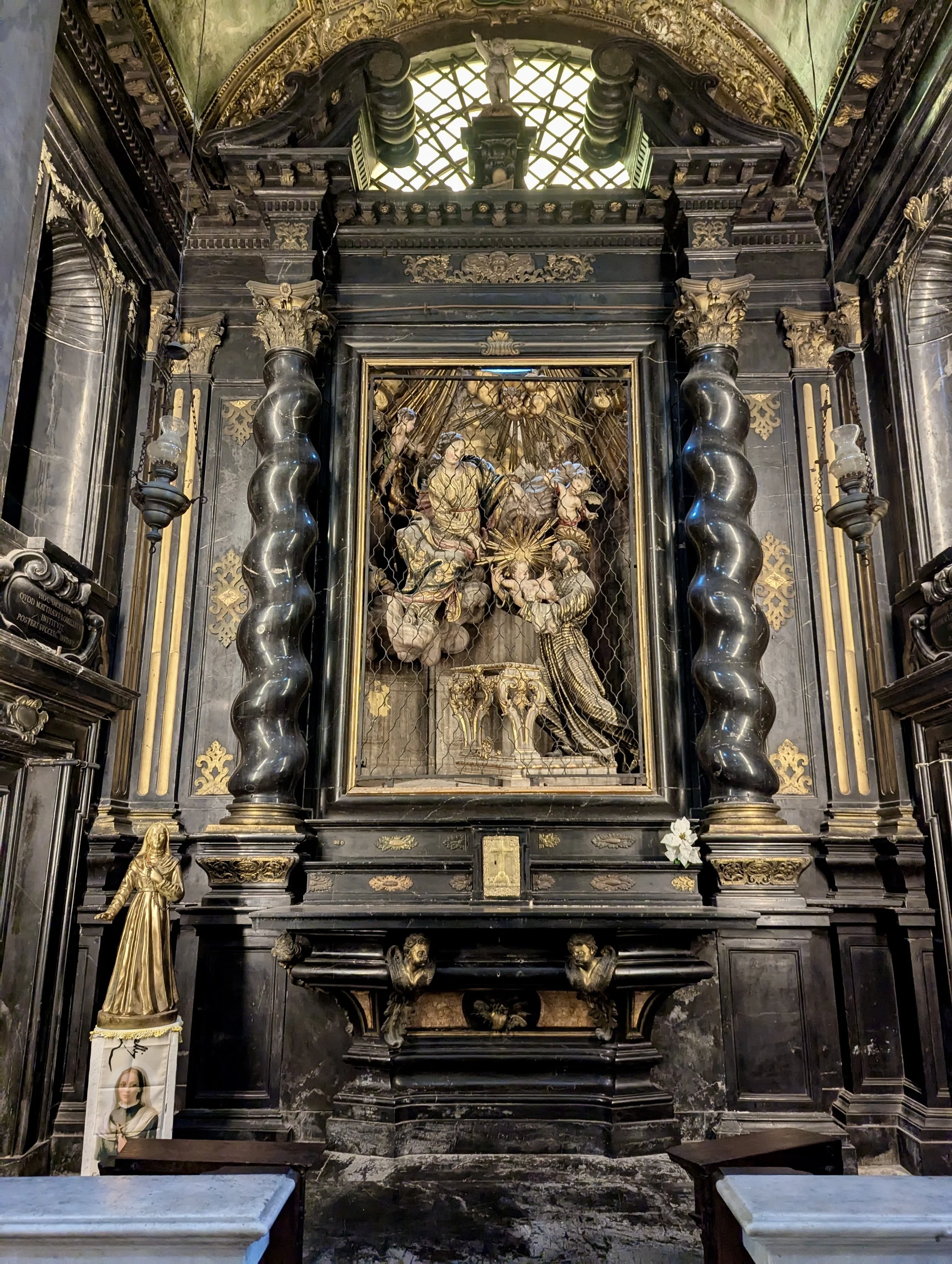
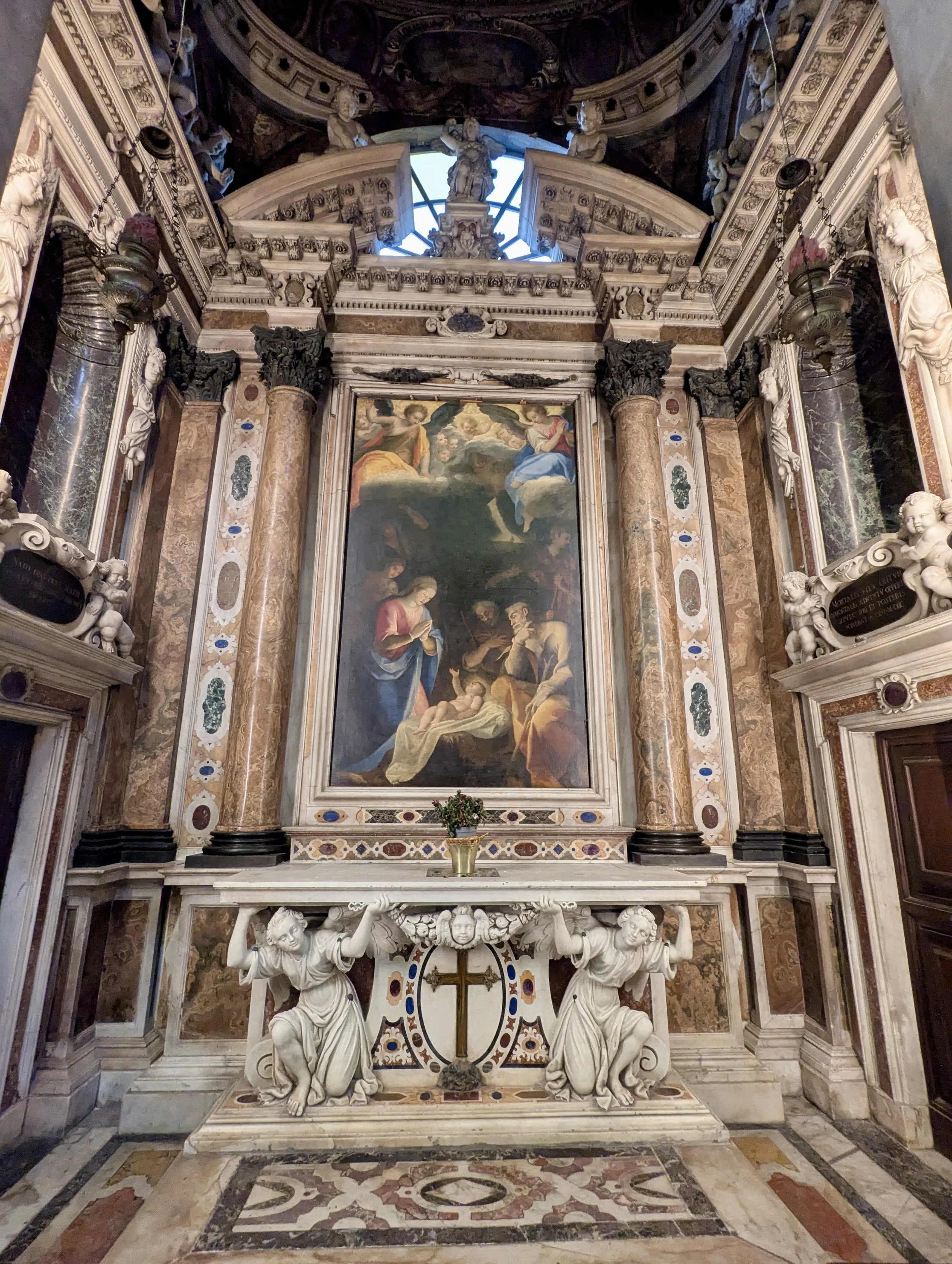
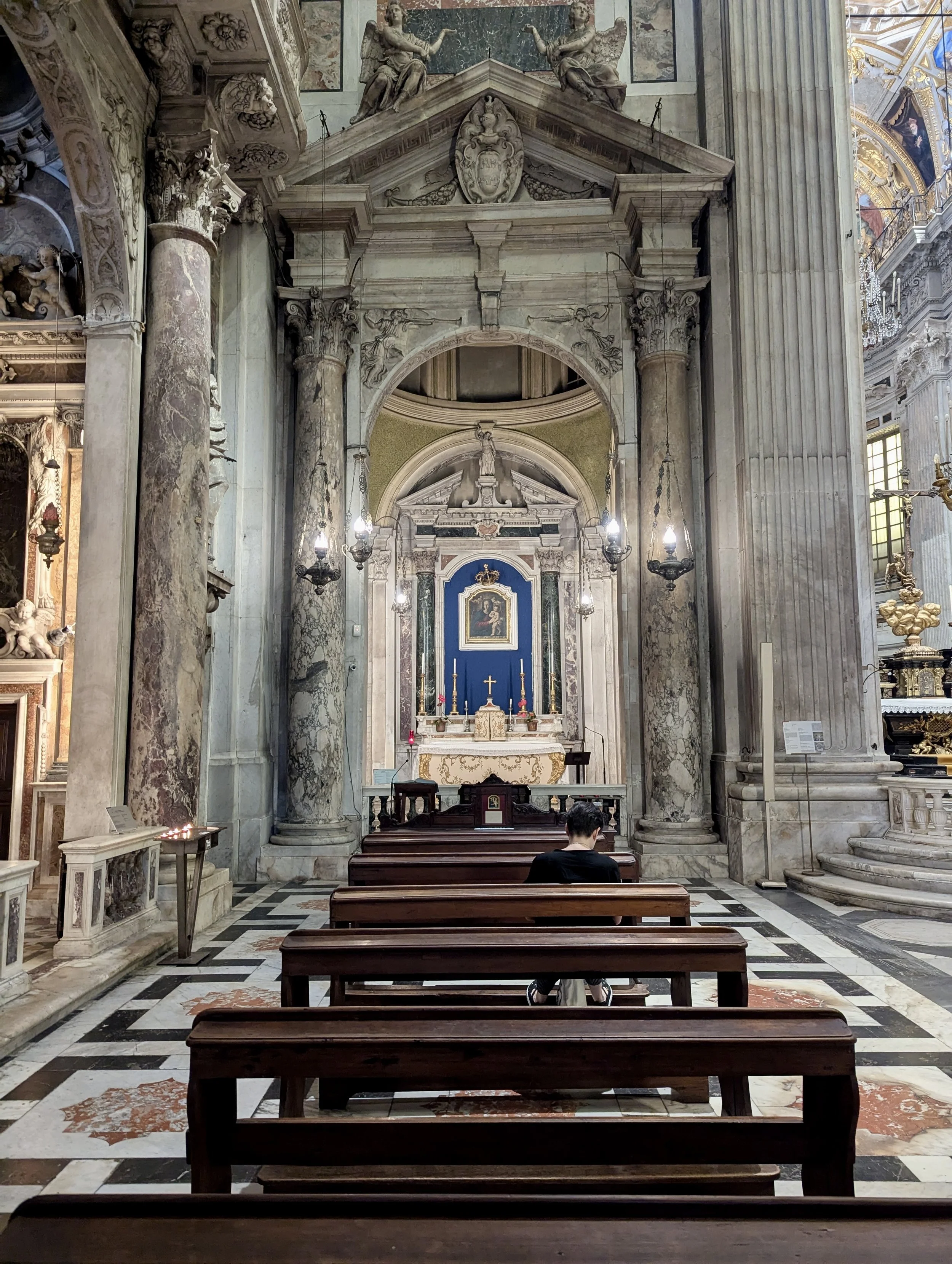
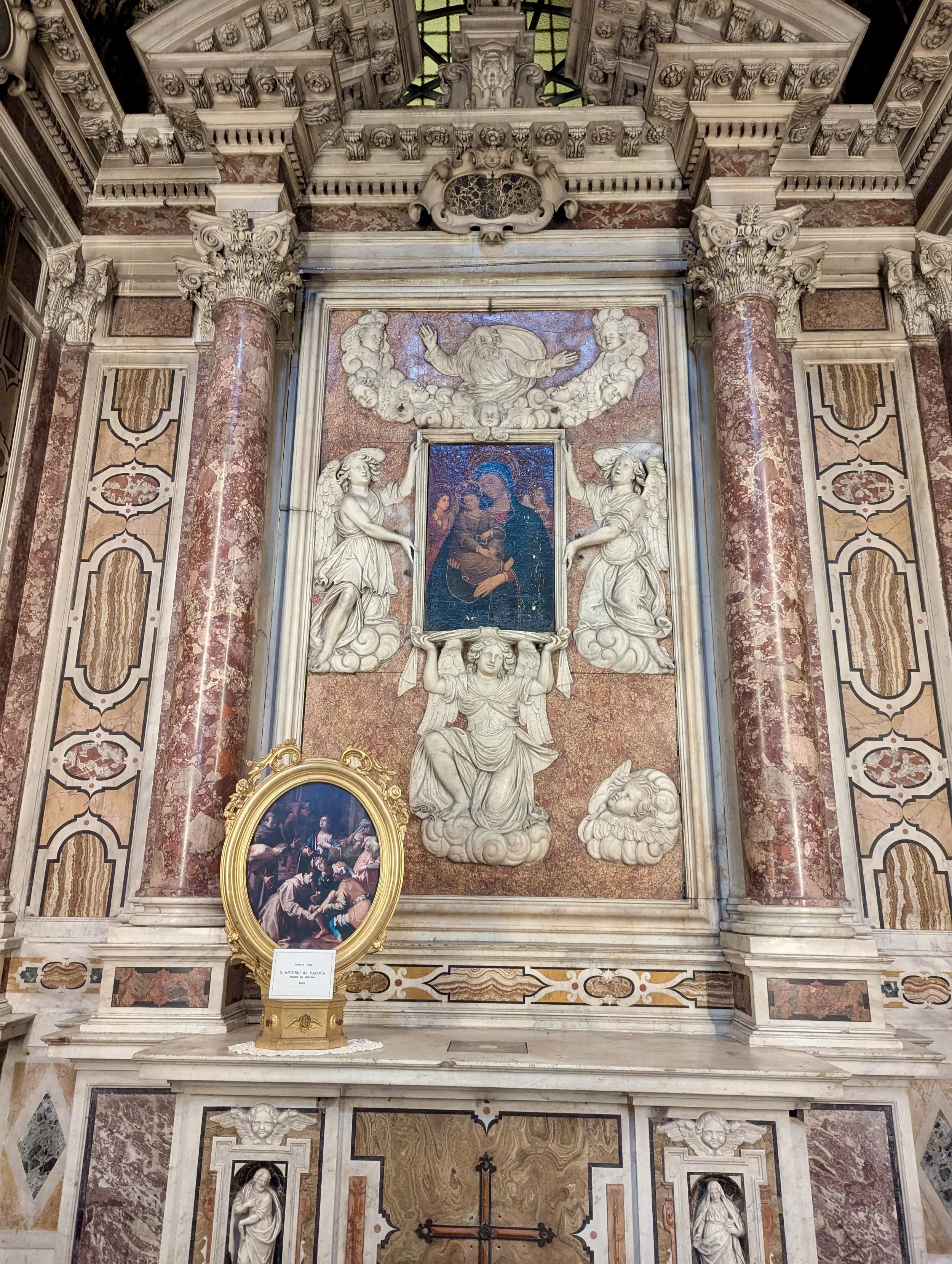
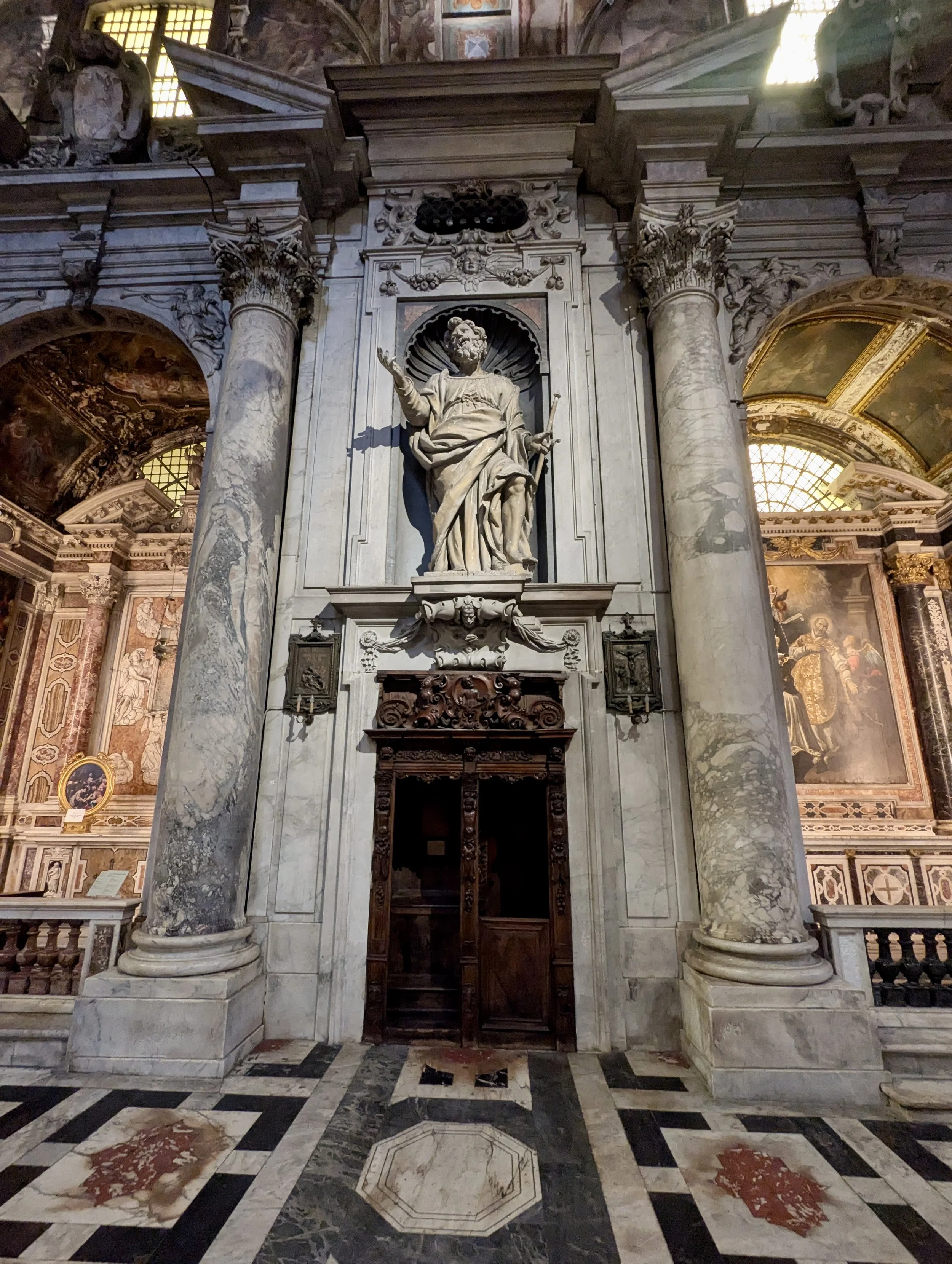
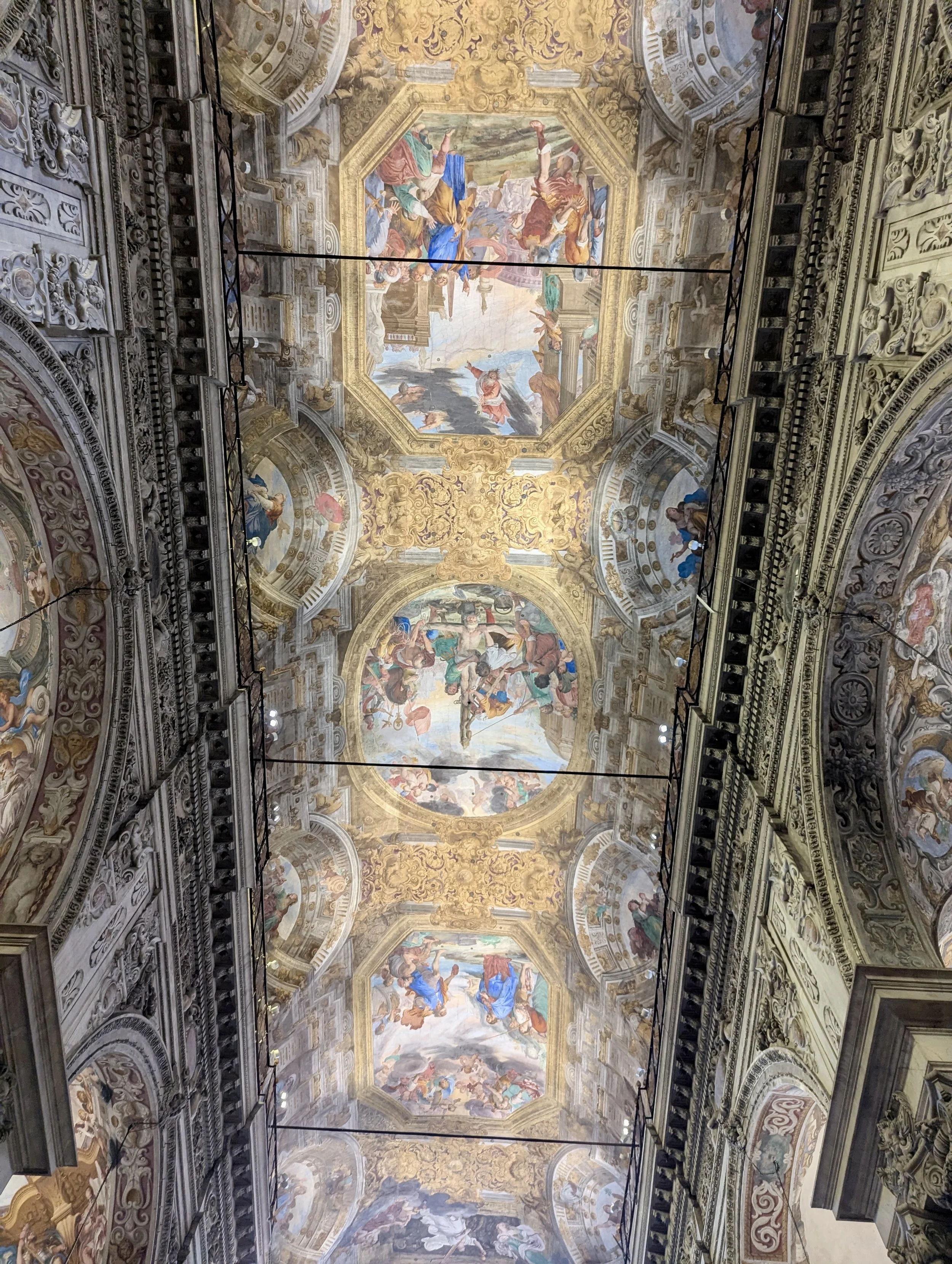
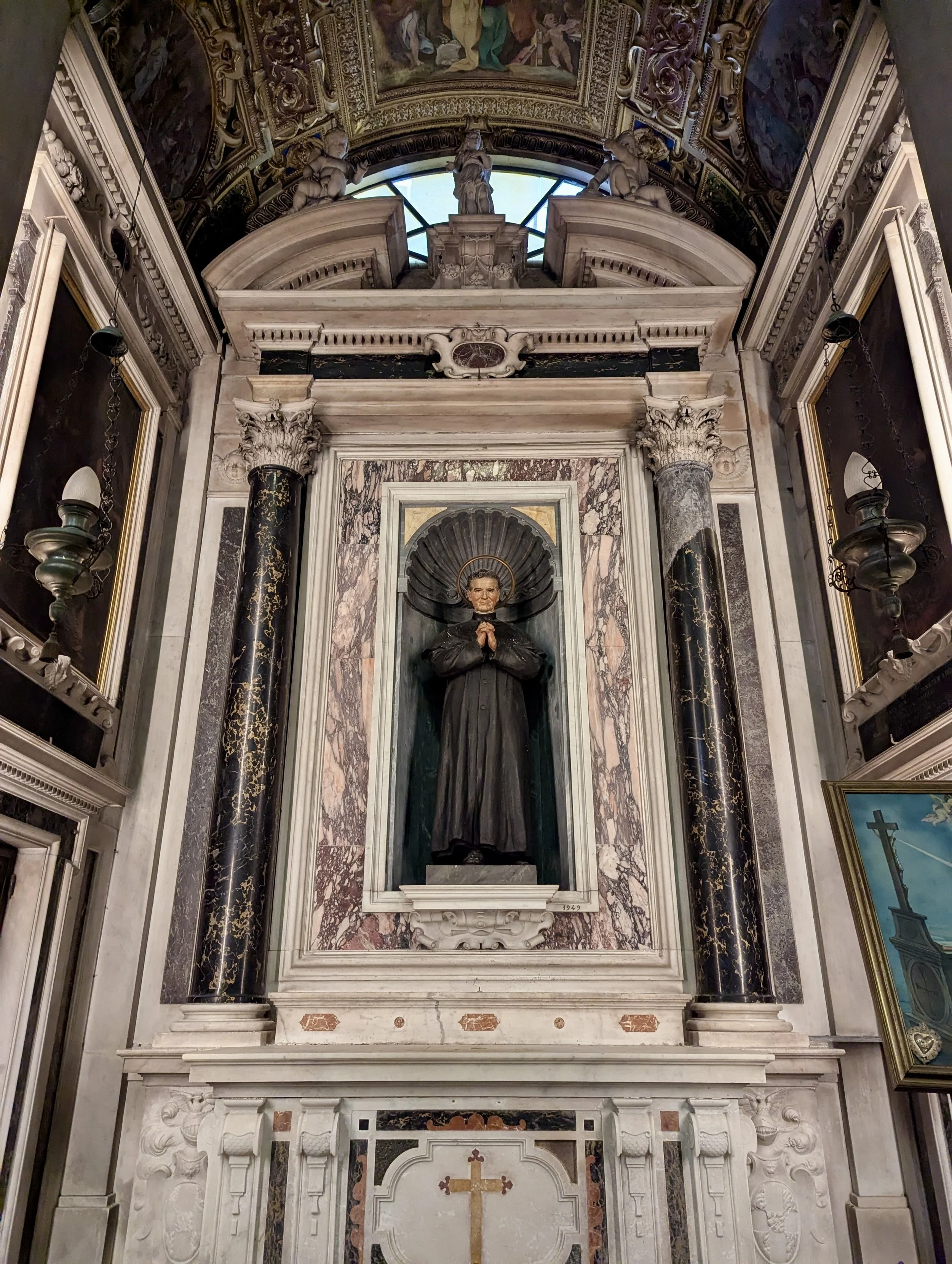
La Basilica di San Siro Via S. Siro, 4, Maddelena
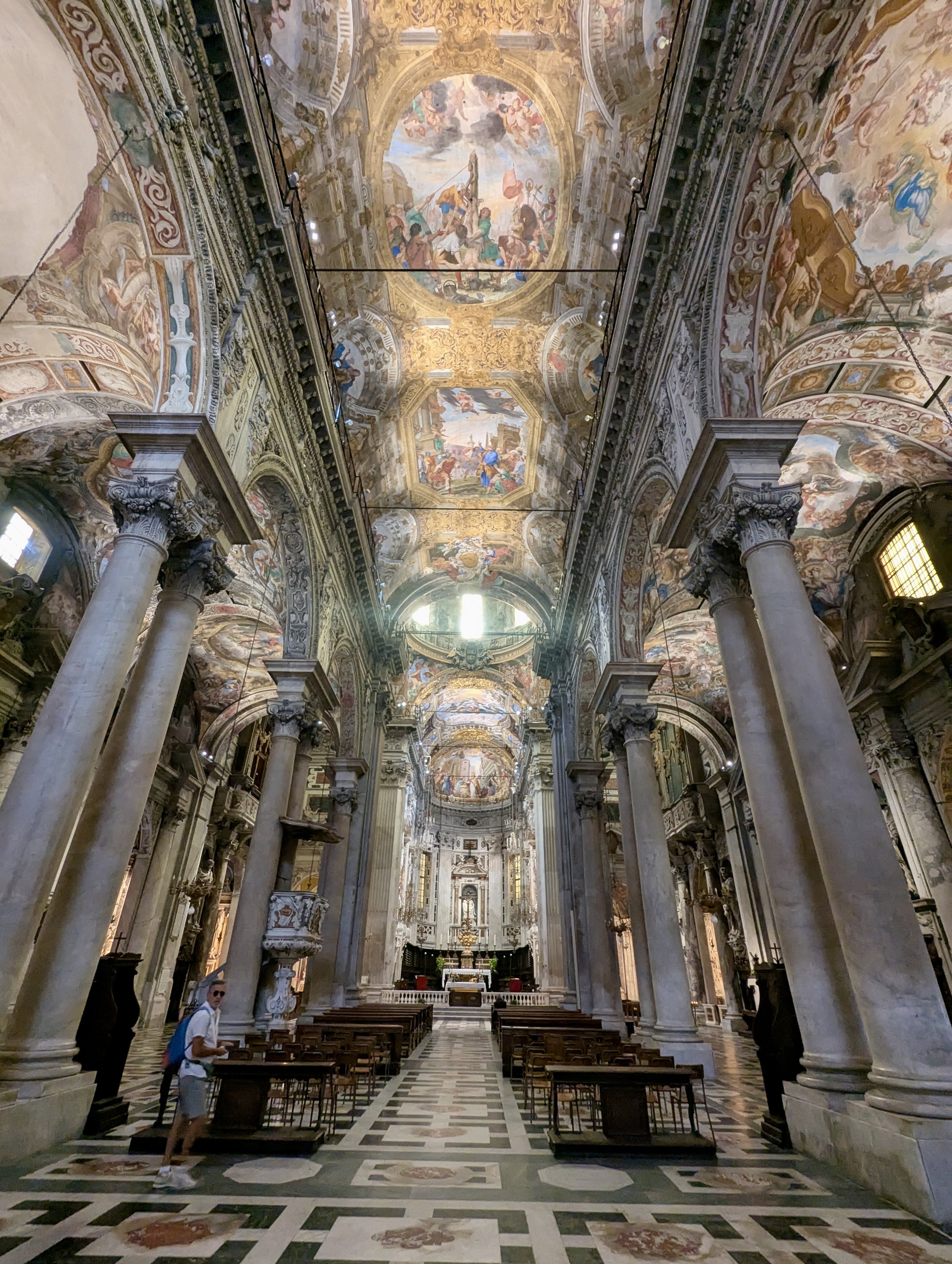
This is a beautiful, ornately decorated Baroque church with intricate carvings, paintings, sculptures, and altars. It’s not all that big, and you might think that the elaborate interior might make it feel a little cramped but it had the opposite effect. The current church is the most recent iteration of churches that have existed on this spot since the fourth century. Absolutely worth a visit.
Porto Antico (Old Port)
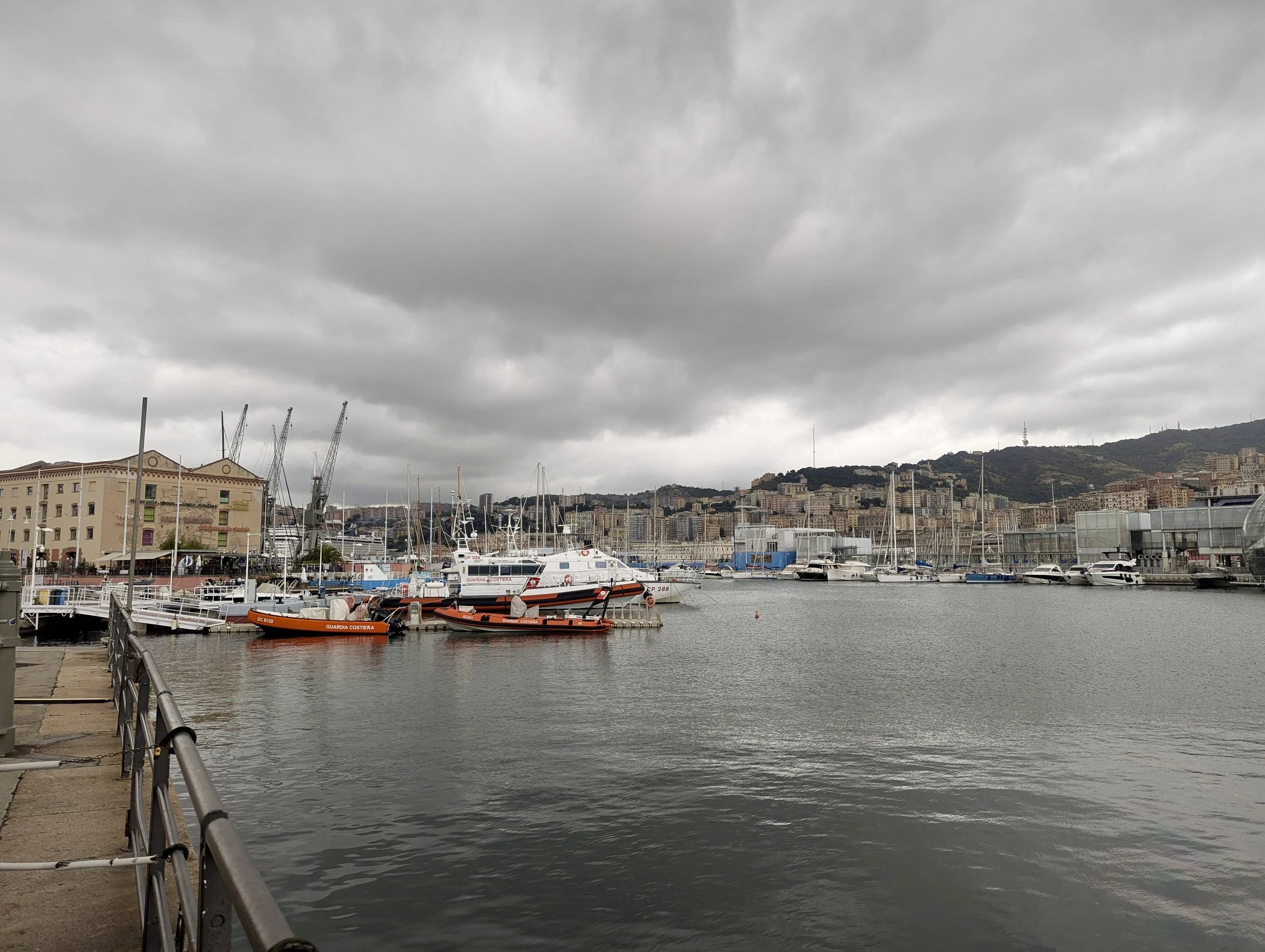
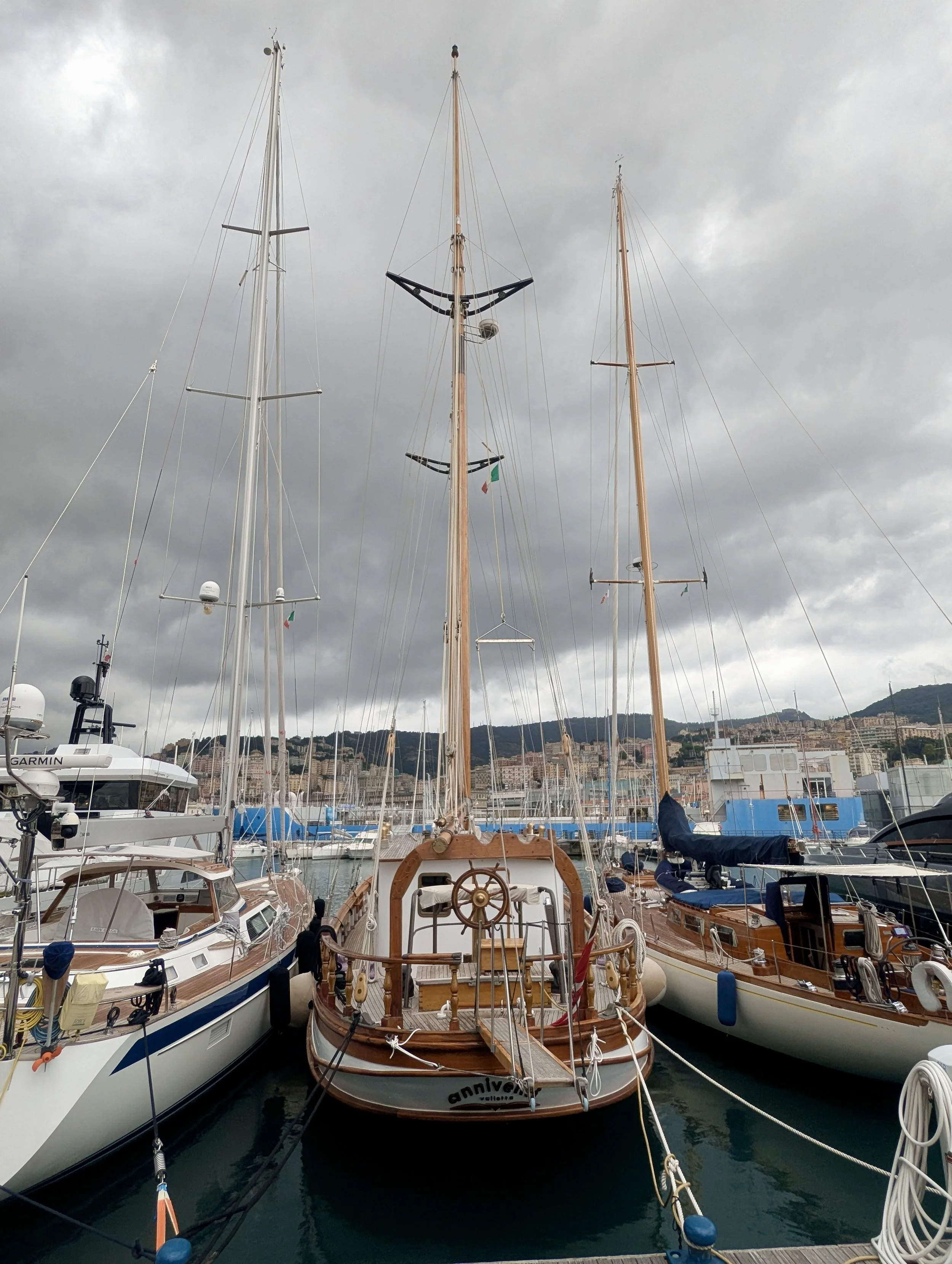
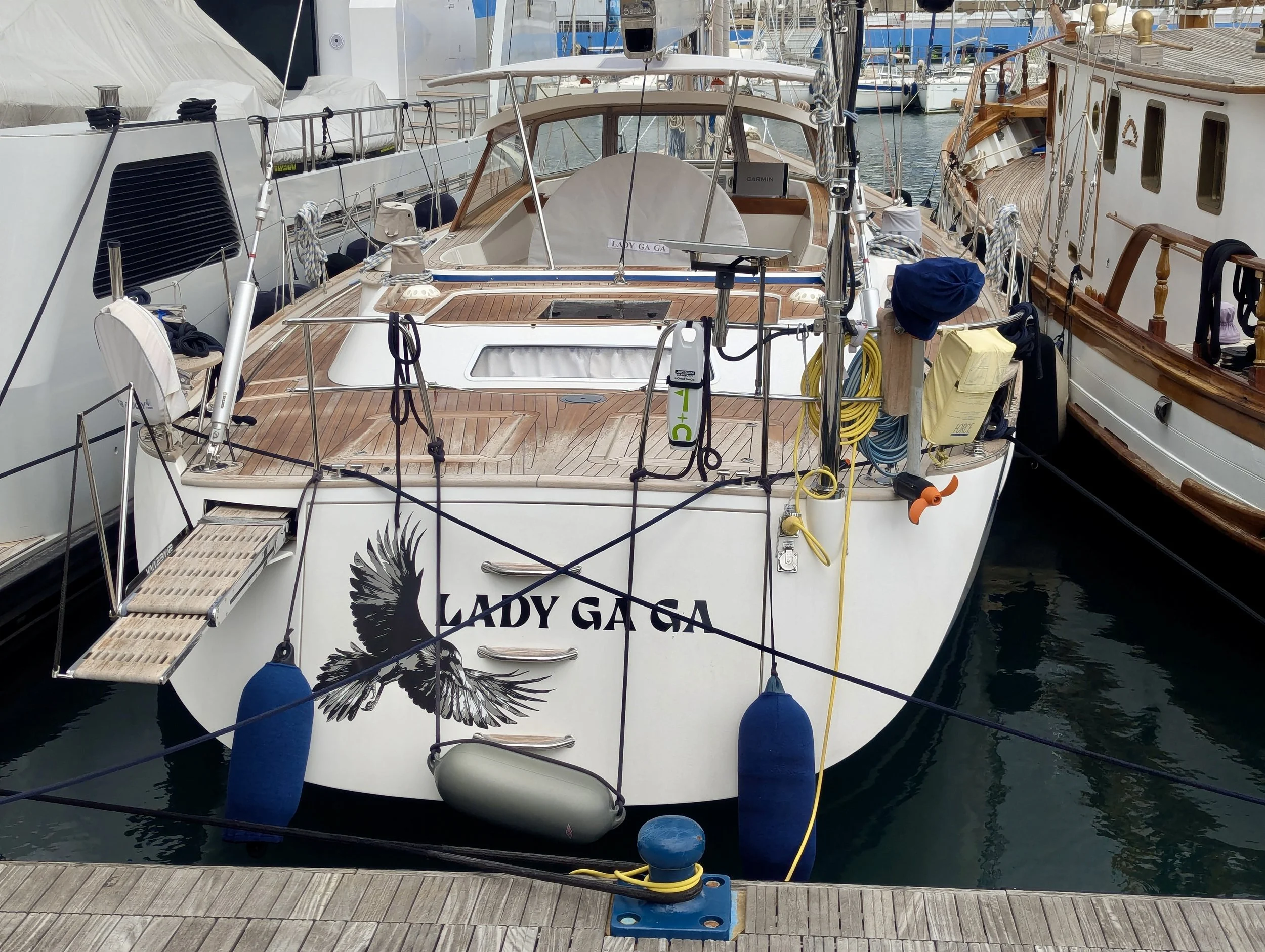
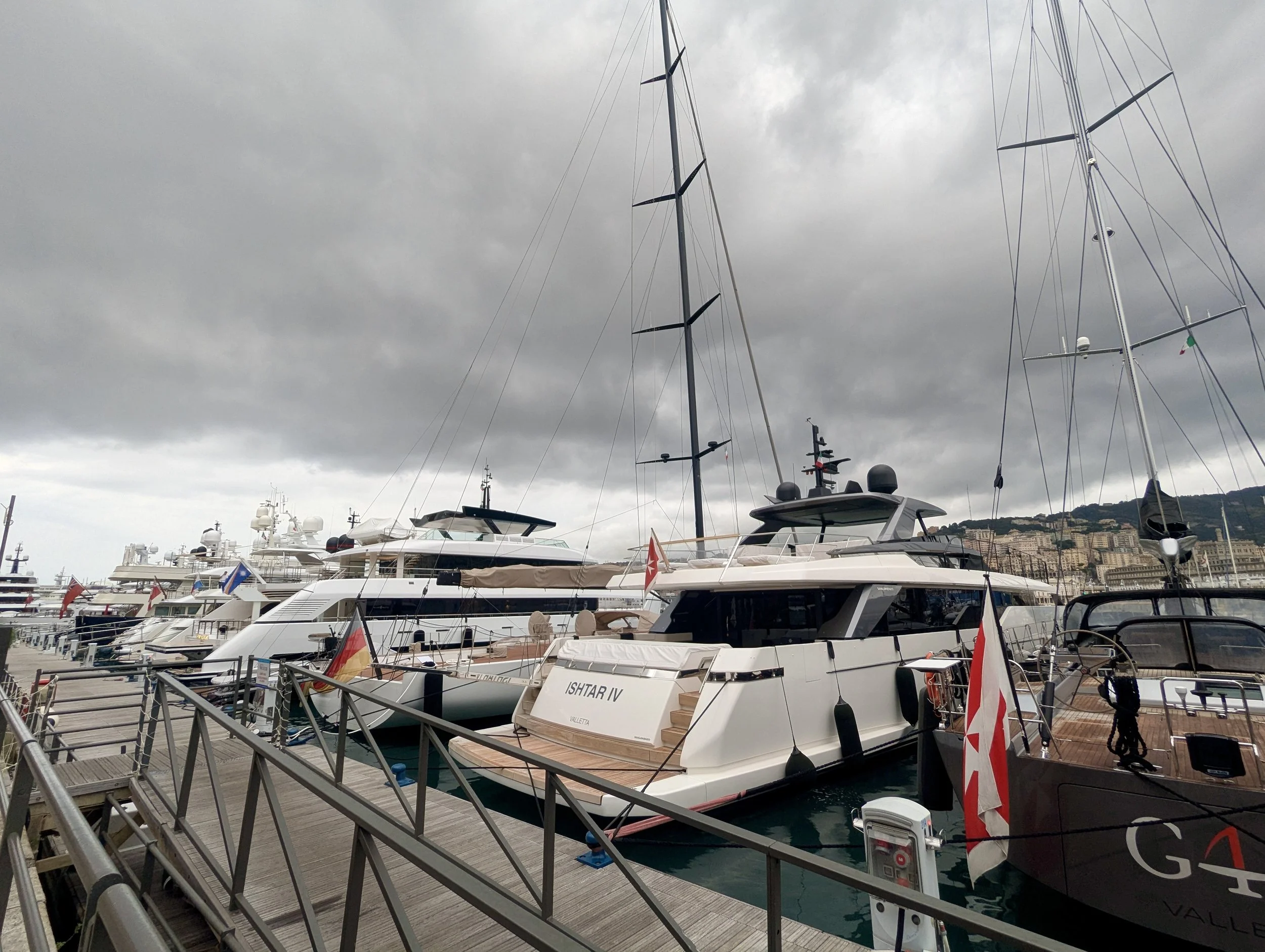
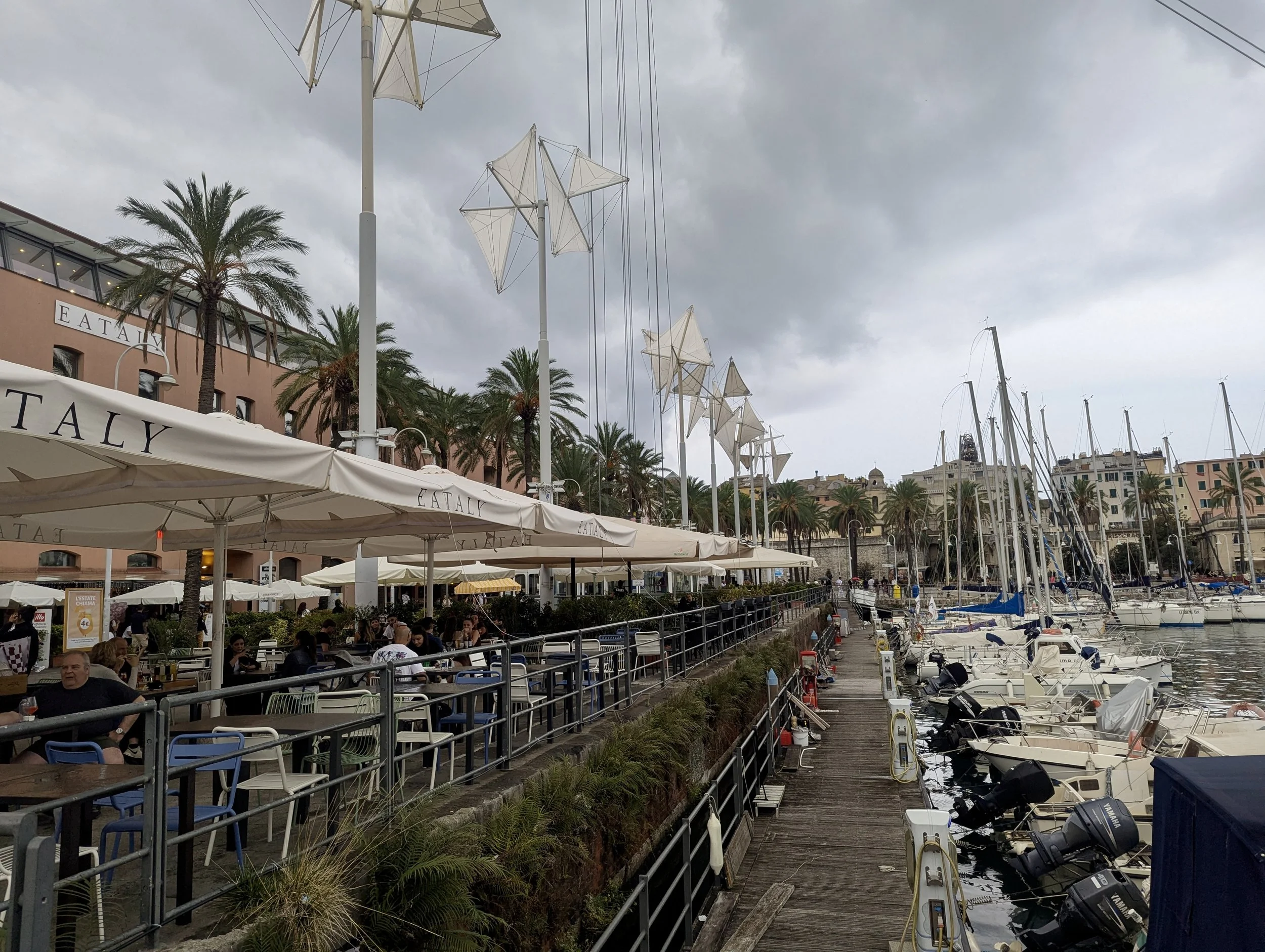
The port is directly outside of the Centro Storico, so it’s easy to reach on foot. The boats range from sailboats to mega-yachts, and Genova’s harbor-side aquarium, reputed to be the best in Europe, as well as a biosphere. Worth a stroll, but if you’re not going to the aquarium or if you’re not a huge boat fan, a cursory glance will suffice. It’s pretty hard to look at the mega-yachts and not think that some people have waaaaaaaay too much money.
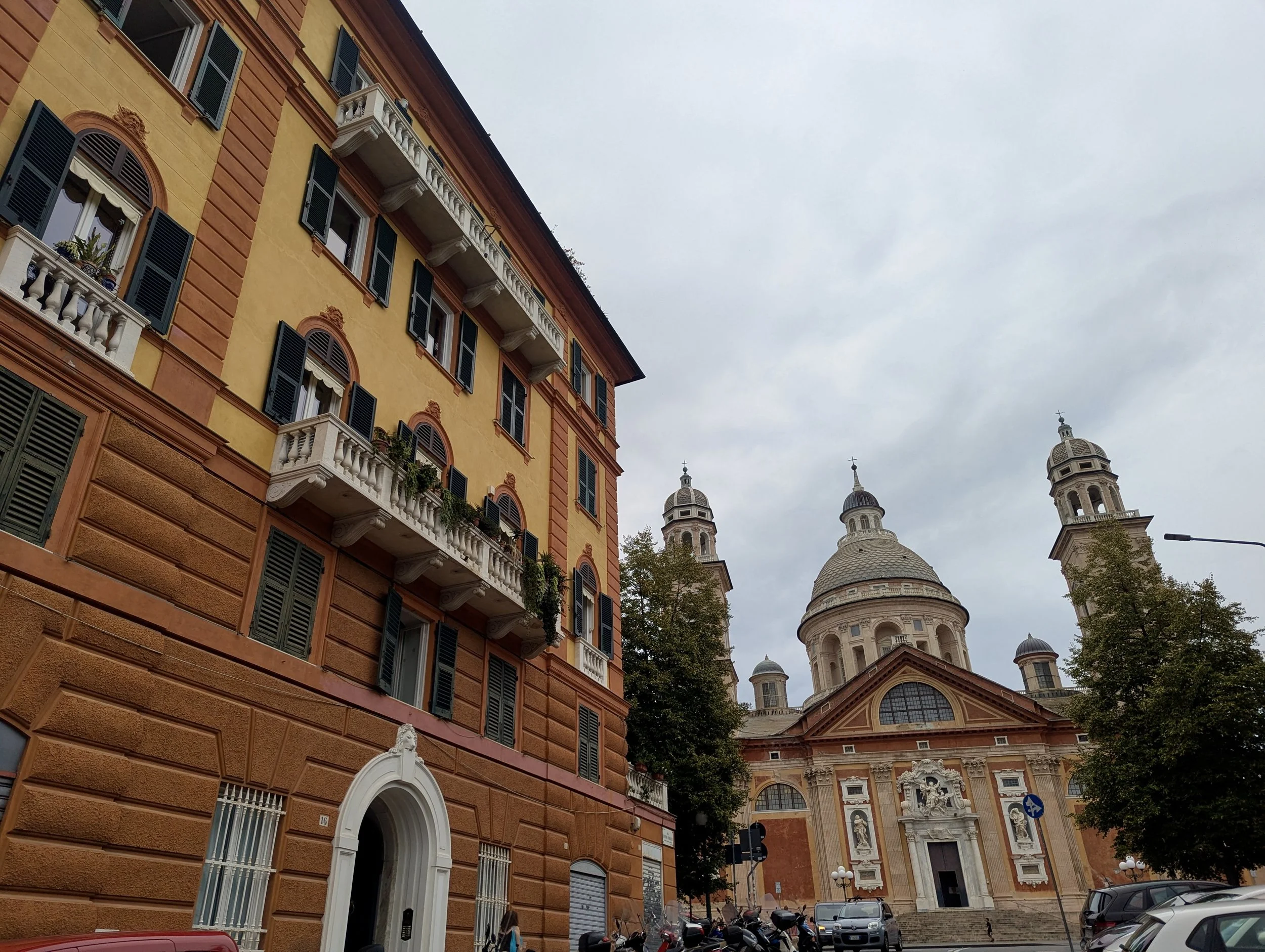
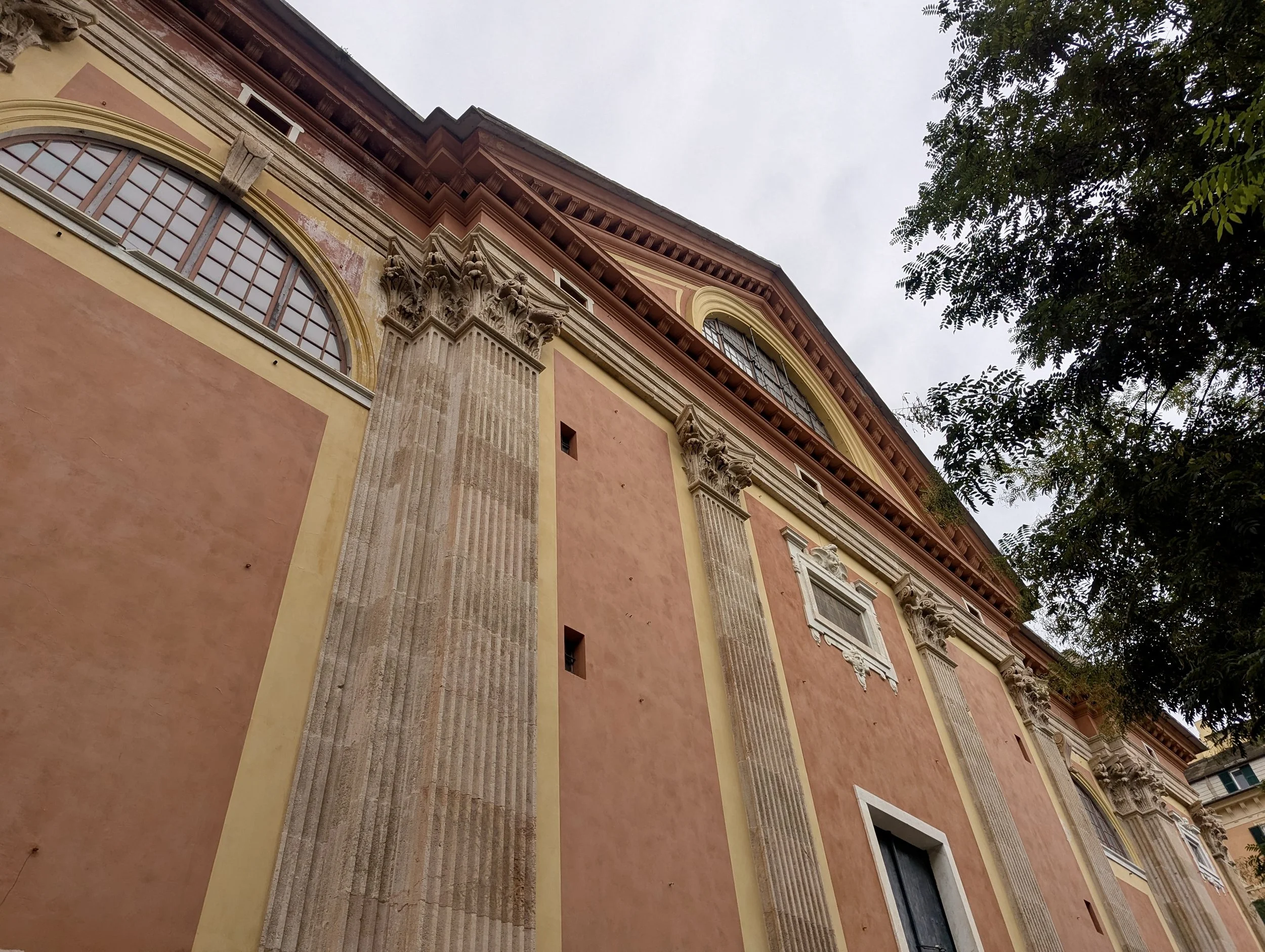
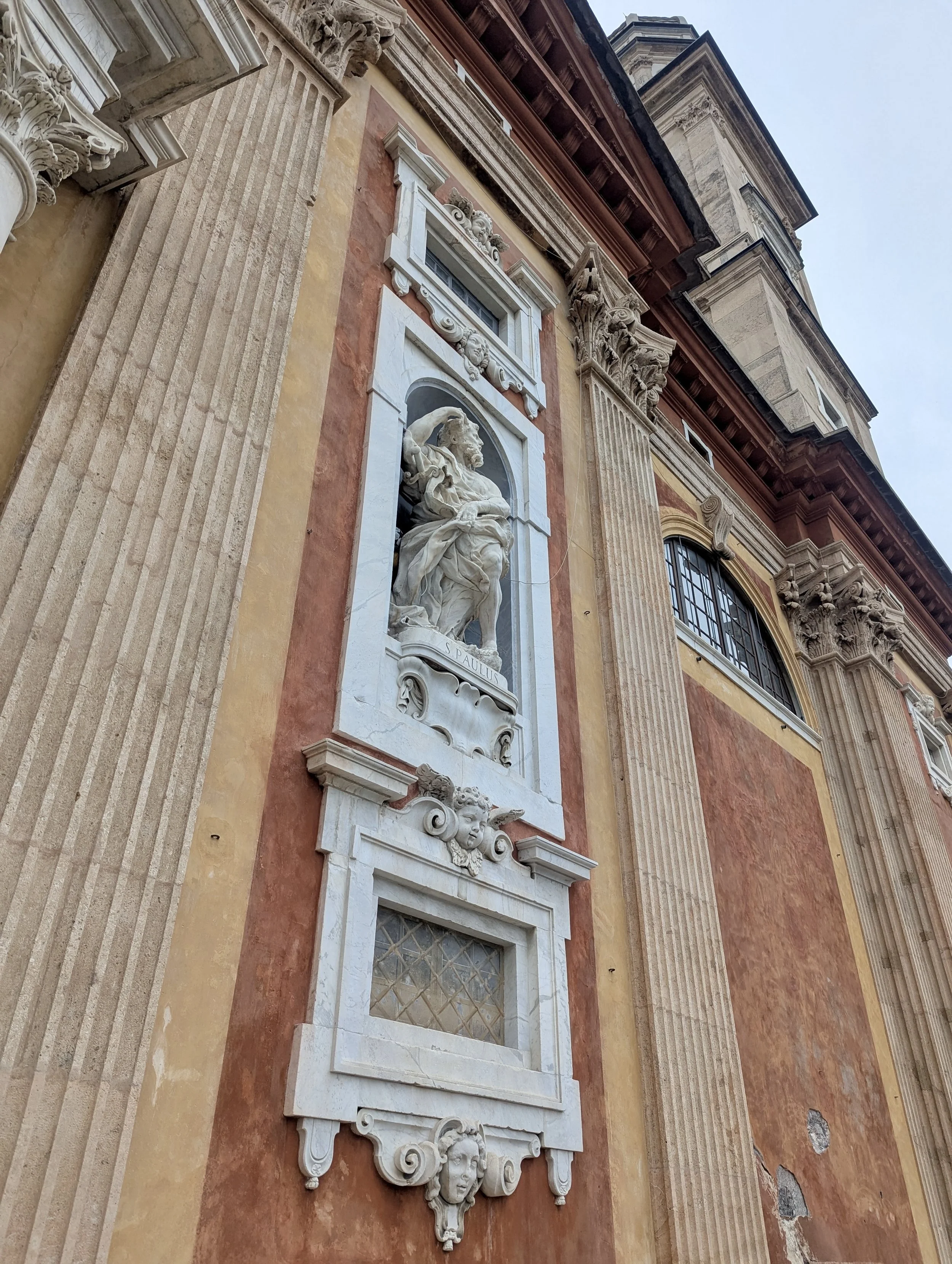
Santa Maria Assunta in Carignano Piazza di Carignano, 8 Carignano
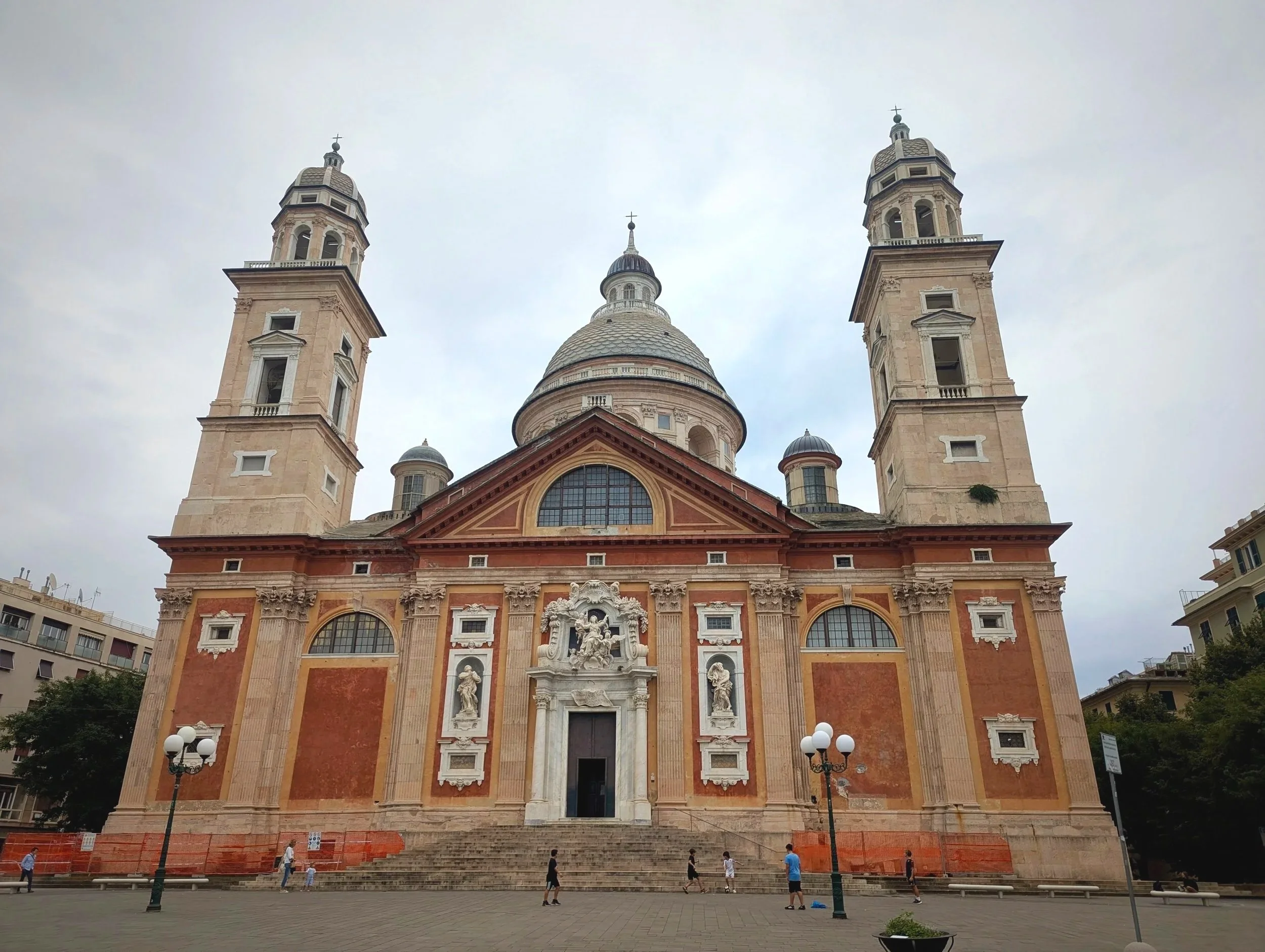
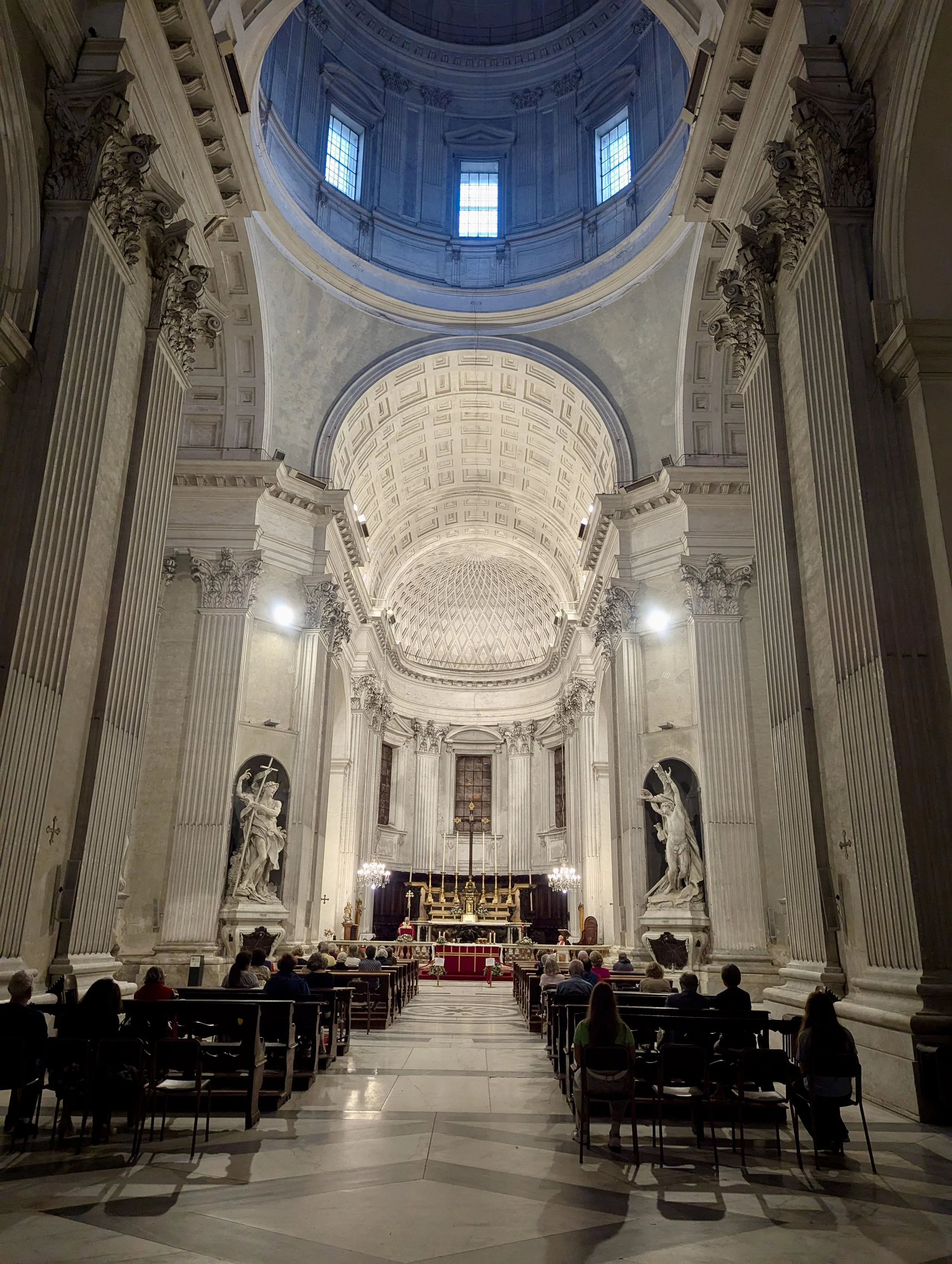
This church is a little off the beaten path, not to mention a bit of a hike to reach, but wow, is it worth the trip. The clean, white interior feels minimalist after the lavish interiors of the other churches we’d visited, even austere, but it was refreshingly bright and airy. There was a service in session when we went, so I was only able to grab a quick photo from just inside the door before scurrying out, and we weren’t able to come back later since it wasn’t that close to where we were staying.
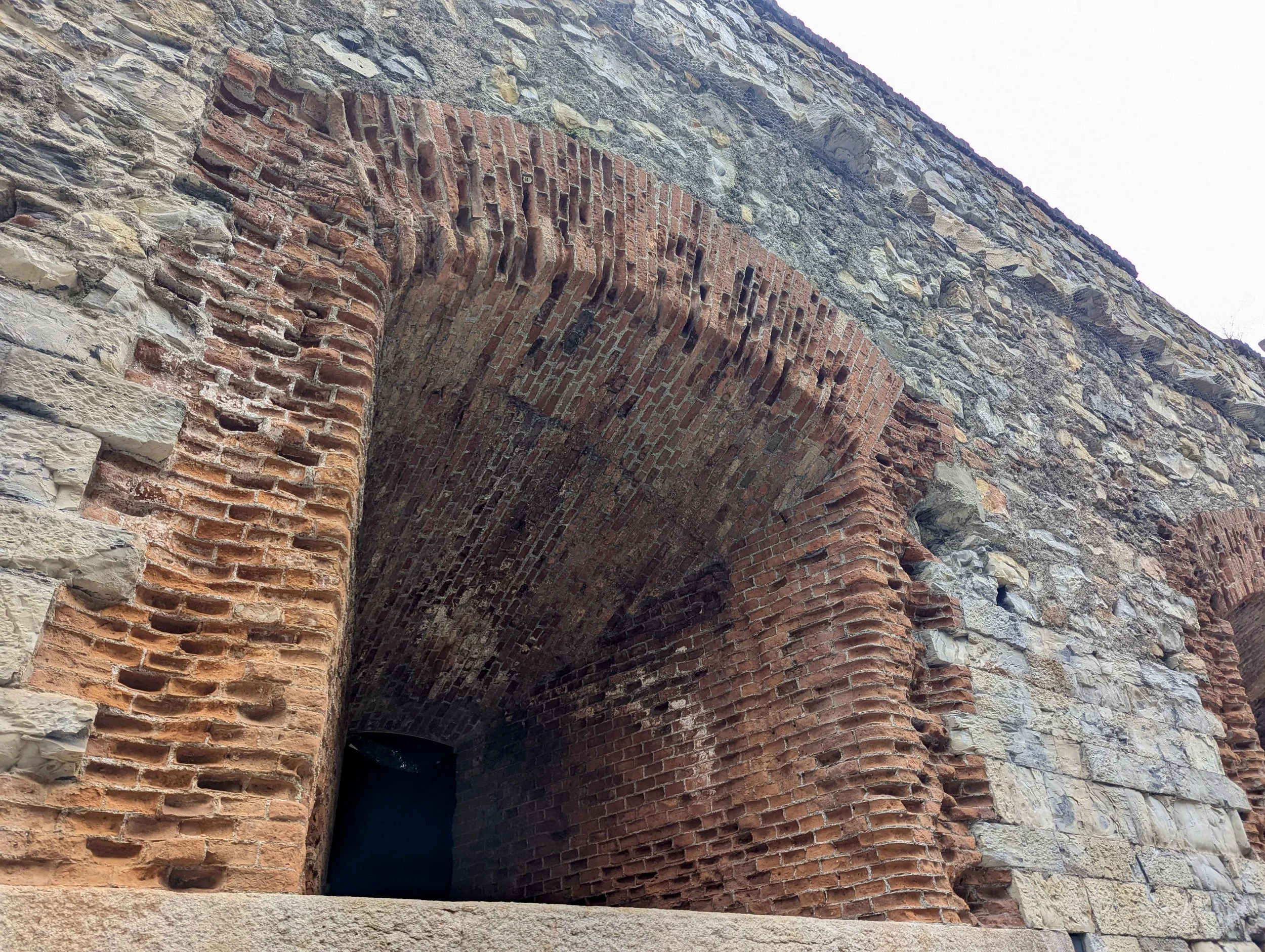
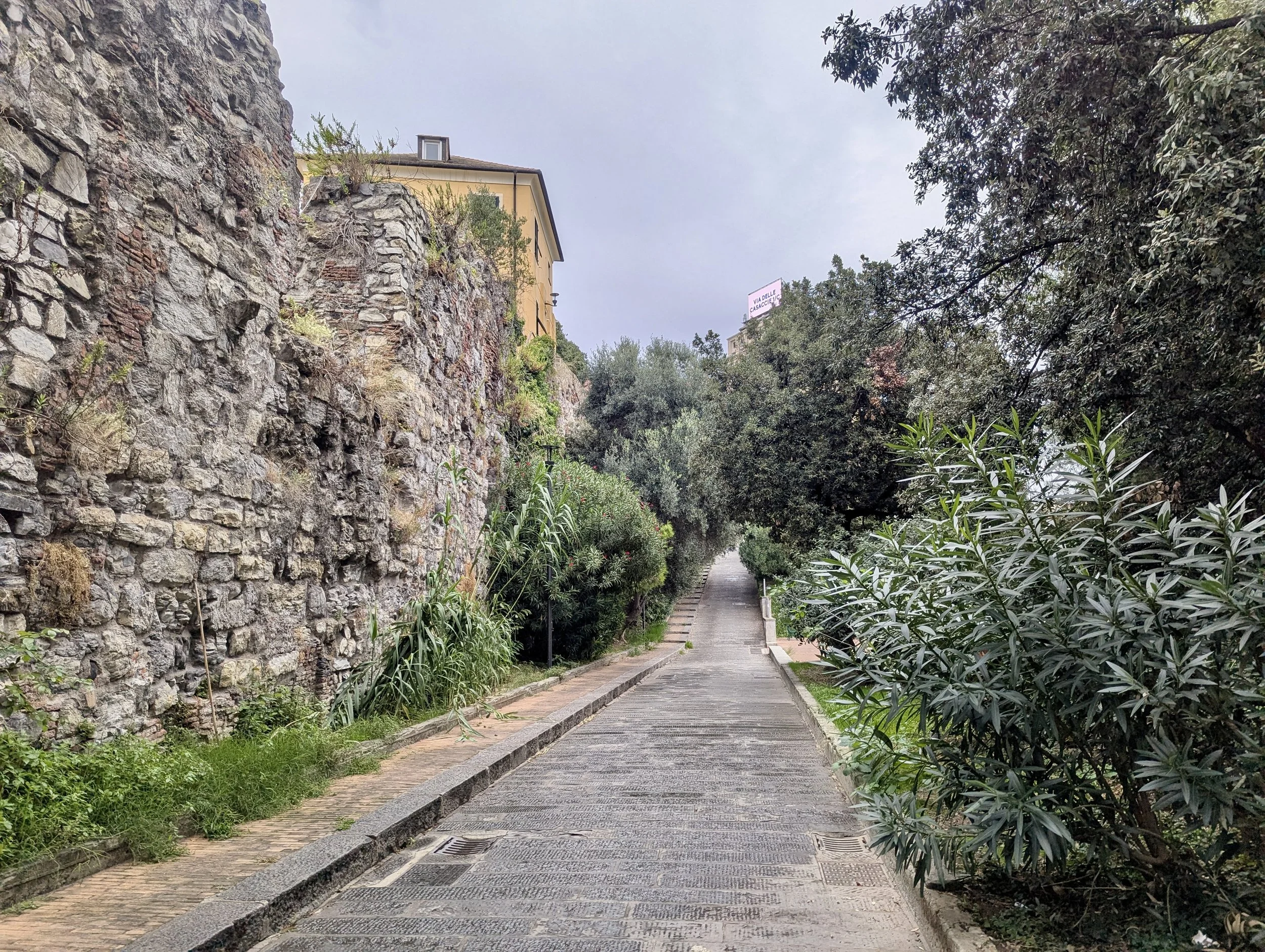
The surrounding Carignano is a nice neighborhood to explore, aside from the church there’s a terrace looking out to the sea built atop the old city walls, and a distinctly airy, open feeling if you’re wanting a break from the narrow streets of the Centro Storico.
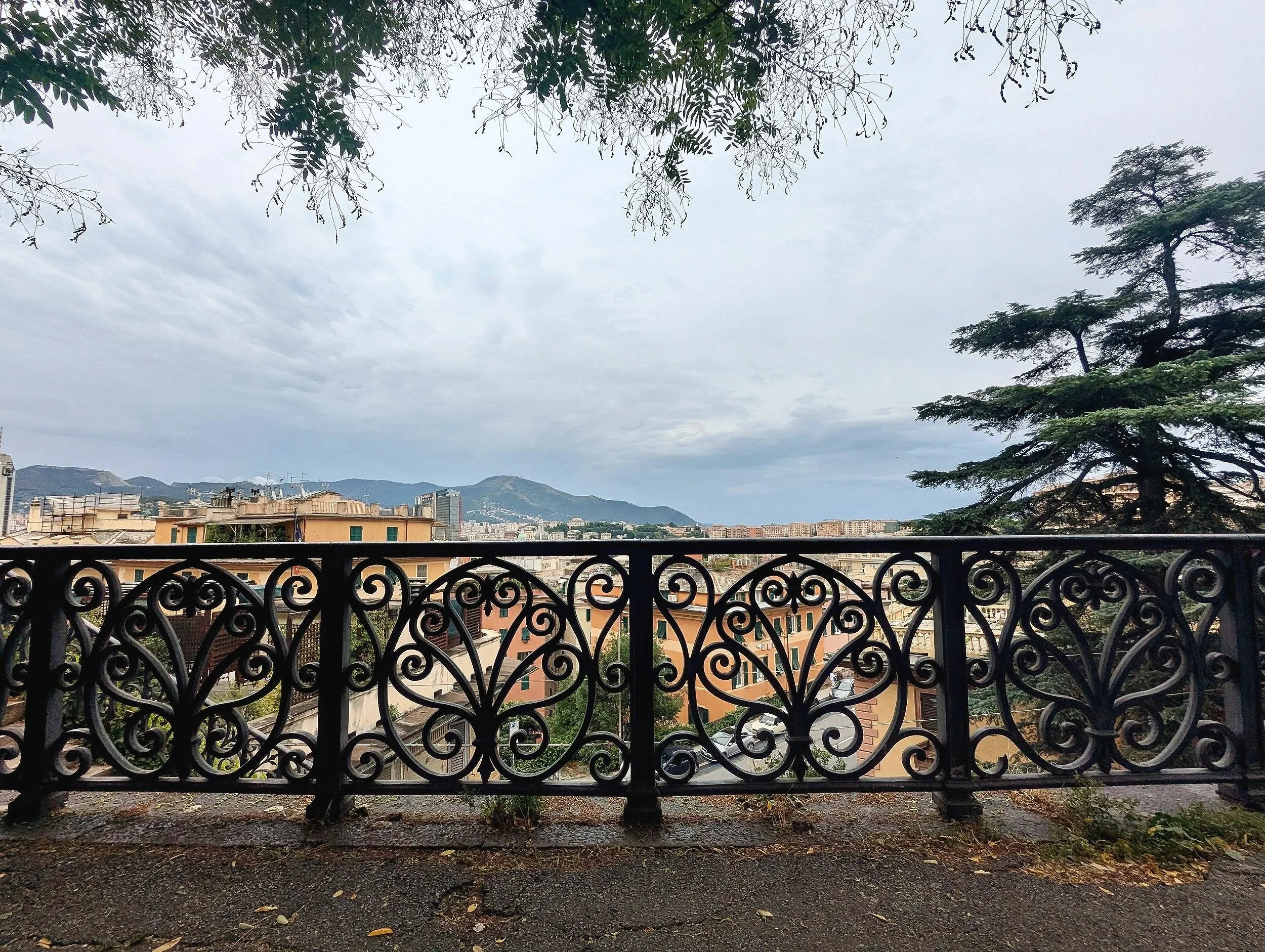
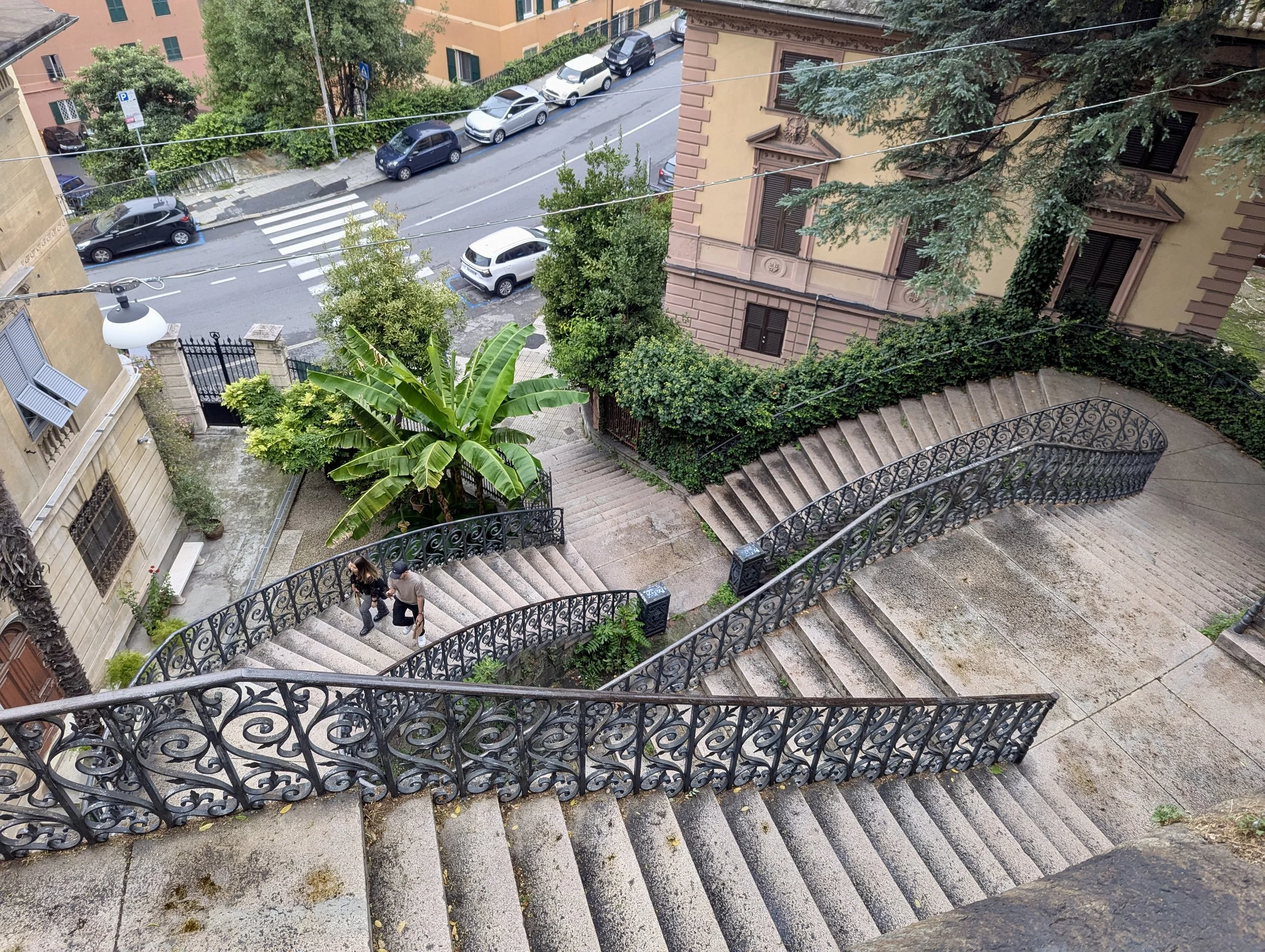
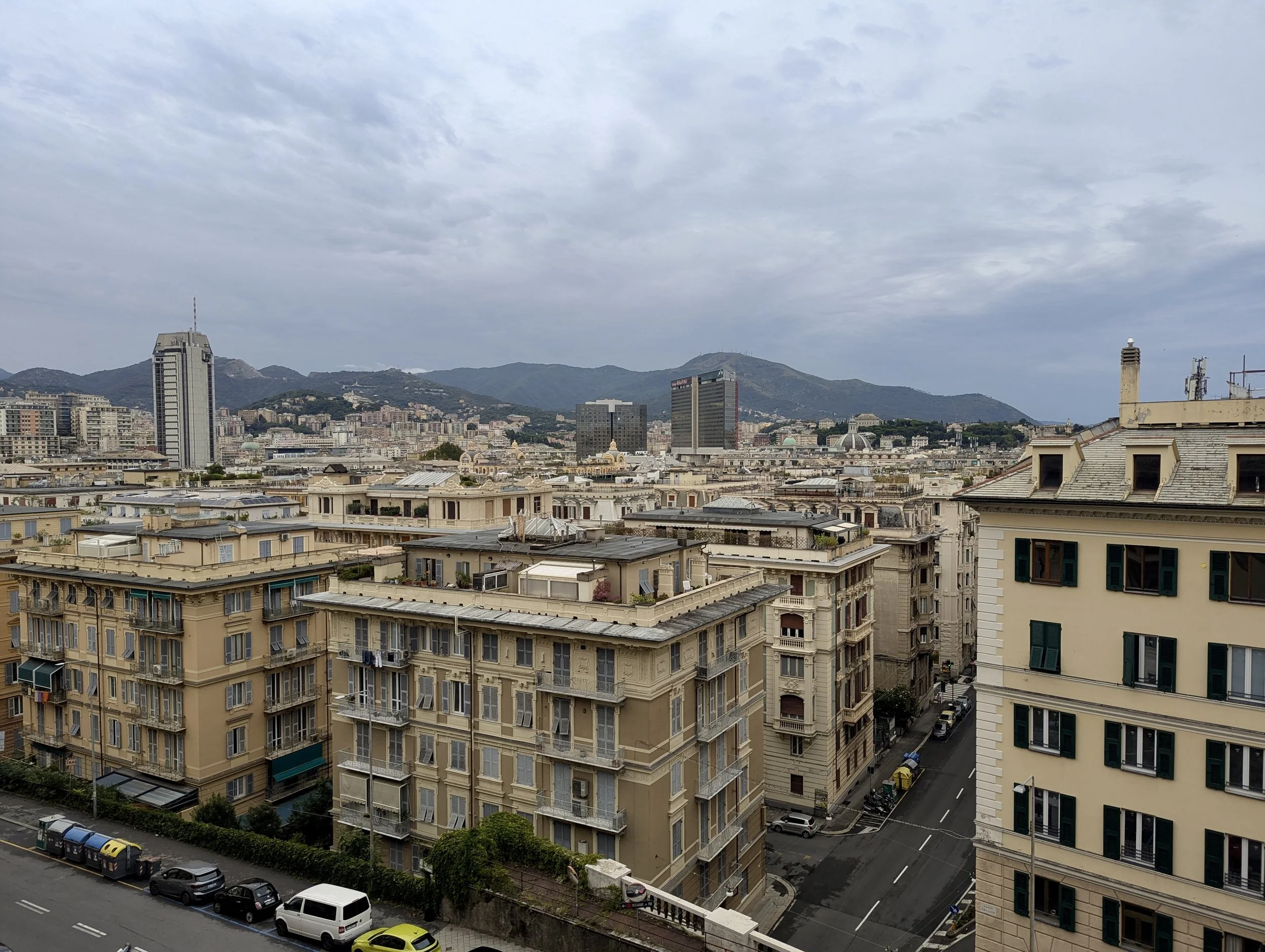
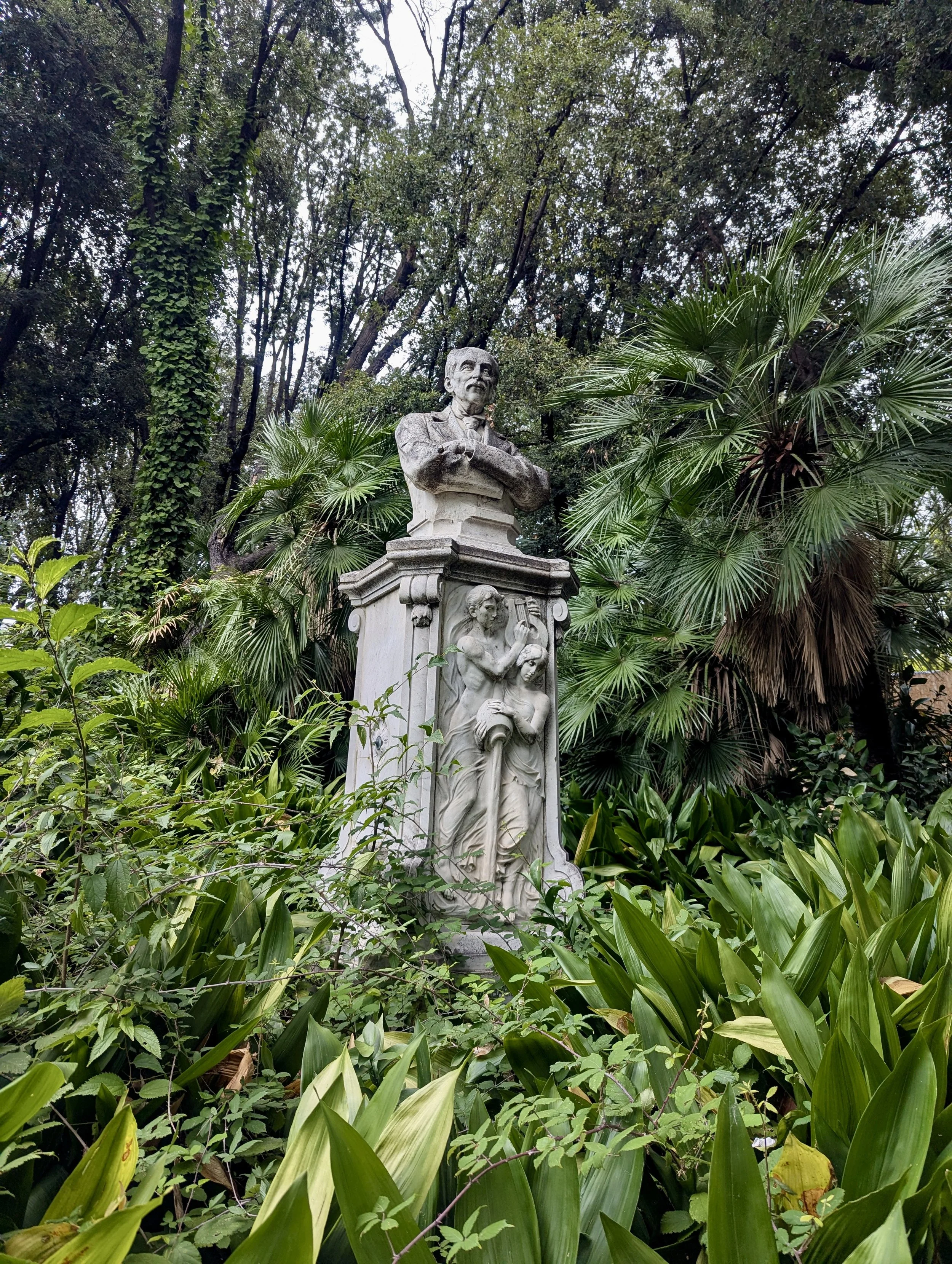
Villetta Di Negro (park) Piazzale Giuseppe Mazzini, 4, Maddalena
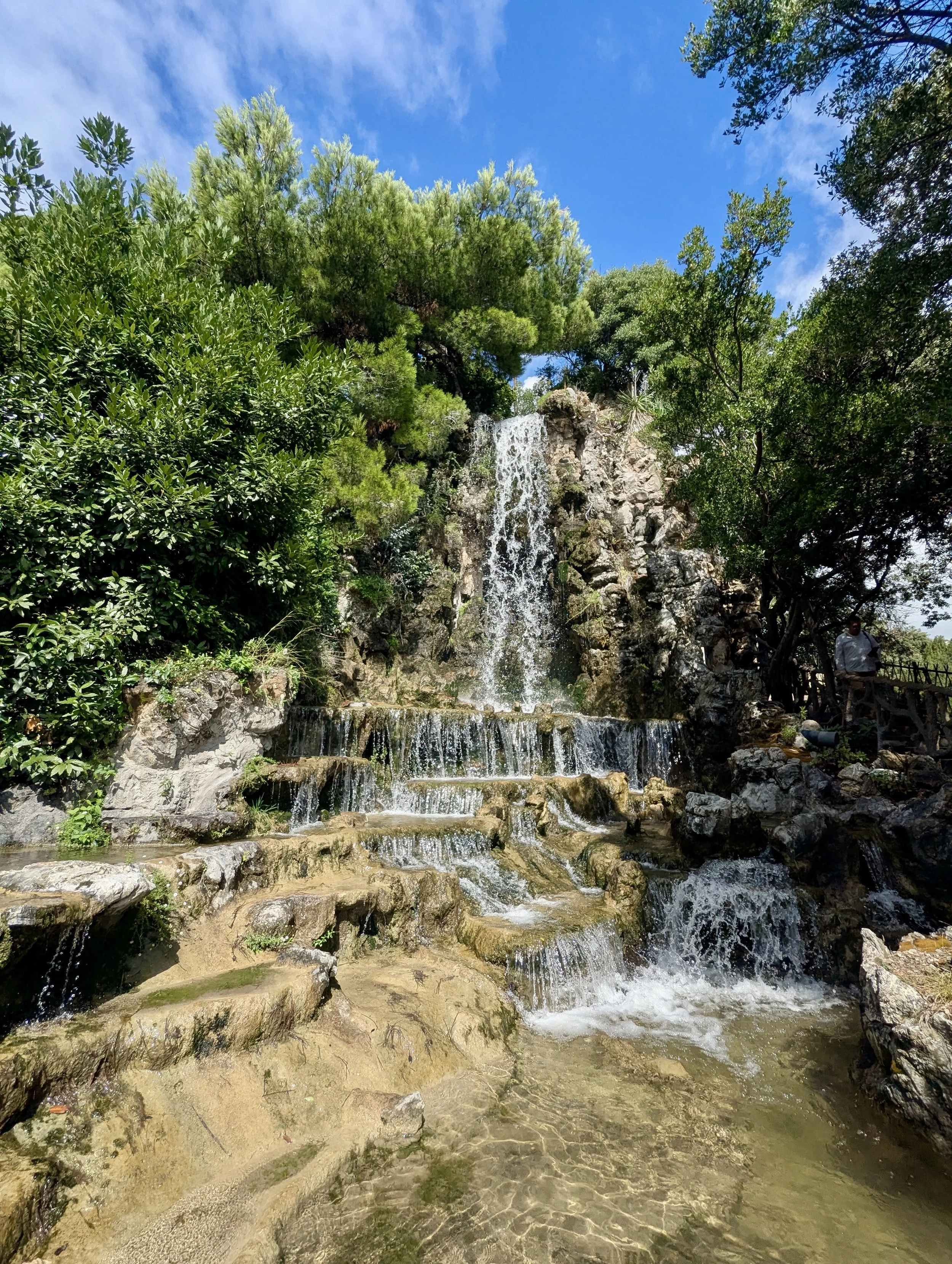
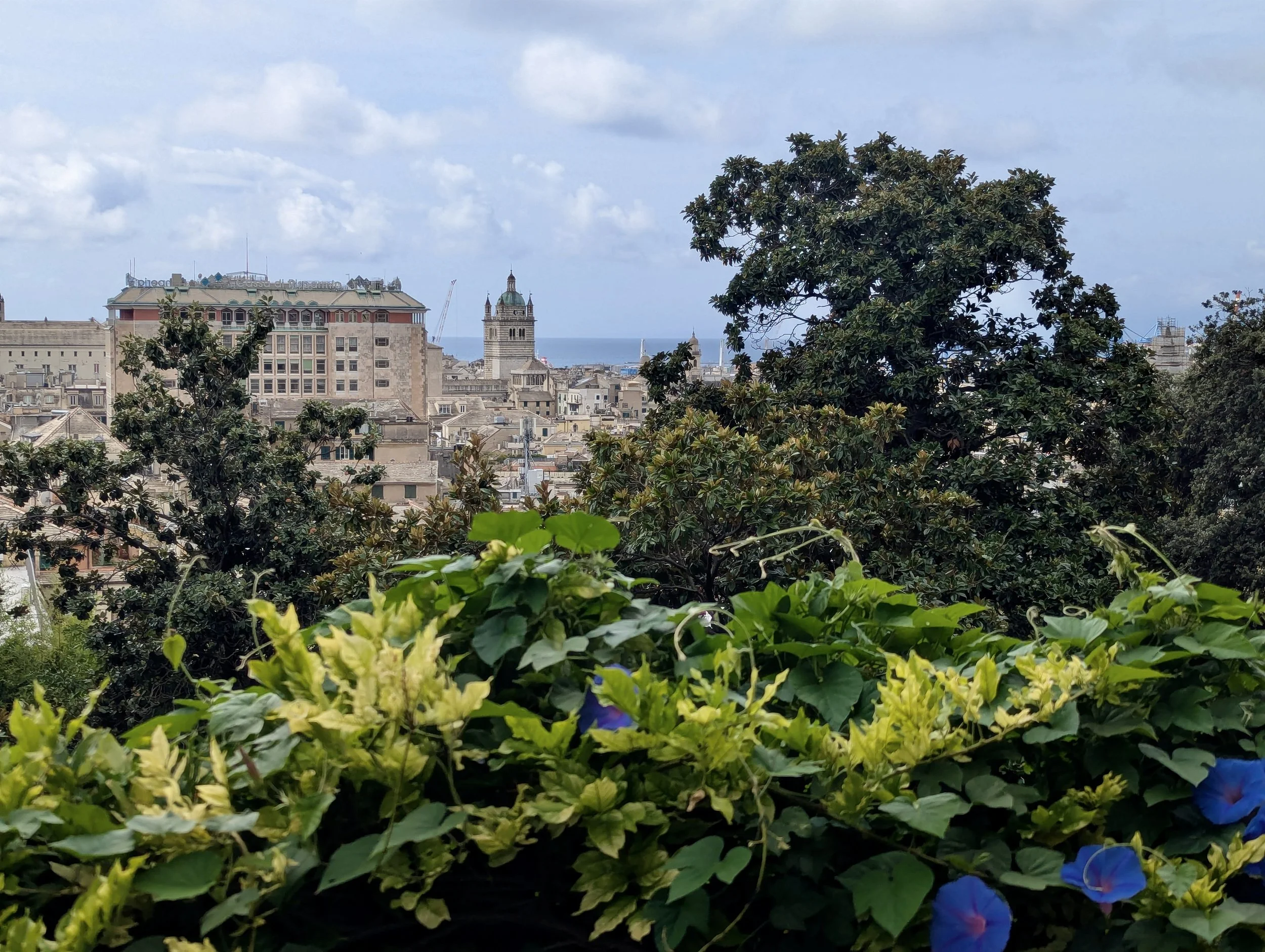
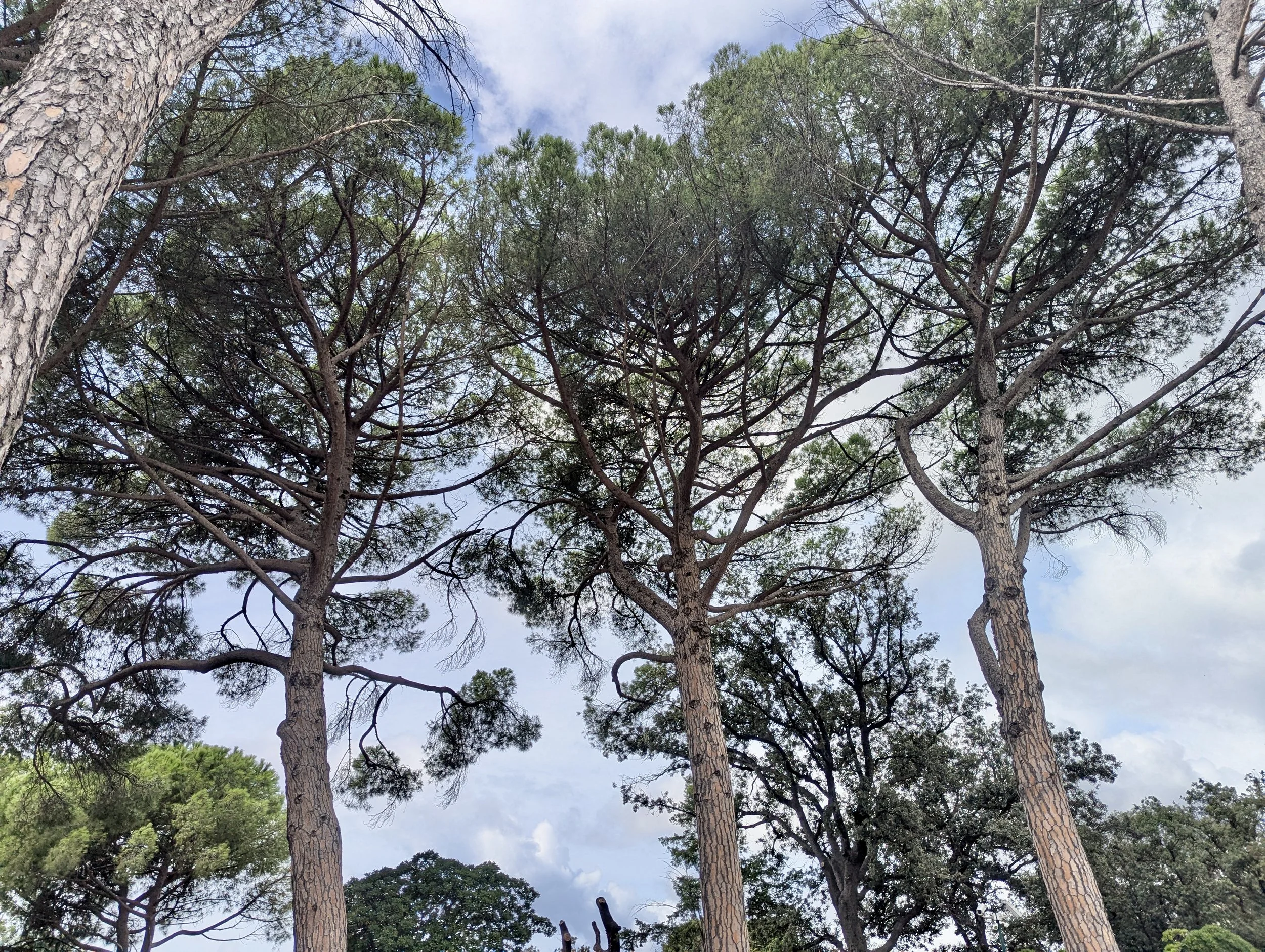
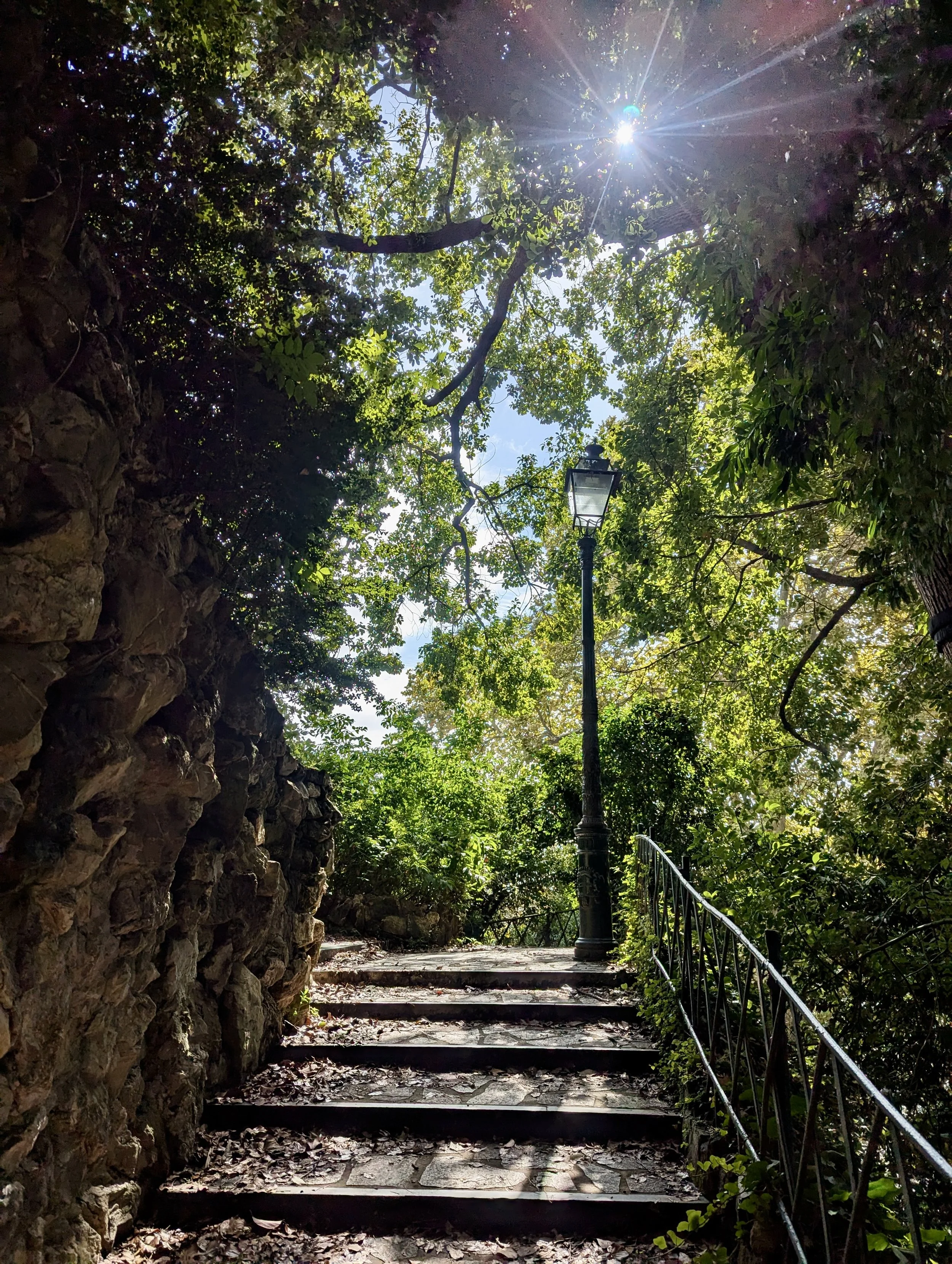
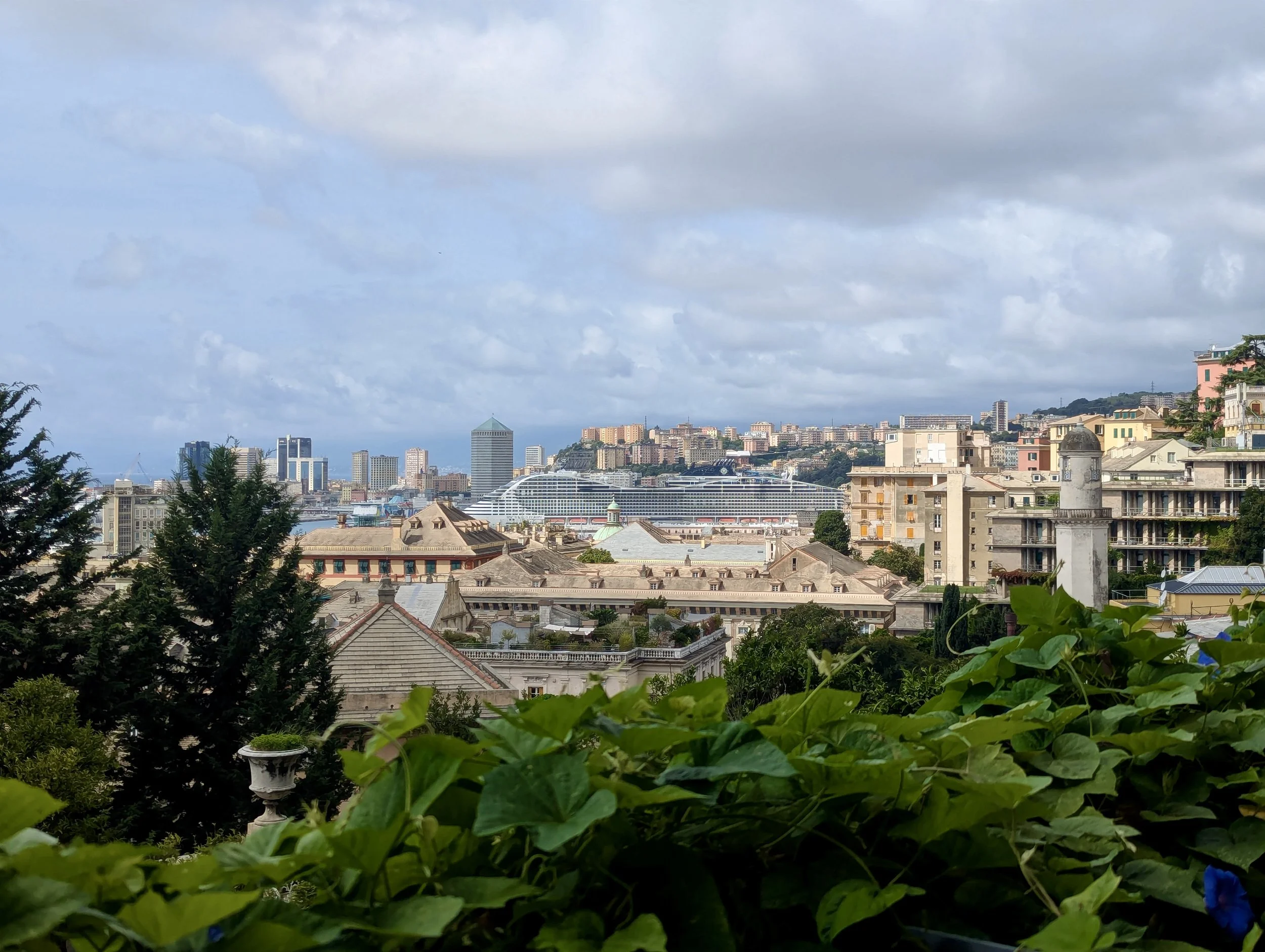
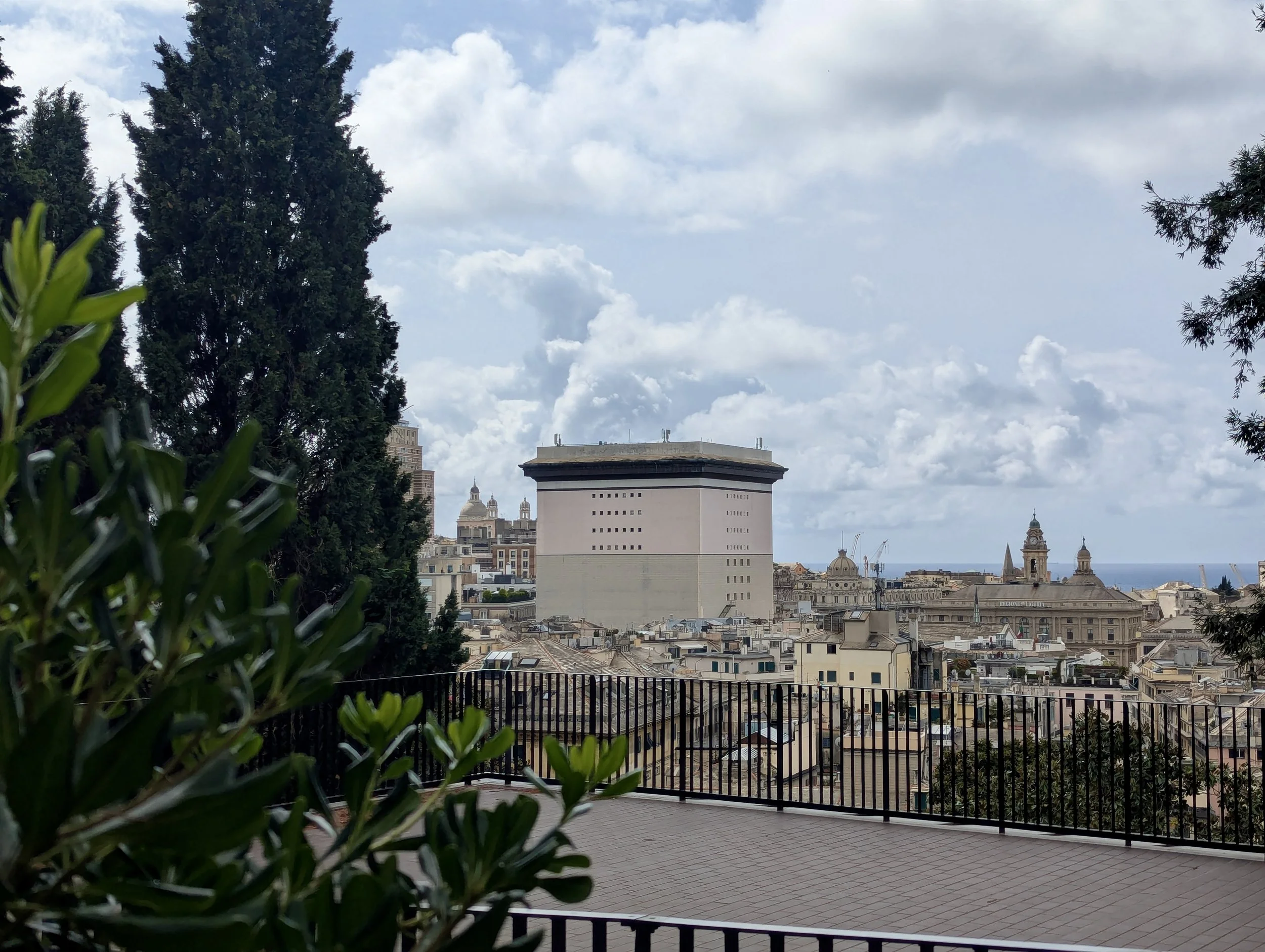
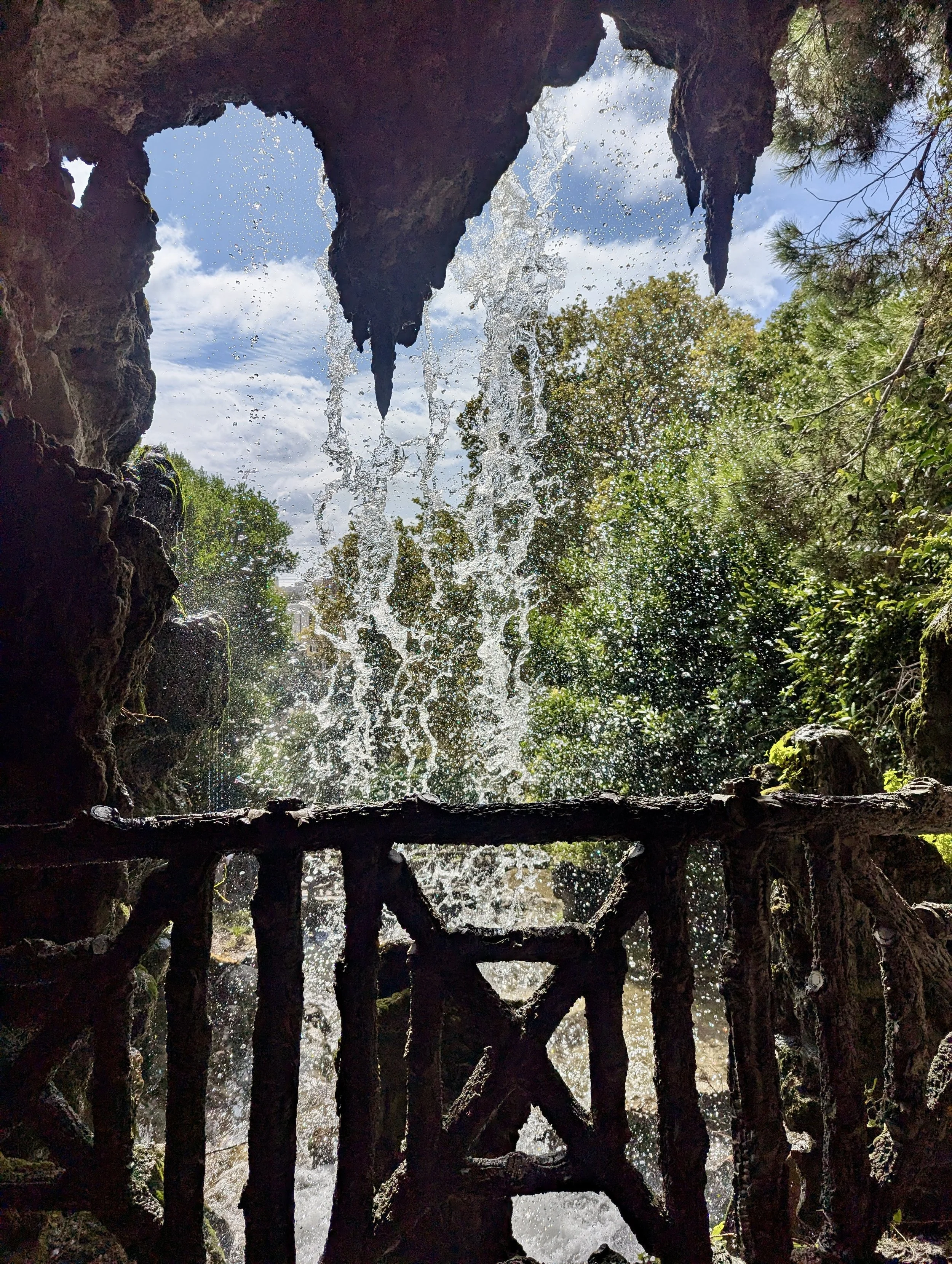
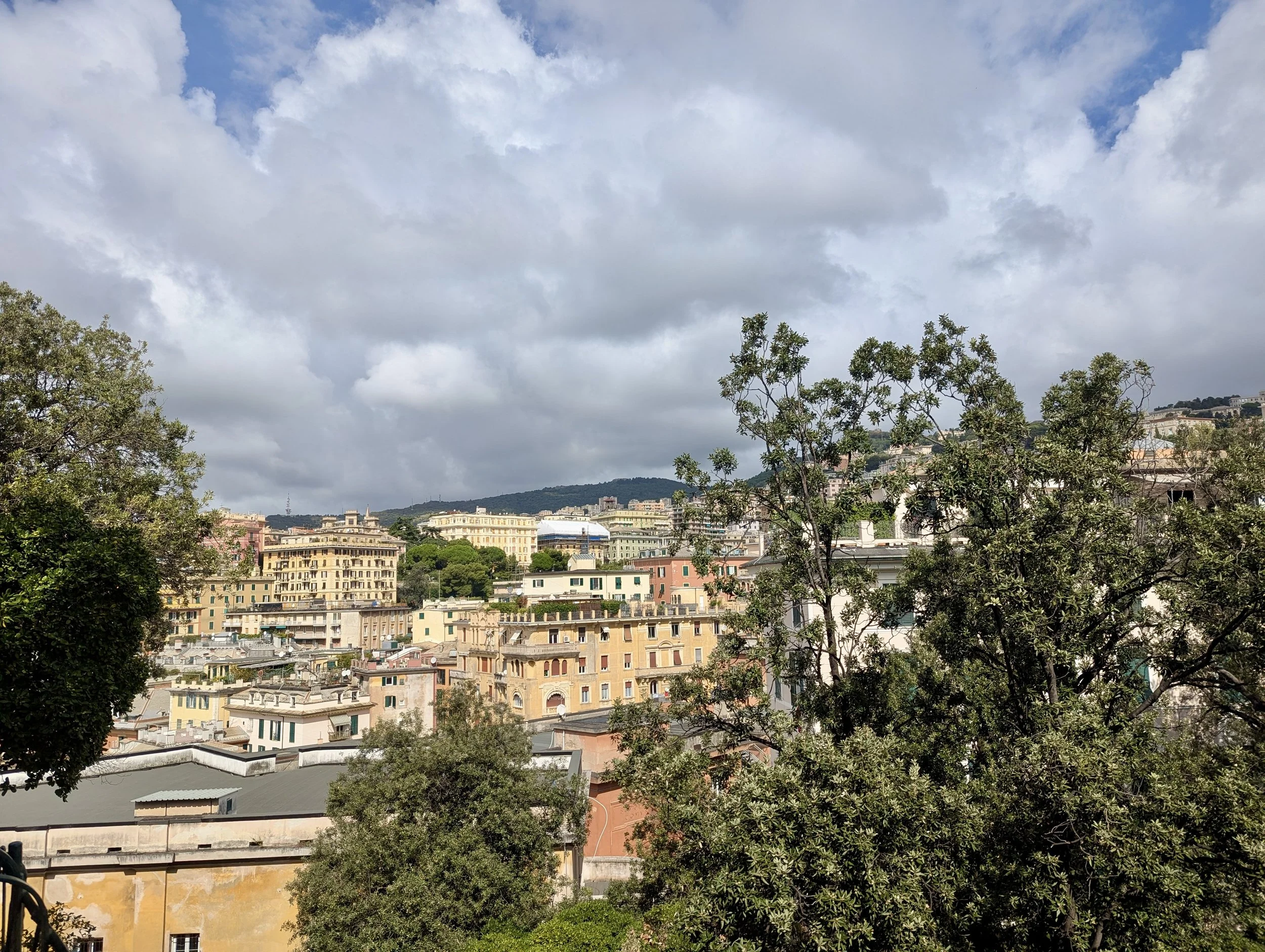
This park, named for Gian Carlo di Negro, was an ideal destination for a sunny Sunday morning, with waterfalls and and winding trails up to the viewpoint. Part Rivendell, part construction zone (unfortunately), we hiked to the top to enjoy the 200 degree view of the city and the sea before walking past the villa, which now houses an Asian art museum (we didn’t go in) and heading back into town.
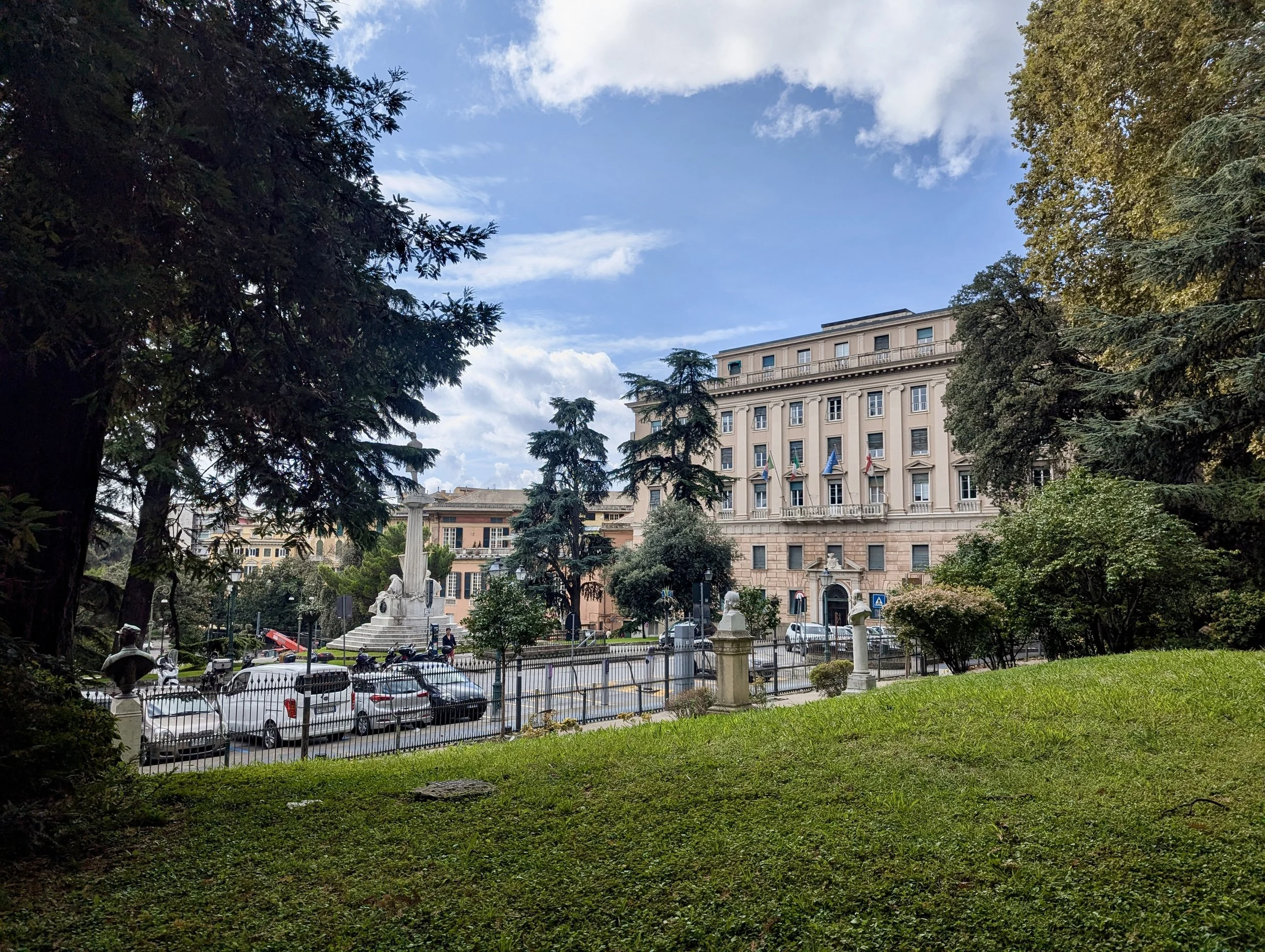
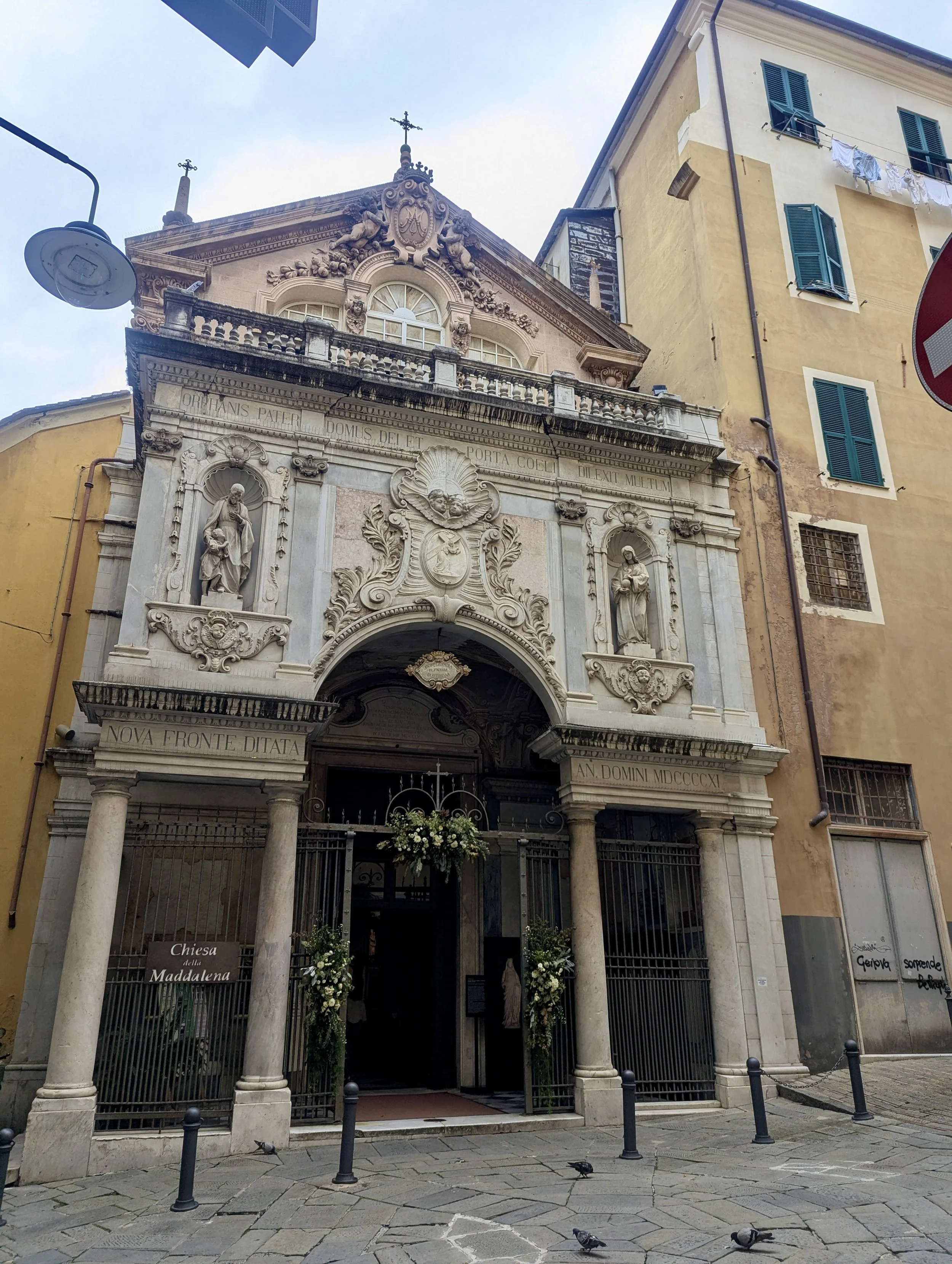
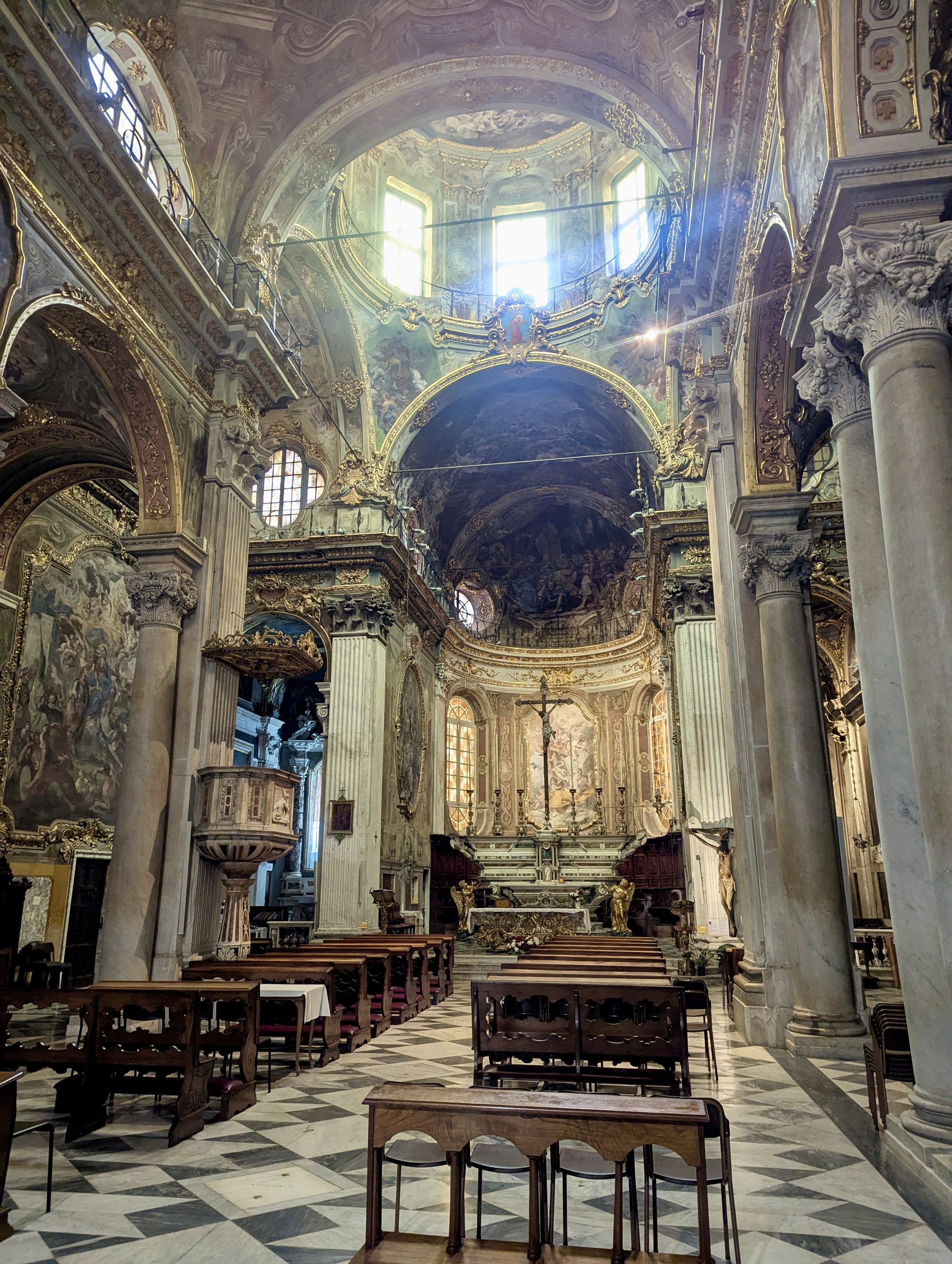
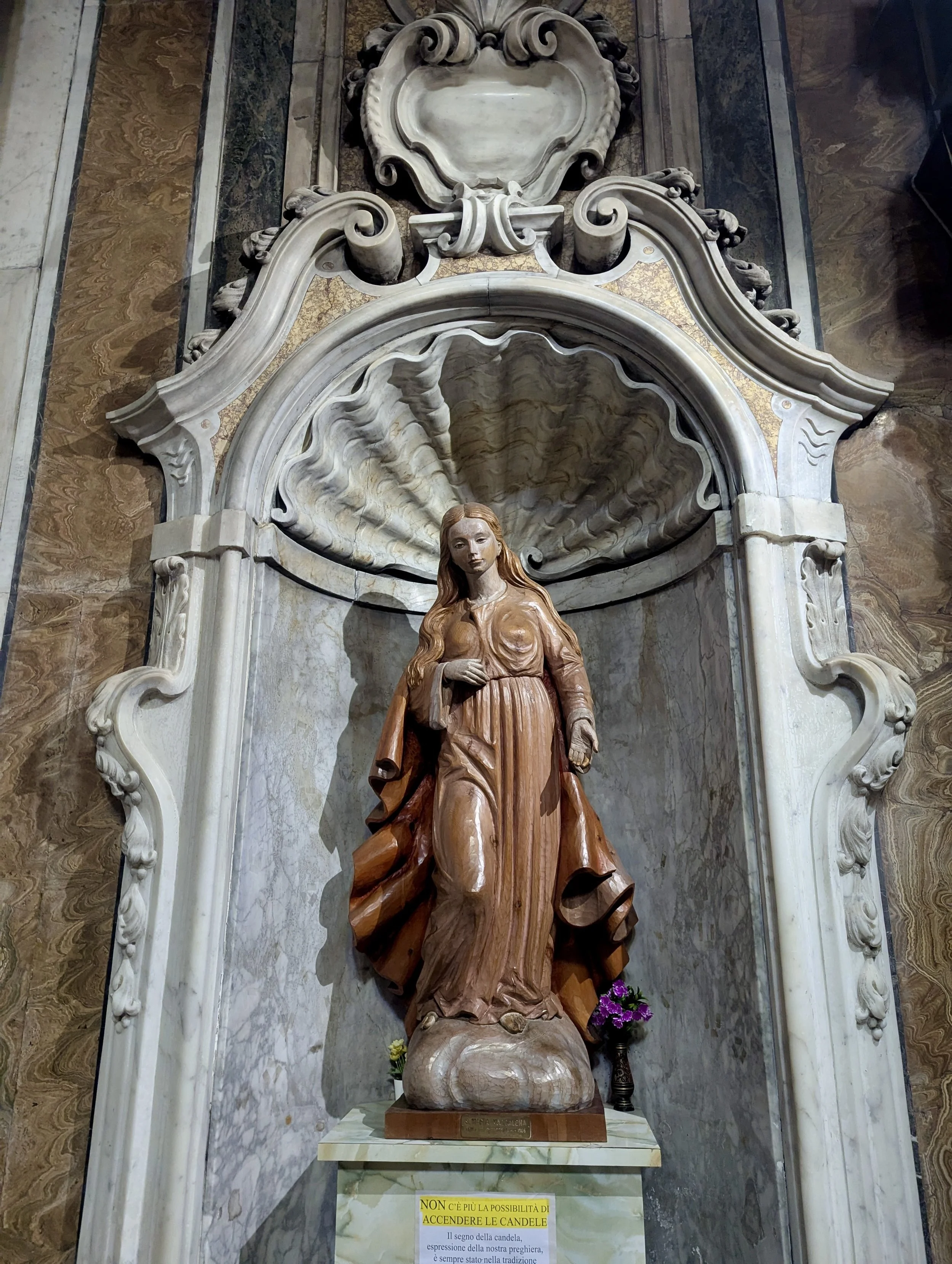
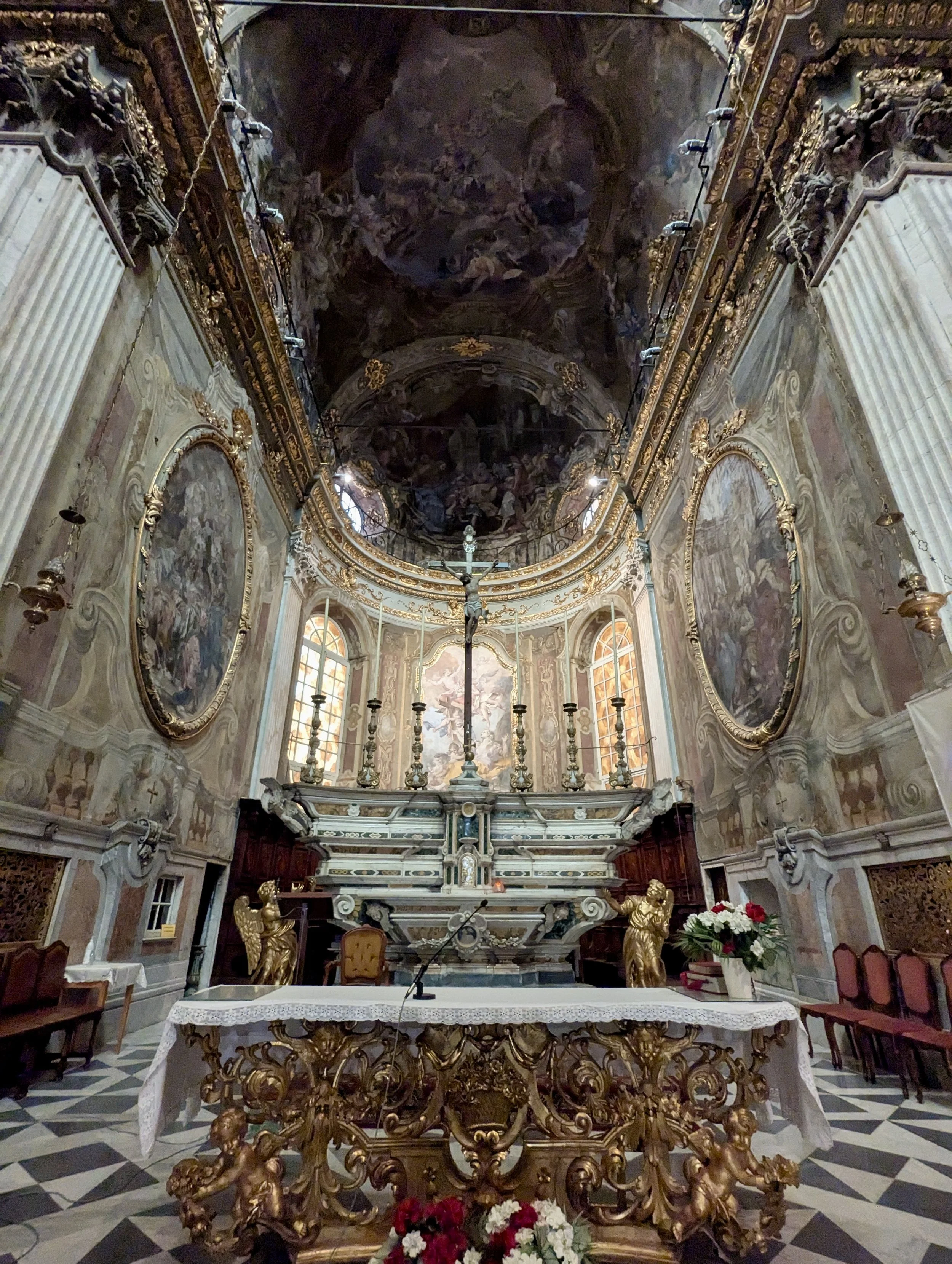
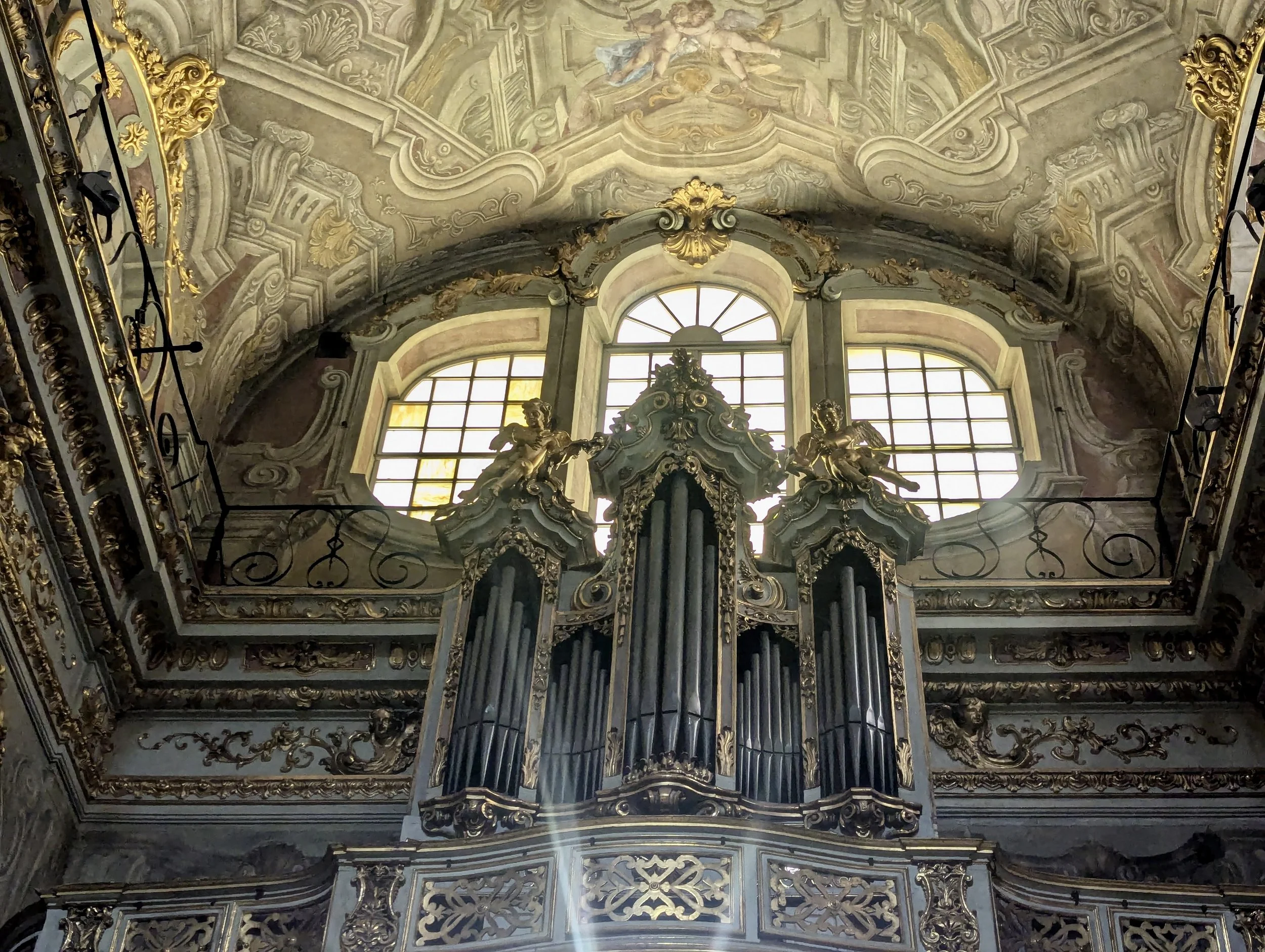
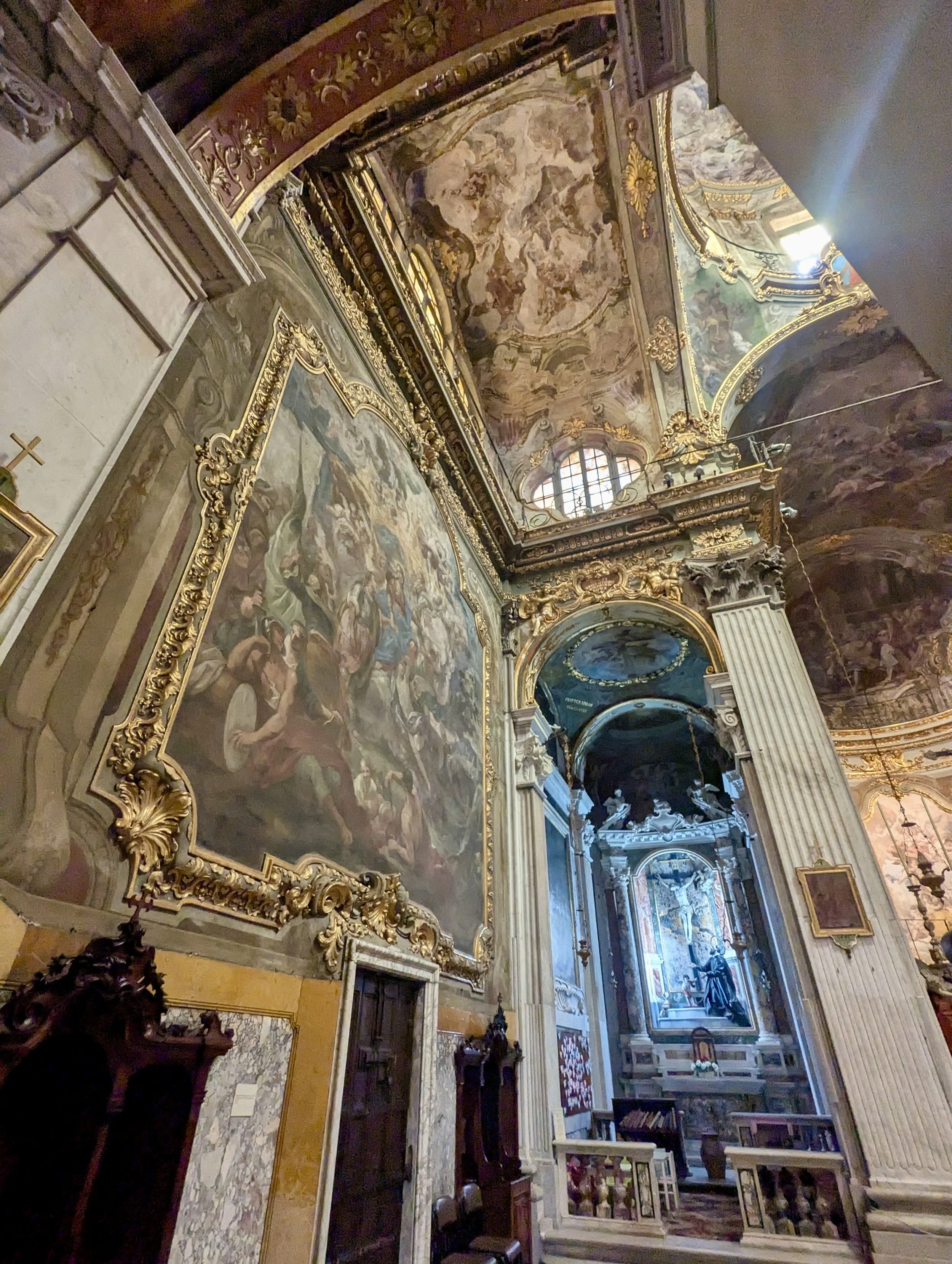
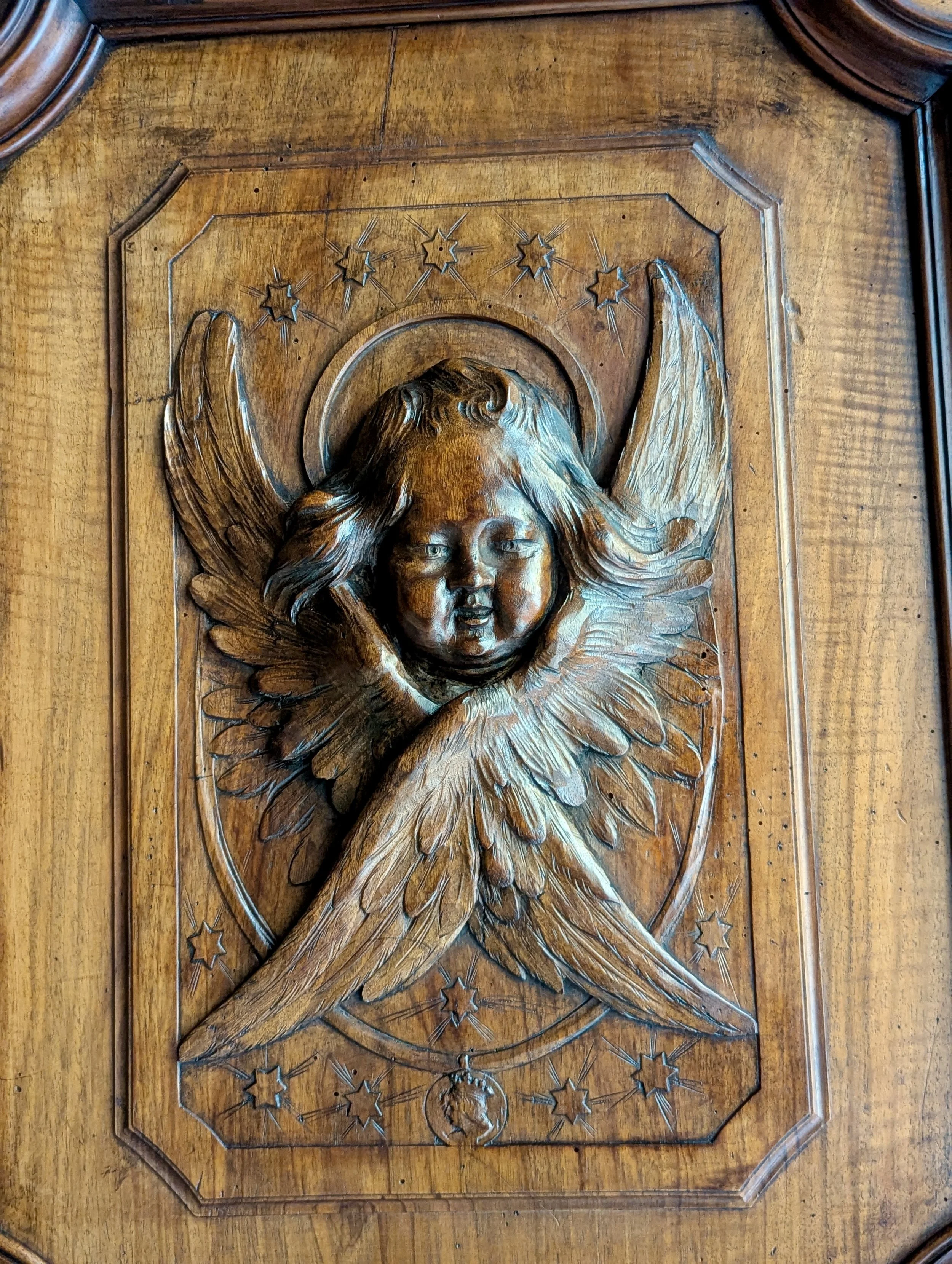
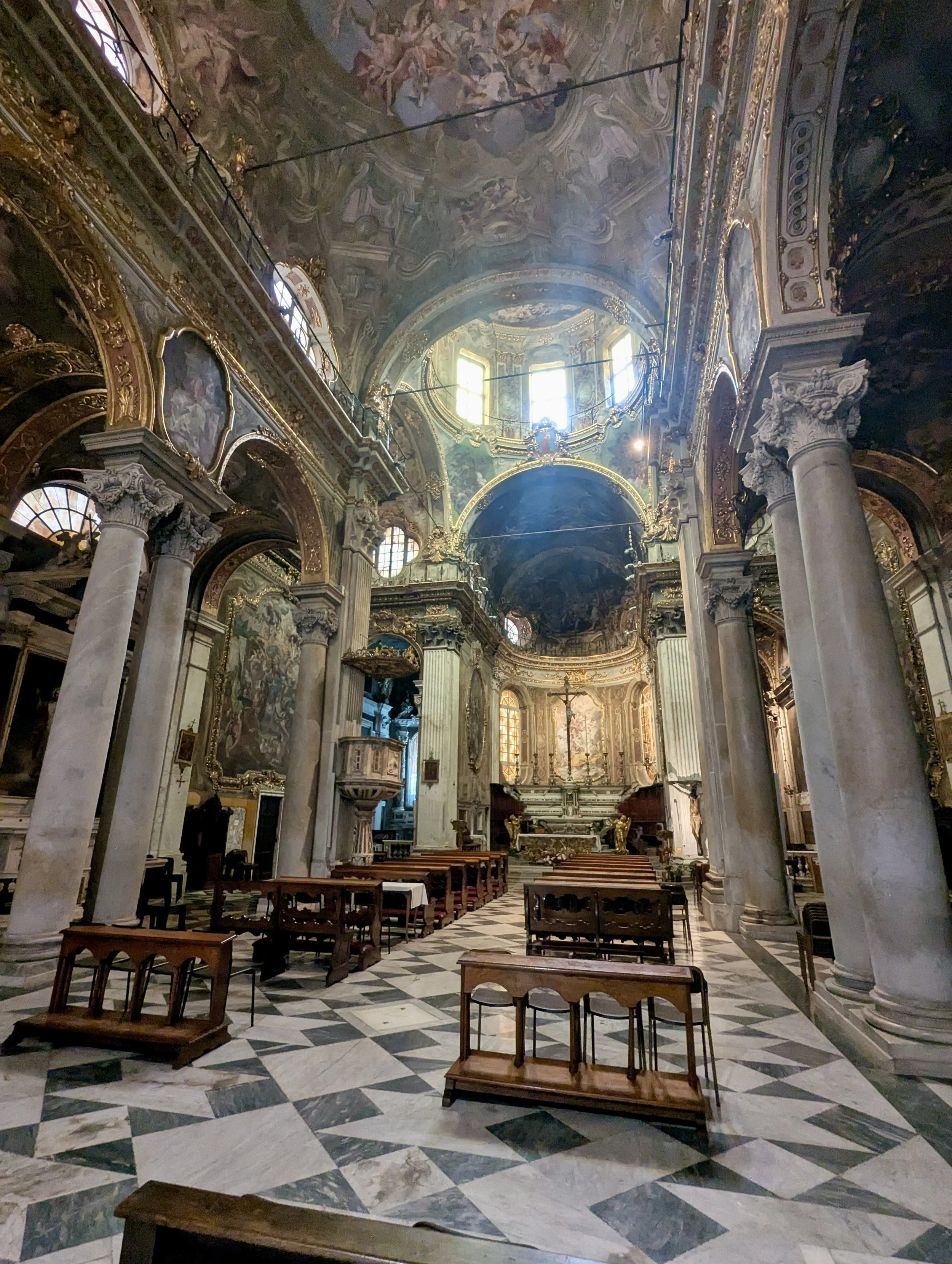
Chiesa di Santa Maria Maddalena e San Girolamo Emiliani Piazza della Maddalena, Maddalena
We’d passed this church several times as we’d walked around town, and on our last morning we managed to get in. I’m so glad we did, it was another Baroque jewel box of a church, and while it seems odd to describe a place with so much marble and gold as intimate, it really had the feel of a smaller space, and the beautiful details were utterly charming.
Where We Ate
Mercato Orientale (covered market & food hall) Via XX Settembre, 199, San Vincenzo
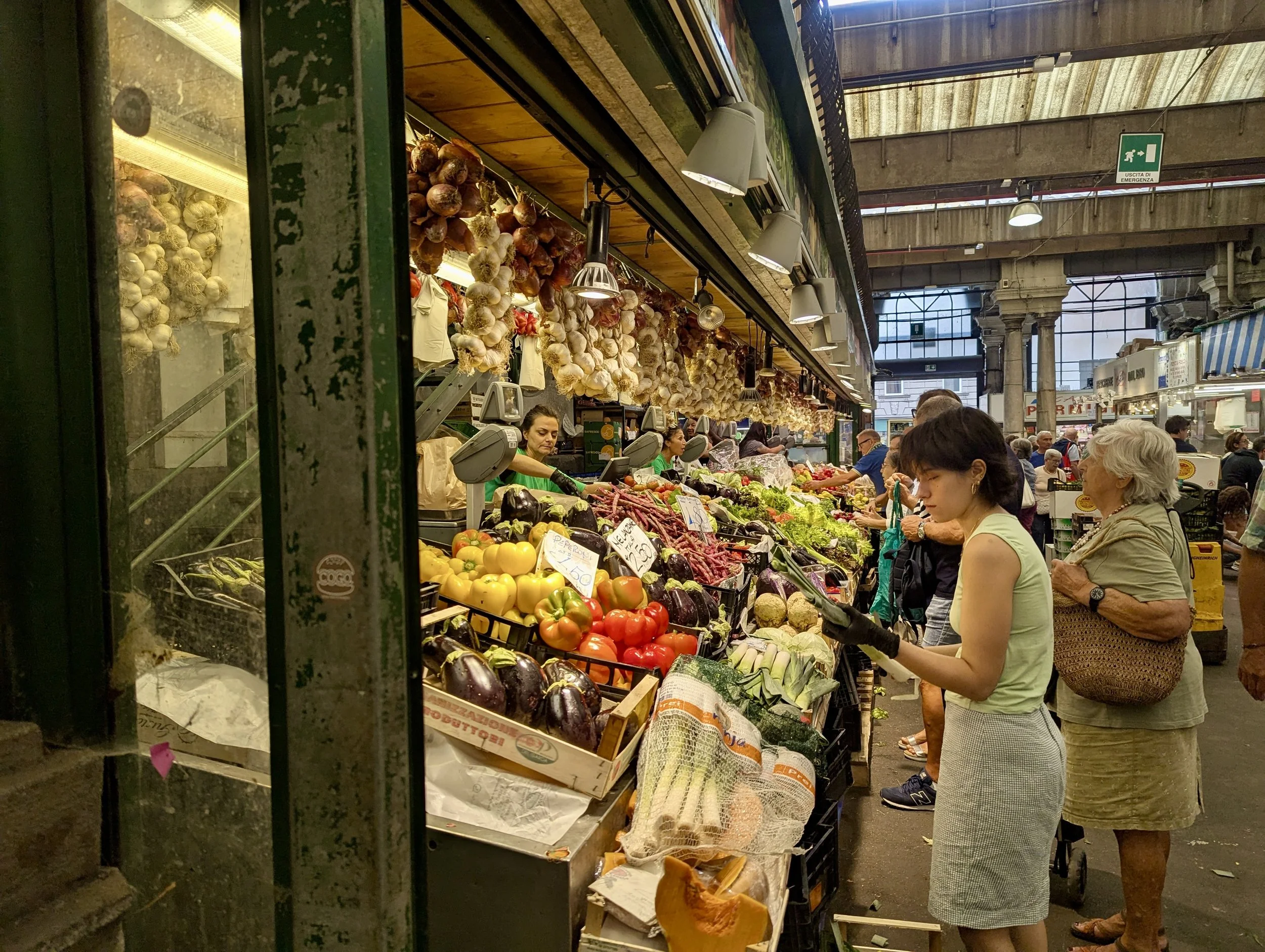
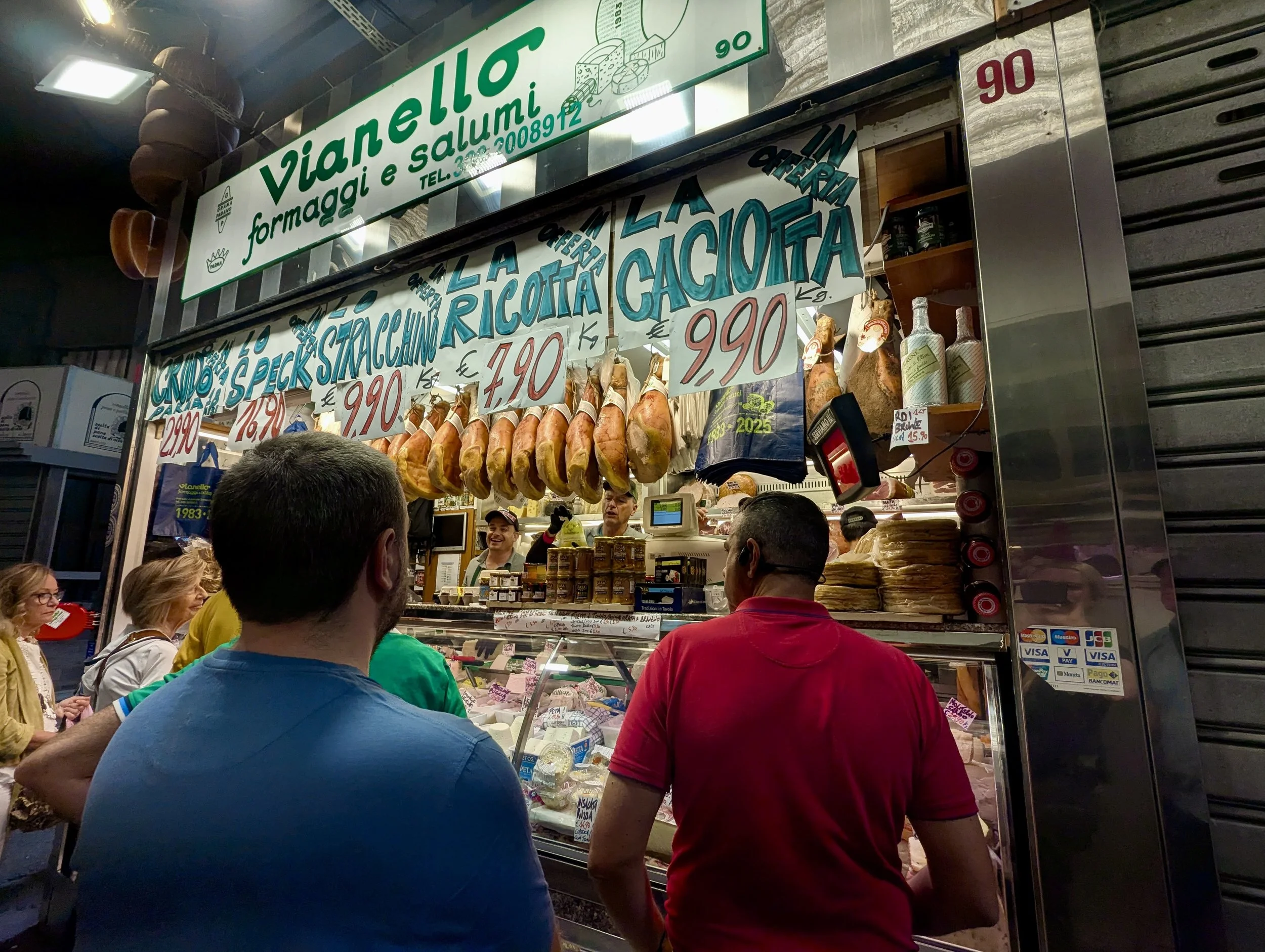
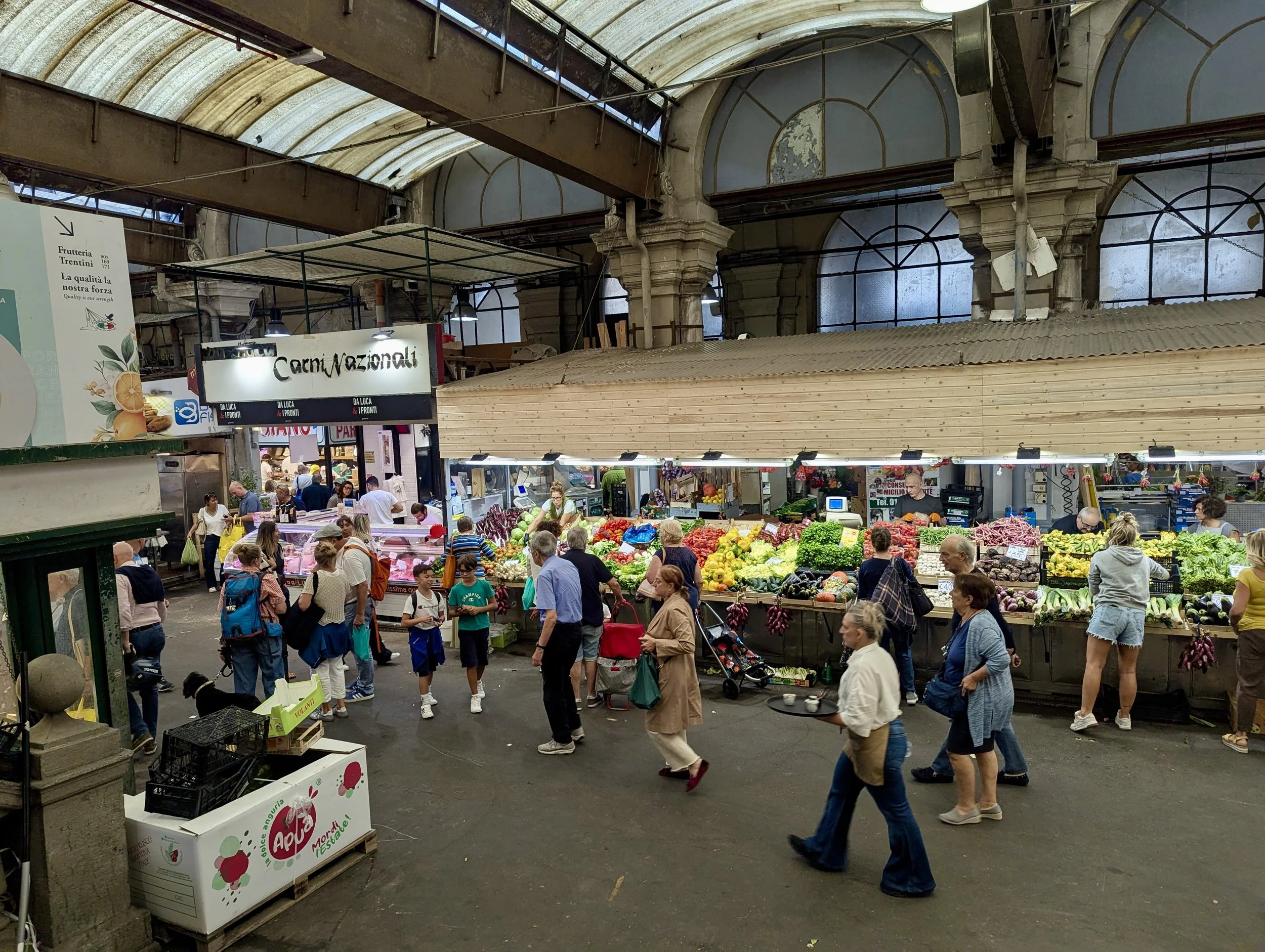
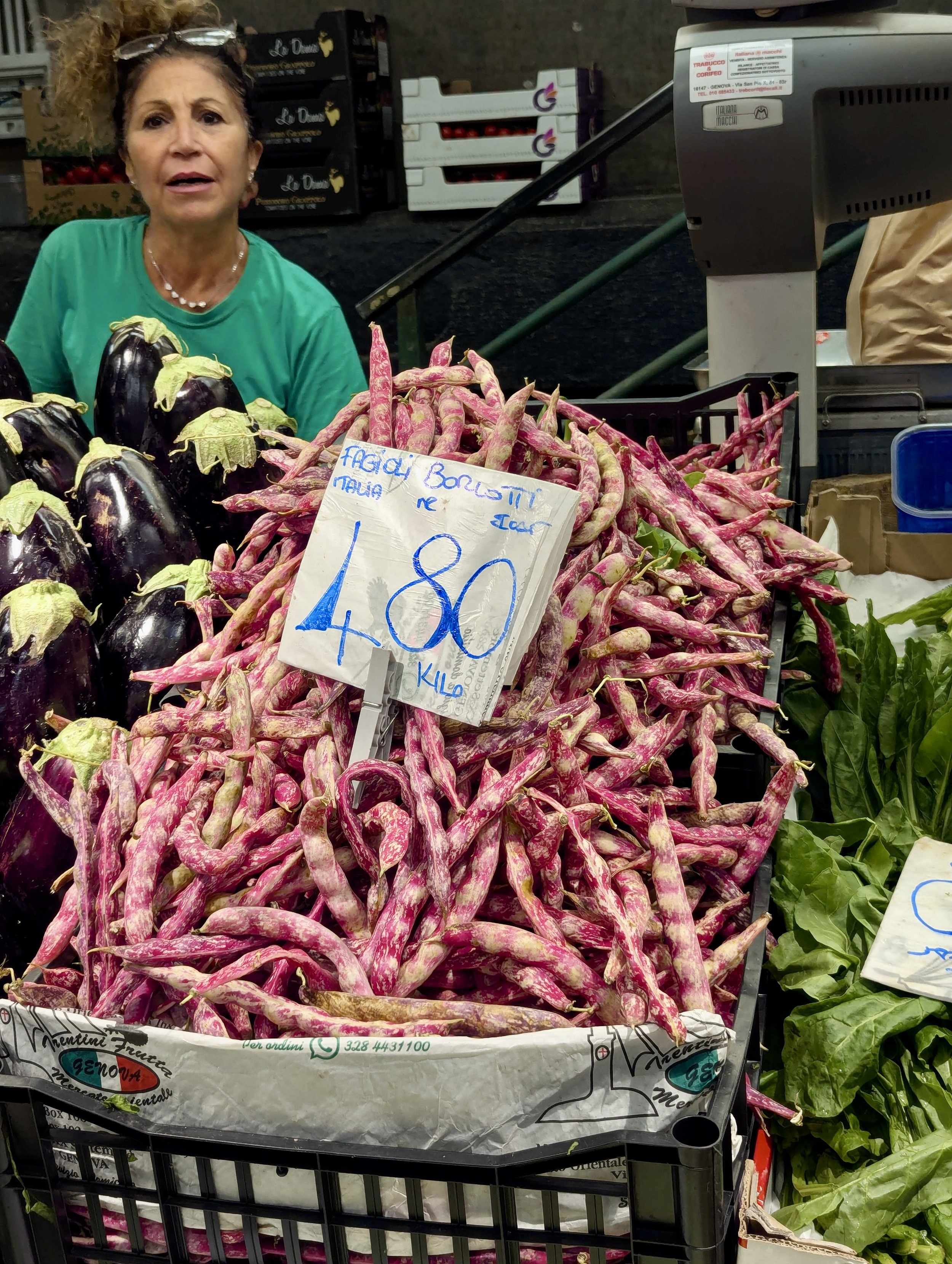
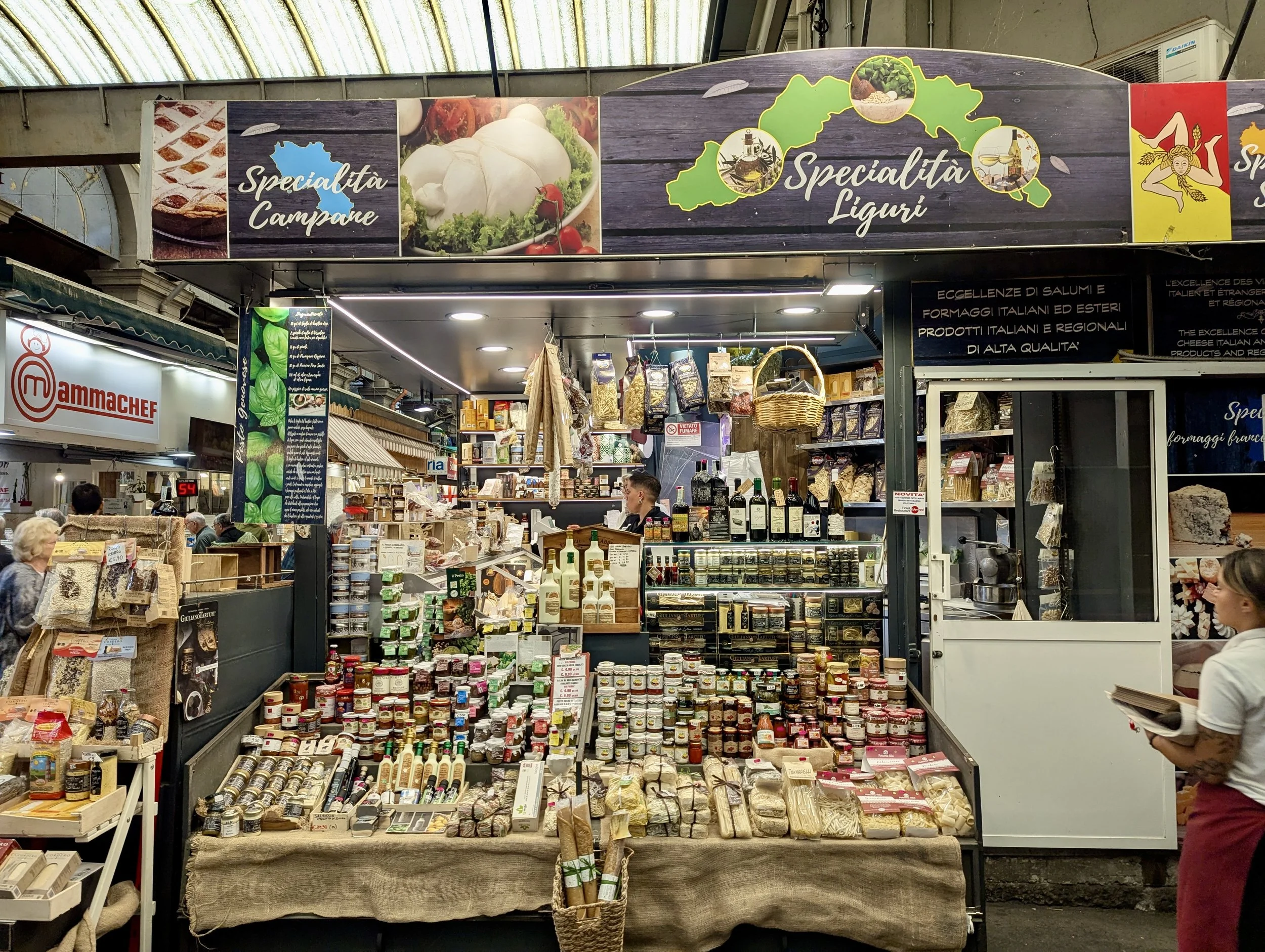
Of course we visited the biggest market in town as our first order of business. This two-story food mecca was so much fun; I could have stayed there for hours. Opened in 1899, the name refers to the proximity to the city’s eastern gate (in Romance languages Orient/Oriental generally just means east, but if you see it in reference to food it’s usually Middle Eastern as opposed to Asian cuisine, which is what you’d expect if you saw it in the US - expect hummus rather than fried rice).
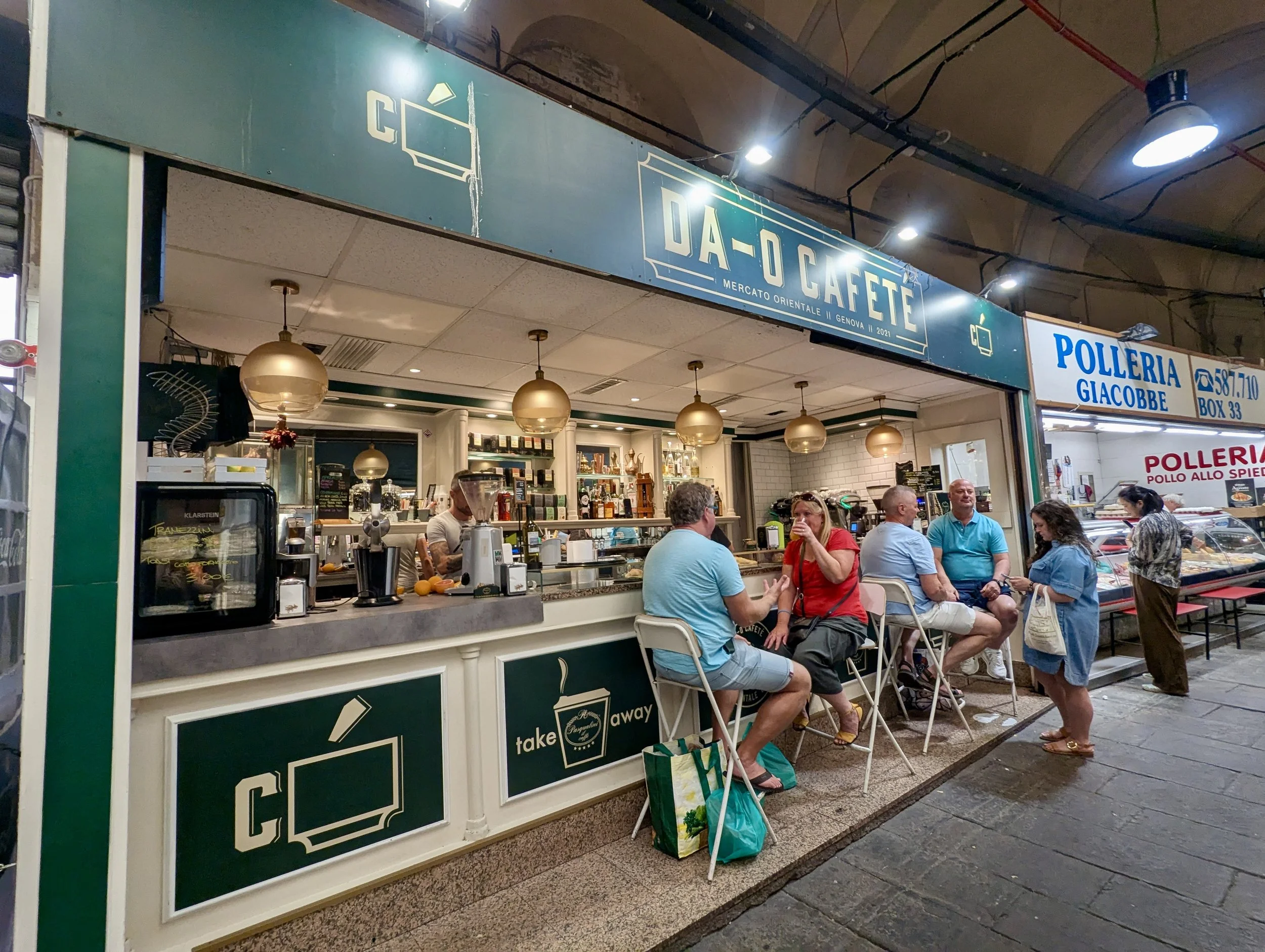
We started with the upper floor, which is where the food hall portion is, with stalls ringing the space that serve food from Peru to Kenya, poke, hamburgers, and of course Italy, with local specialties. It’s a really nice space, with lots of tables, and a bar/juice stand in the center of the room. We grabbed coffees and some spilucchi (little crostini-like open-faced sandwiches) at Lo Spilucco to fuel up for some shopping in the market area.
The ground floor is the market portion - fruit, veggies, cheese, bread, salumi, fish, a couple of cafes, and local products. I could have spent the whole day wandering and buying different treats, but I restricted myself to figs (of course), grapes, some cheese, pesto, some sausages for Geoffrey, and tomatoes. We visited a focacceria outside of the market to get some focaccia and a lovely little crostata. The whole experience was fantastic, and quintessentially Italian - when it’s your turn, it’s your turn, even if it’s busy you aren’t rushed, if you want to buy a dozen different things, you will patiently be served until you’re done, with nobody hassling you, not even other customers. It’s very pleasant. The focacceria was the same, with the people in front of us buying giant slabs of focaccia and the bakers wishing them happy Sunday (it was Saturday, and with everything closed on Sunday you got the impression that everyone was shopping for Sunday lunch, which is a big deal in Italy).
Il Tondìn (Ligurian) Piazzetta dell'Amico, 2, Maddalena
We had a spectacular dinner at this restaurant that serves Ligurian cuisine. I had made a reservation online long before we even started our trip, which was good because they were pretty busy. We were given the option of indoor or outdoor, and I’m very glad we chose indoor because there was an intense rainstorm that was just starting as we arrived, and finished up right before we left, so the nice table we had in the cozy (and dry) downstairs dining room was absolutely the correct choice.
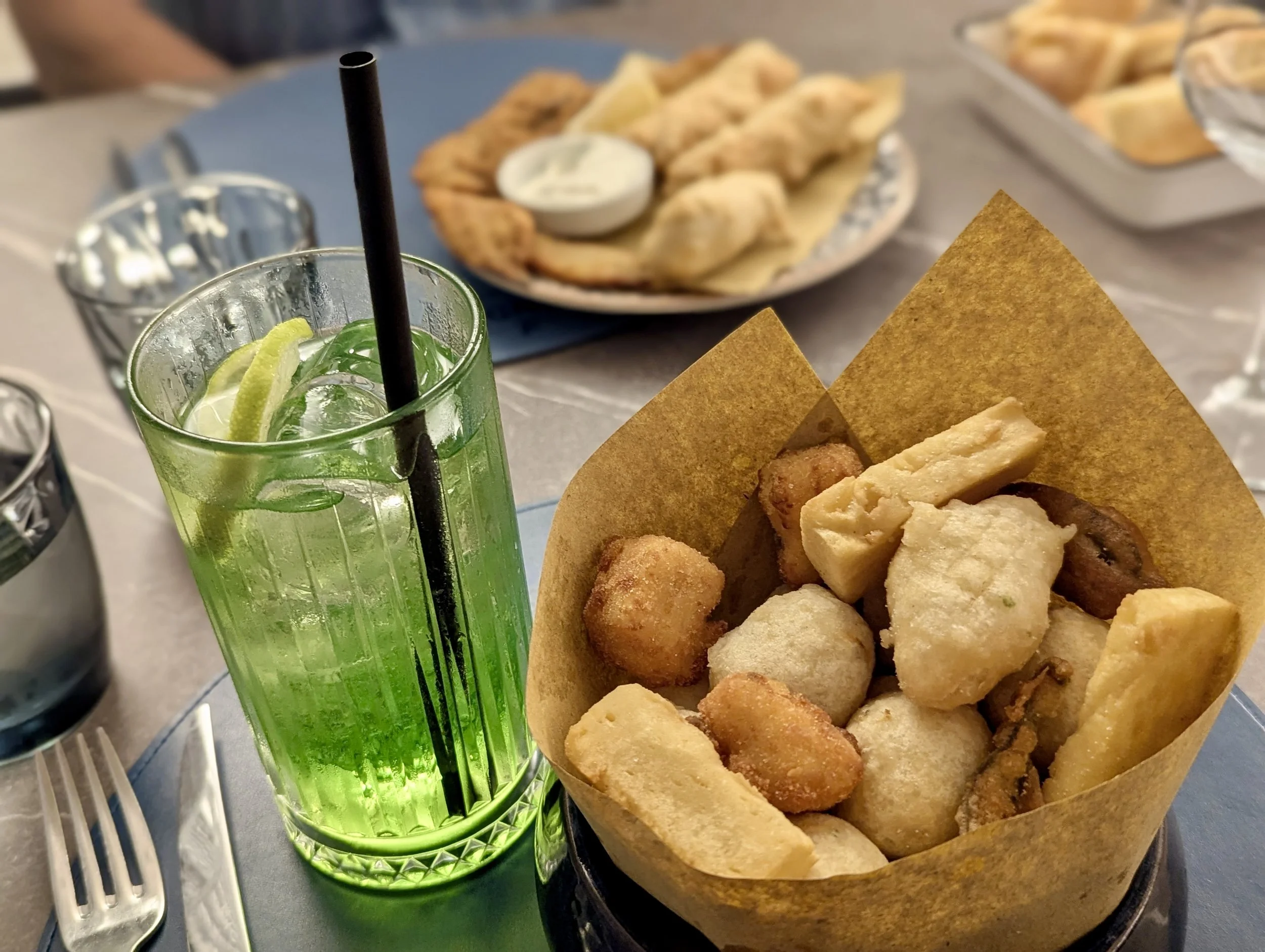
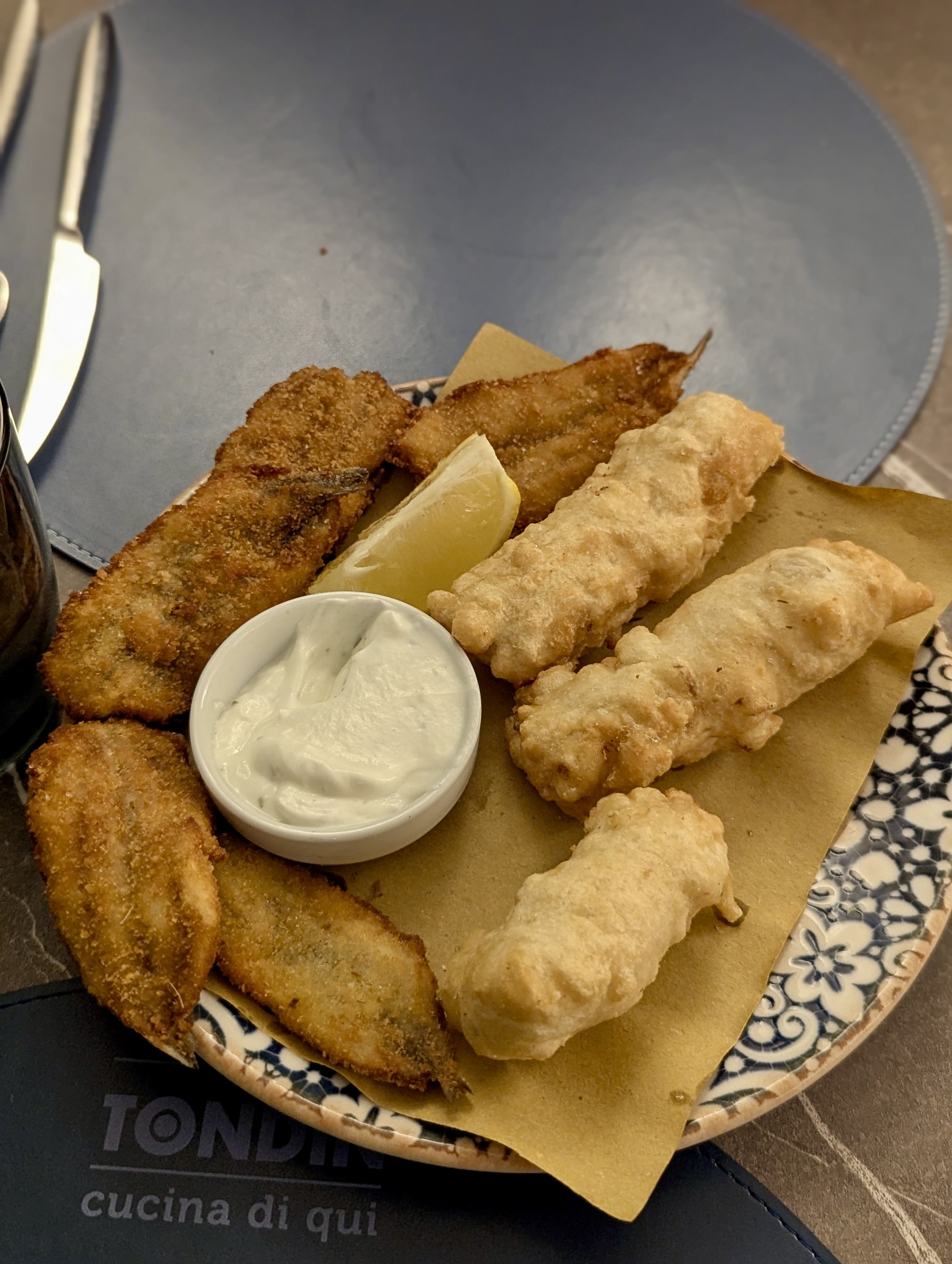
The only problem was that we had planned to stop somewhere else in town for an aperitivo before dinner but we ran out of time, so we decided to just have an aperitivo at the restaurant before moving on to ordering. I ordered an amazing basil and gin cocktail (Italy produces a lot of high-quality gin) and Geoffrey had an Aperol Spritz, and because we were really hungry we ordered two appetizers, baccalà and a lovely fritti misti. While they were both wonderful, the mixed fried assortment also contained baccalà, so it seemed like overkill, plus there was focaccia. . . you can see where this is going.
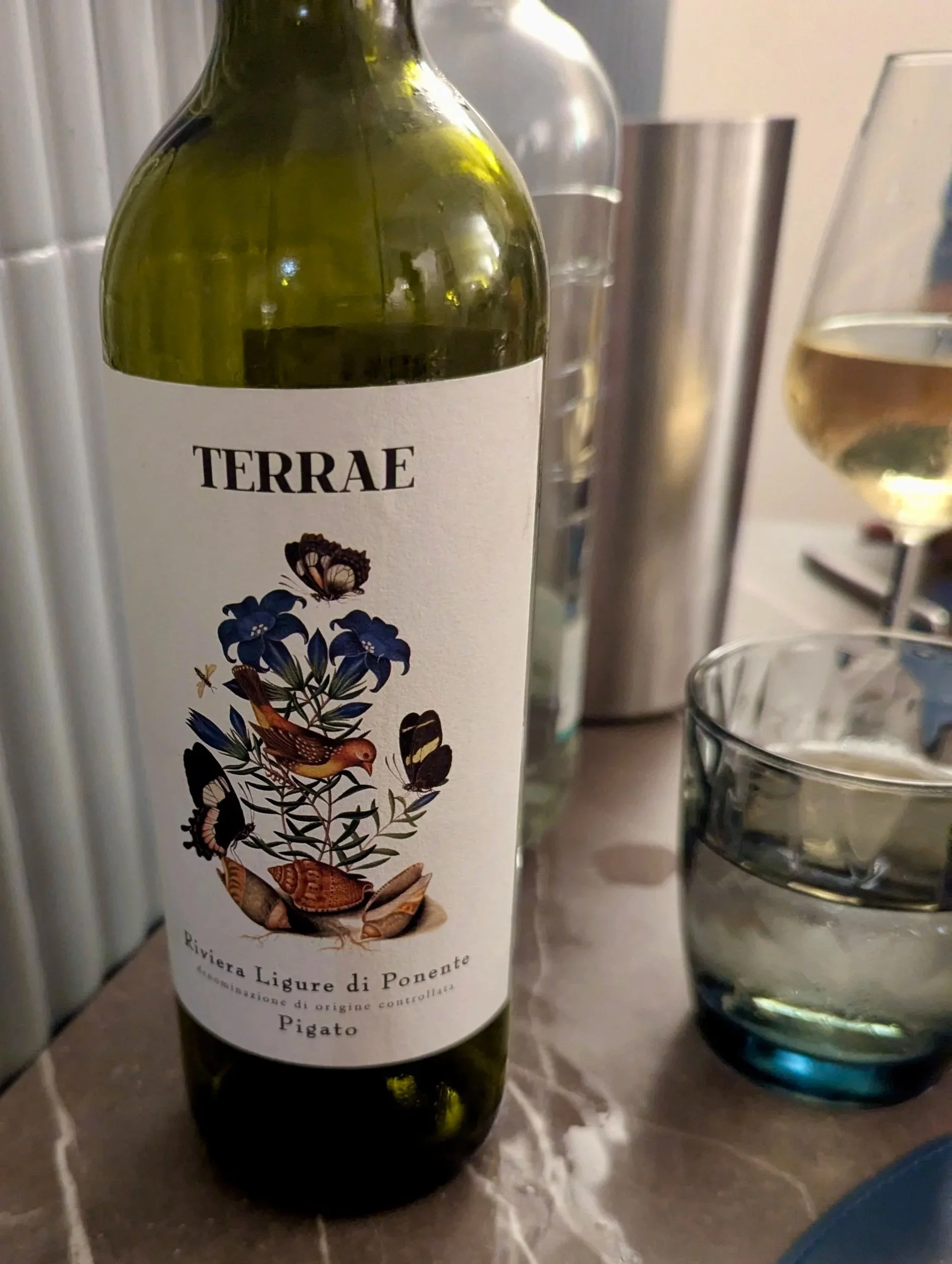
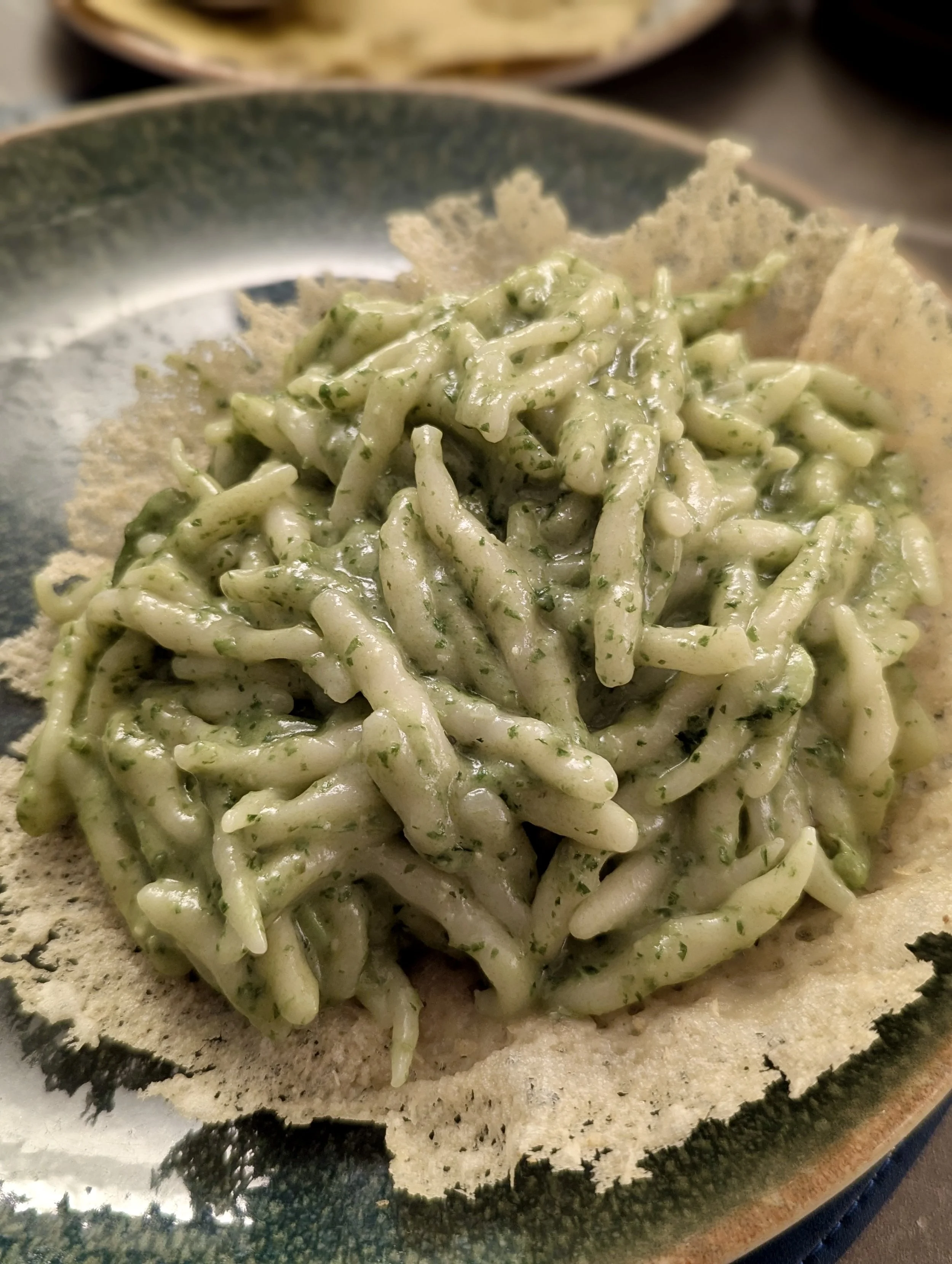
For “actual” dinner, I stuck to a primo and ordered trofie al pesto, one of my all-time favorite dishes in the entire world, and honestly, one of the reasons we came to Genova. Geoffrey ordered a seafood pasta that contained some whole prawns which made for some challenging work to eat in a restaurant with silverware. We also enjoyed a nice bottle of local Pigato and left very, very full, but happy. It was an allover great evening - good food, good drinks, and there was a family at the table behind us who brought their dog with them who came over to say hello, which we were not at all upset about, and I chatted with them a little in Italian and got in some (wet) dog pets.
A note on Italian dining: you can absolutely go the traditional route and order all the courses, which are antipasto (appetizer), primo (usually pasta, but it could be risotto or polenta), secondo (meat or fish/main course), and dolce (dessert), but it’s not required. If you can handle it, bless, but it’s a lot of food, and Italians don’t do doggie bags, so if you want to not feel absolutely stuffed or feel guilty for leaving a lot of food on your plate it’s absolutely fine to just order from either the primi or secondi menu. I tend to get an antipasto and a primo and call it a day, that way I get to try two things but I can generally clean my plate (and occasionally even have room for dessert). If I don’t, a walk after dinner can help make enough room for a quick gelato to round off the night.
Pasticceria Gelateria Mangini (cafe) P.za Corvetto, 3 r, San Vincenzo
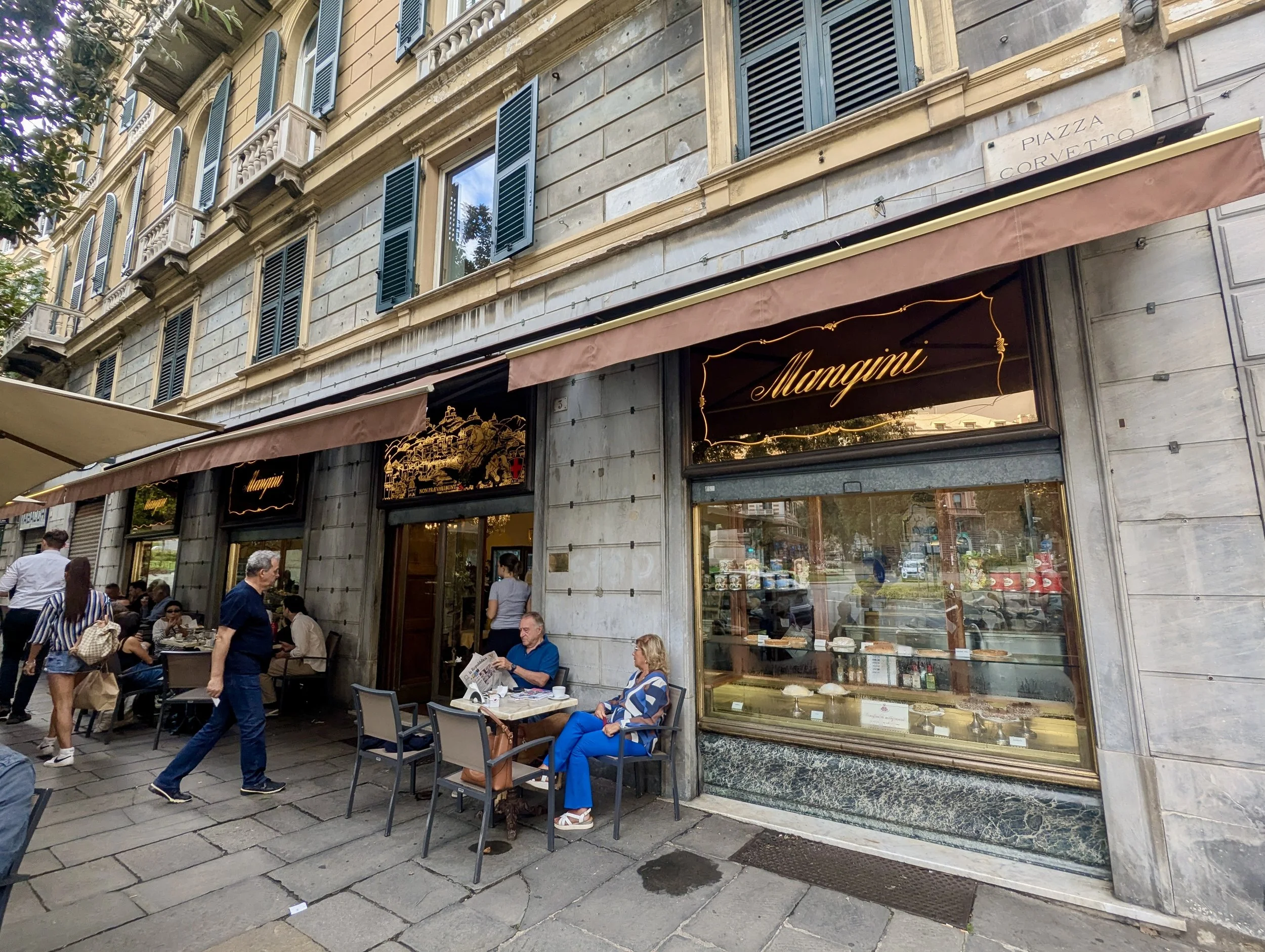
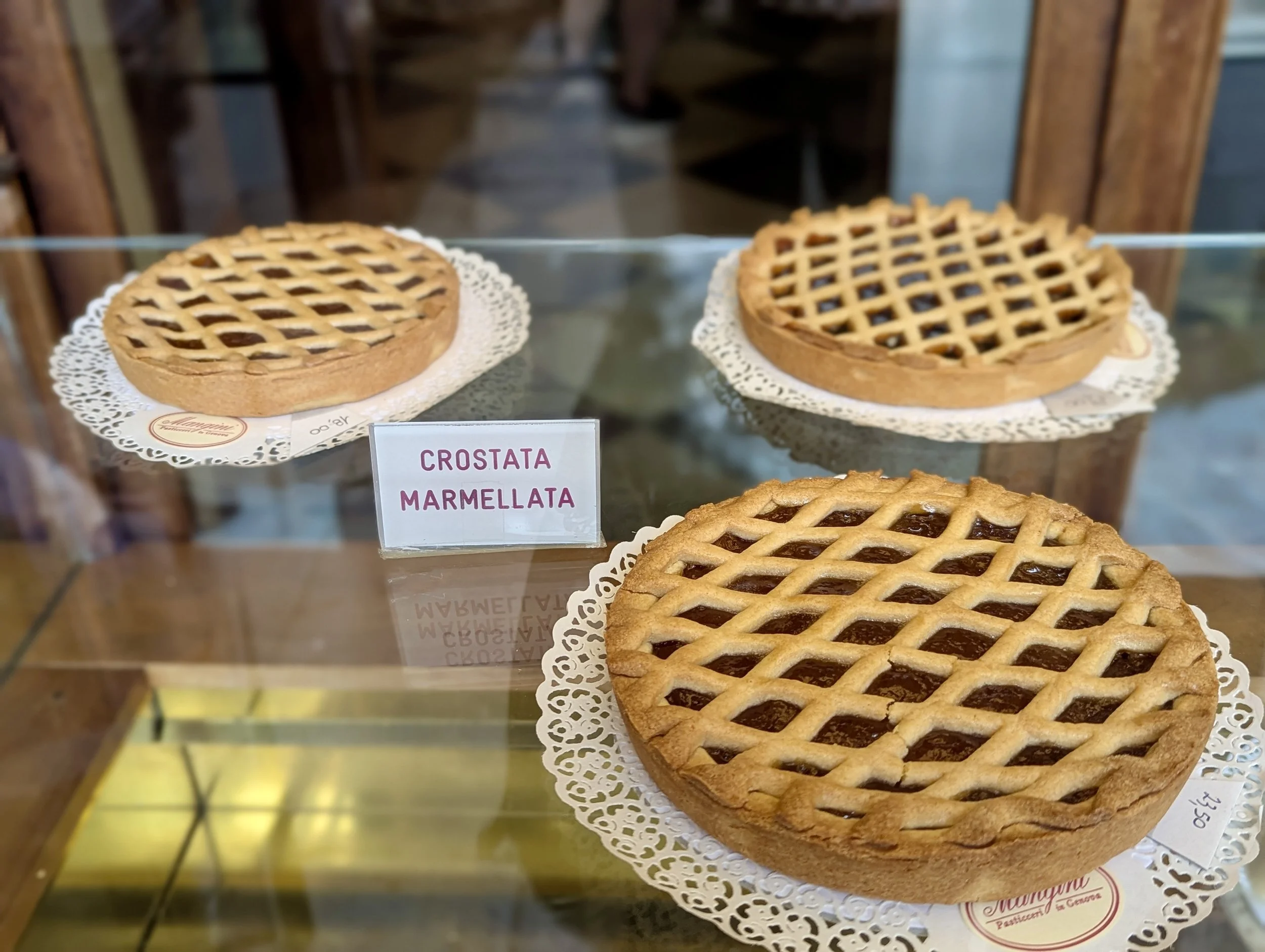
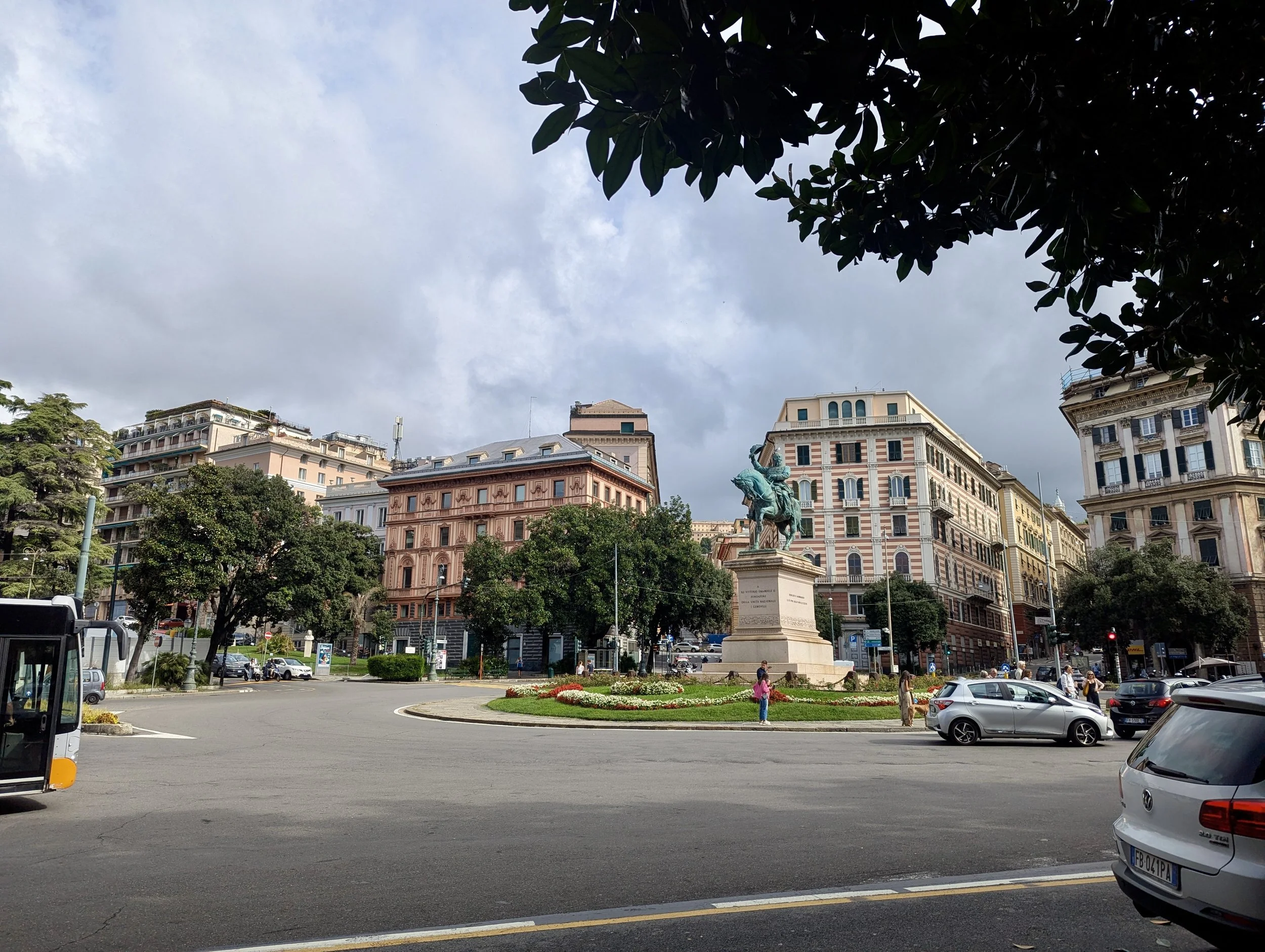
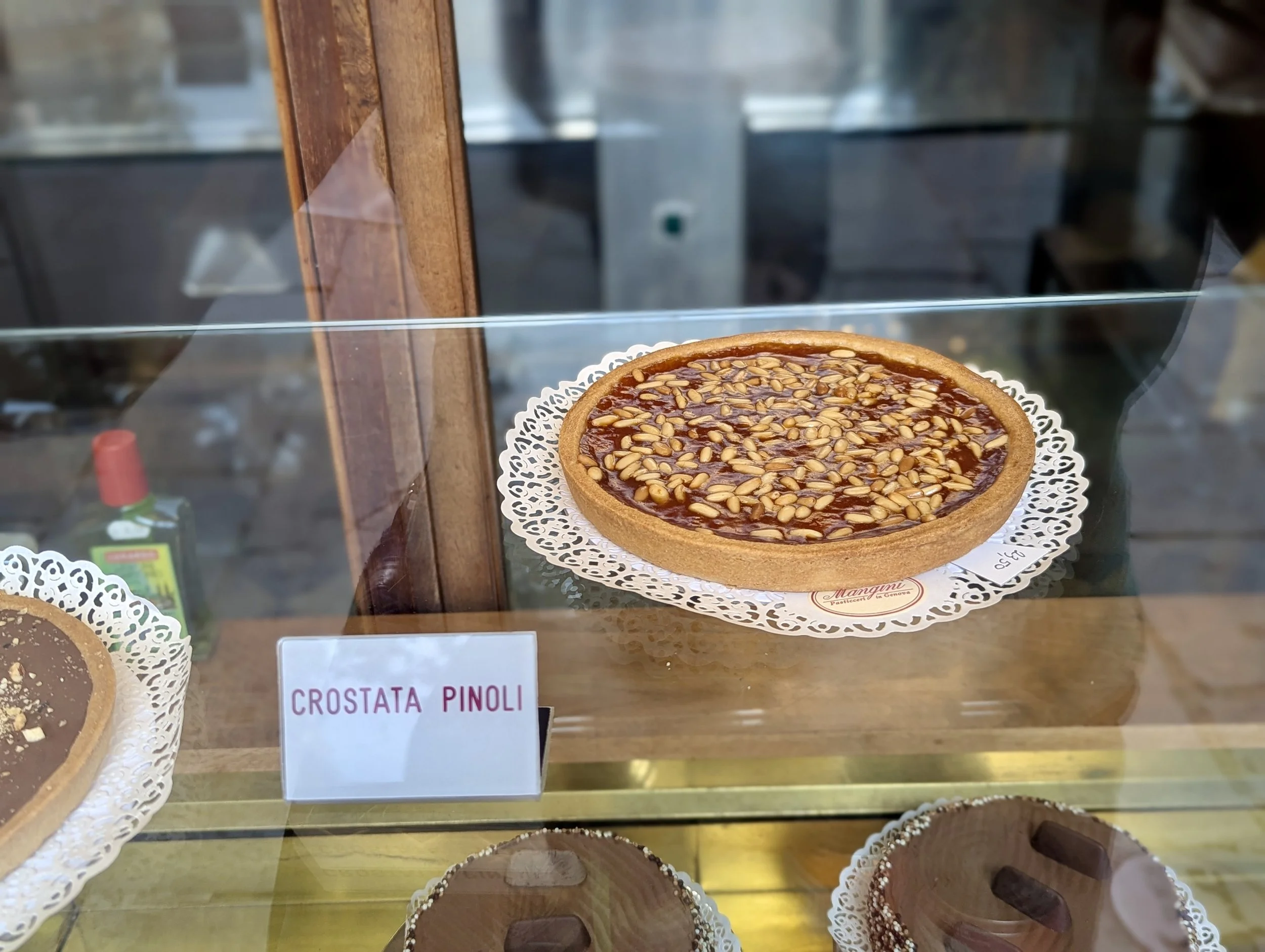
We grabbed a mid-morning coffee and snack here on Sunday morning - it was okay, not amazing. The coffee was good (it’s Italy, you have to try to find bad coffee) and the cornettos were fine, though service was pretty chaotic. We sat outside and tried to avoid the smoke emanating from every other table. They only take cash (this was very common last time we were here in 2010, but apparently now it’s illegal in Italy for a business not to accept cards as a means to prevent tax fraud), and, while a waiter comes to take your order at the table, you have to go inside to pay the cashier directly. The interior is very grand and elegant, with a classic 19th century style that fits in nicely with Genova’s elegant palazzi, and sitting outside right off the lively Piazza Corvetto made for a pleasant break. I’m not sure I’d go out of my way to visit again, the prices were a little high (though compared to the US it was cheap) and the service wasn’t great.
Trattoria Rosmarino (Ligurian) Salita del Fondaco, 30, Maddalena
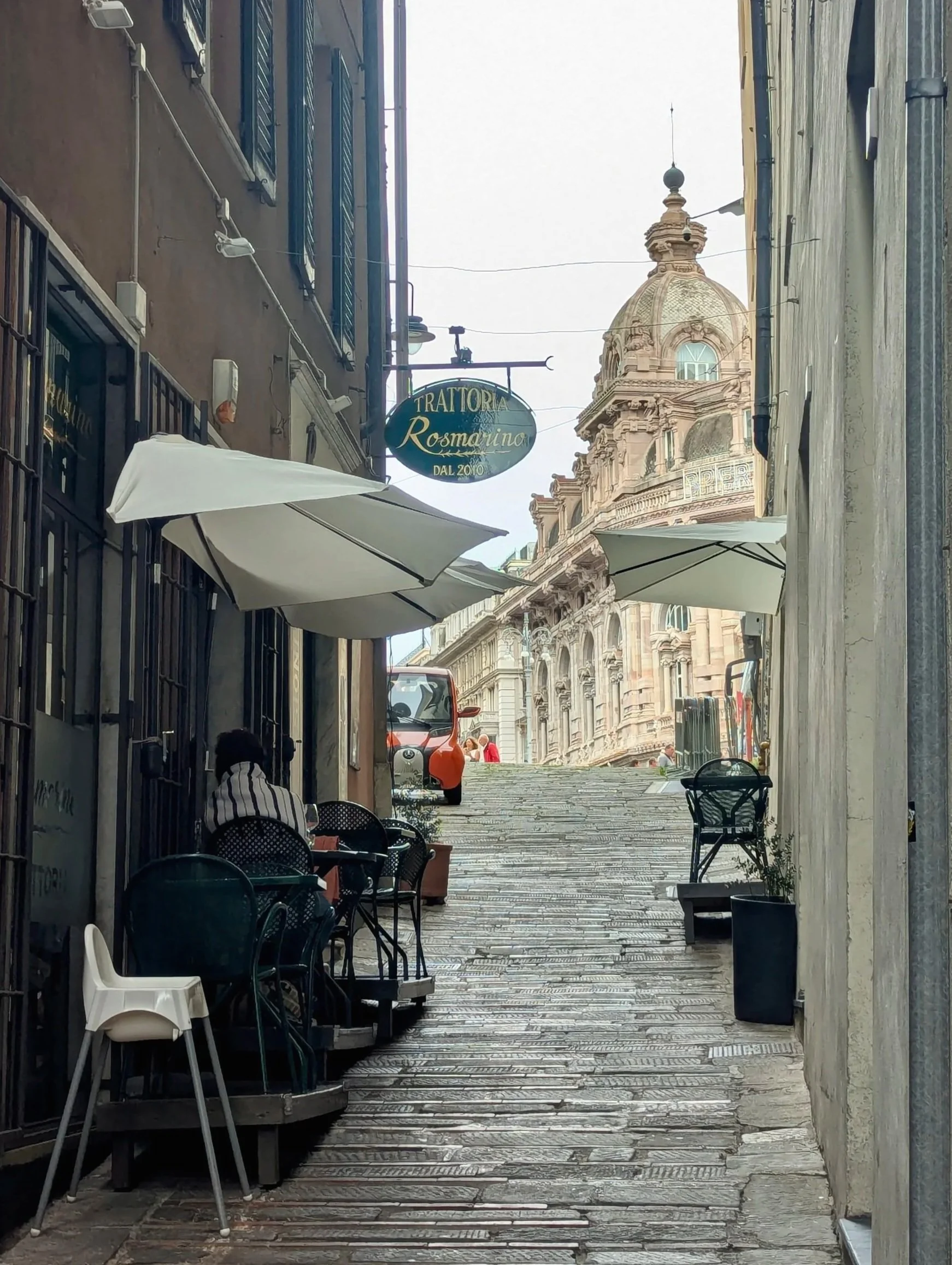
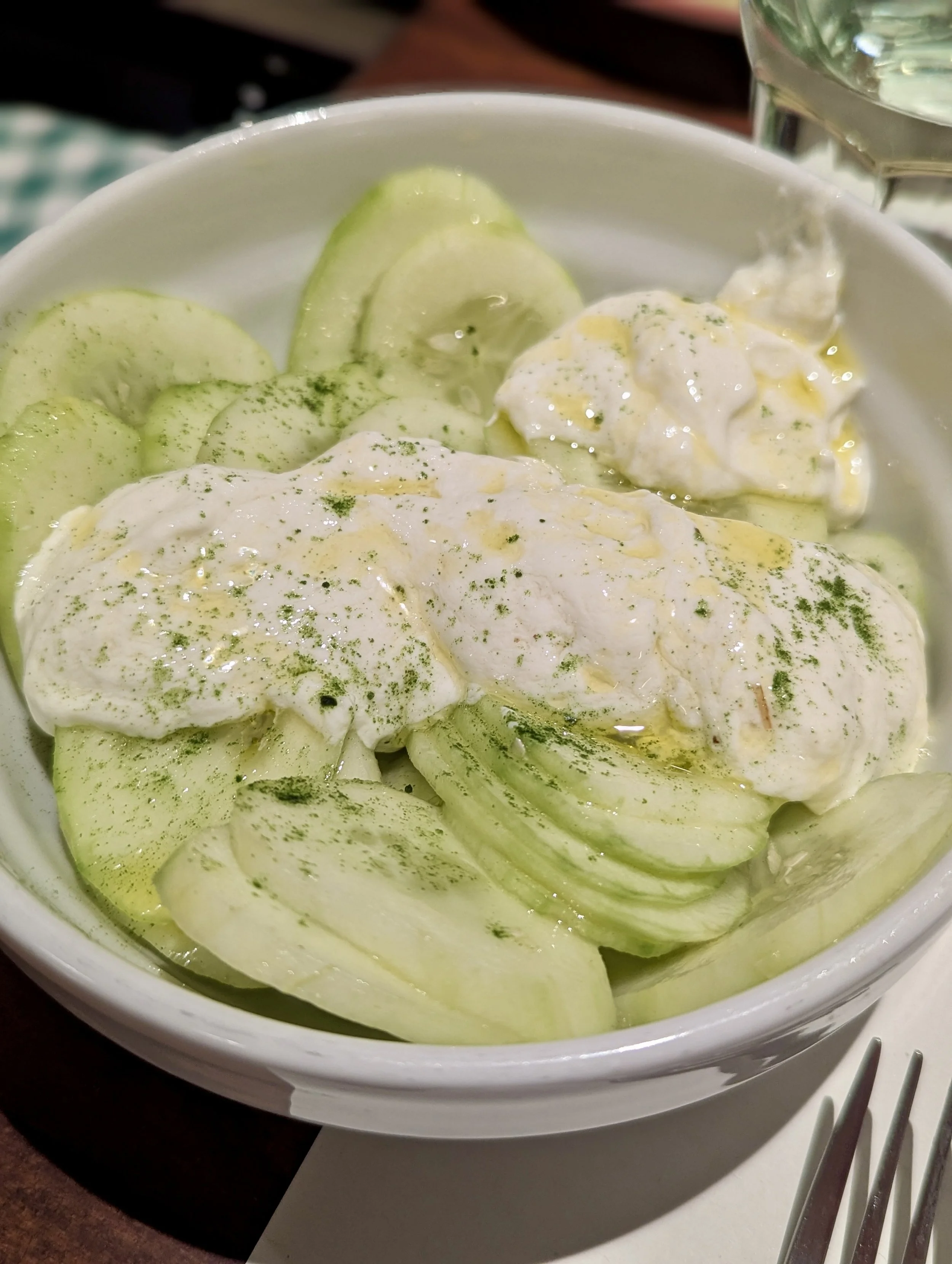
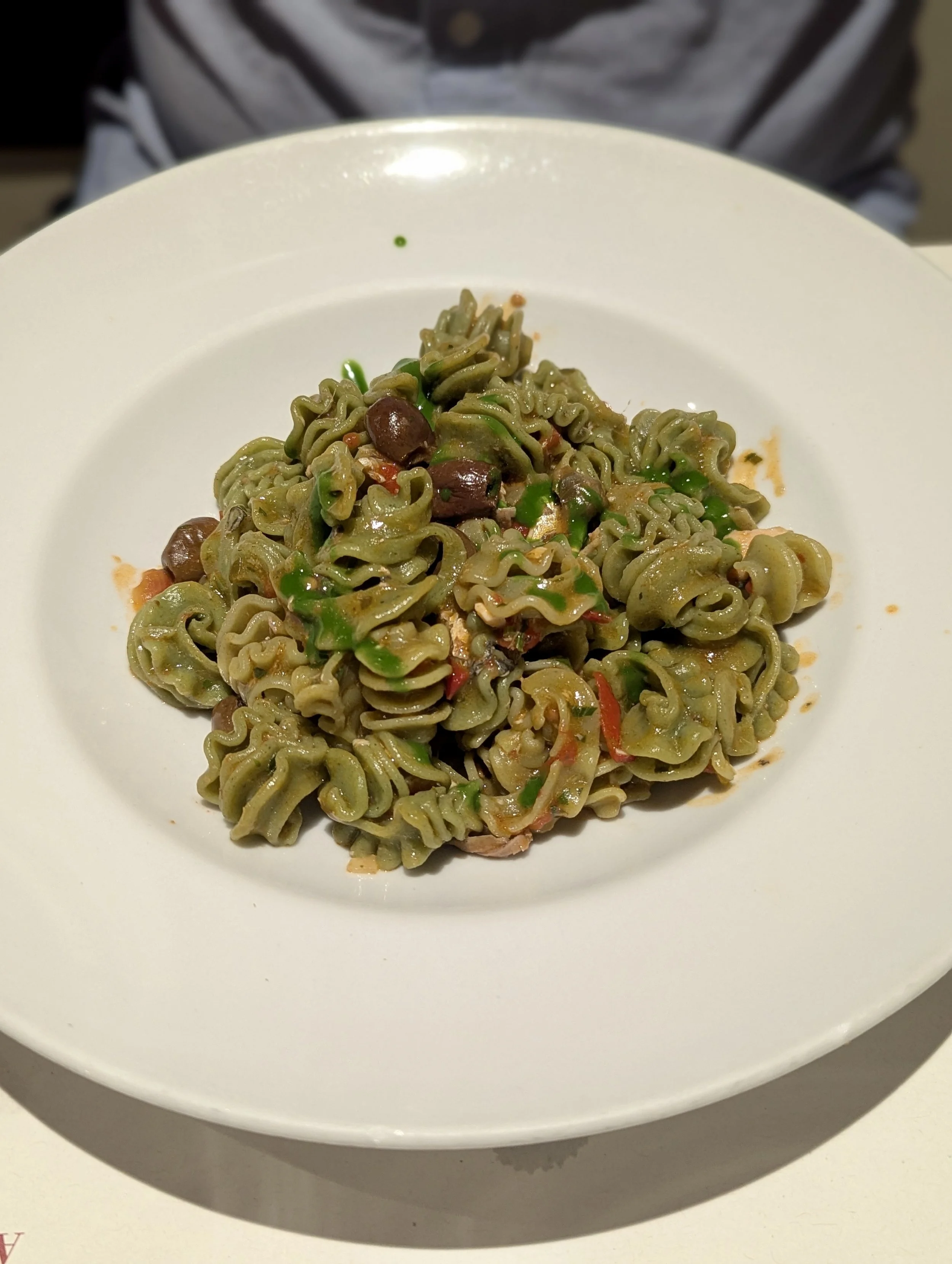
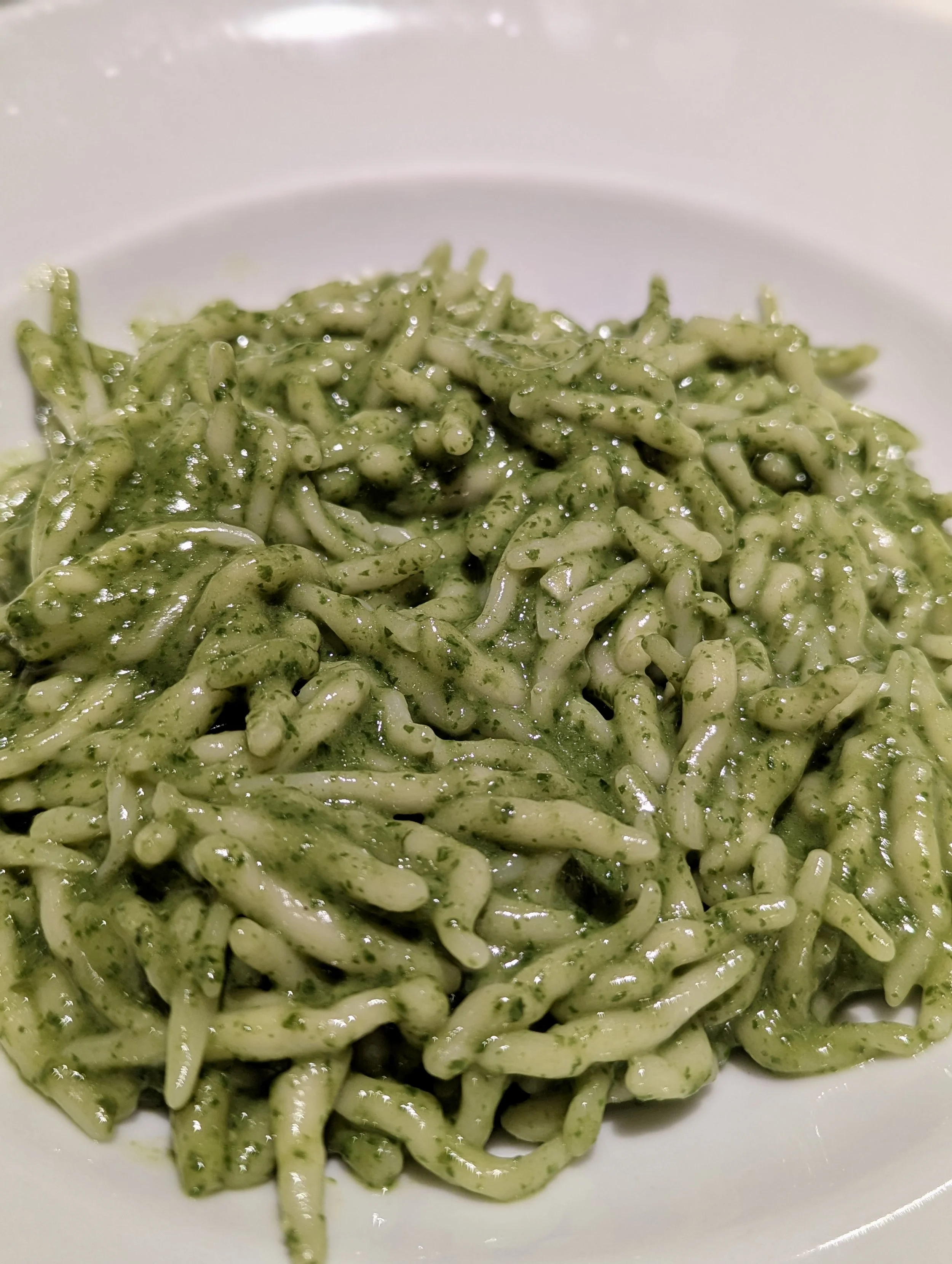
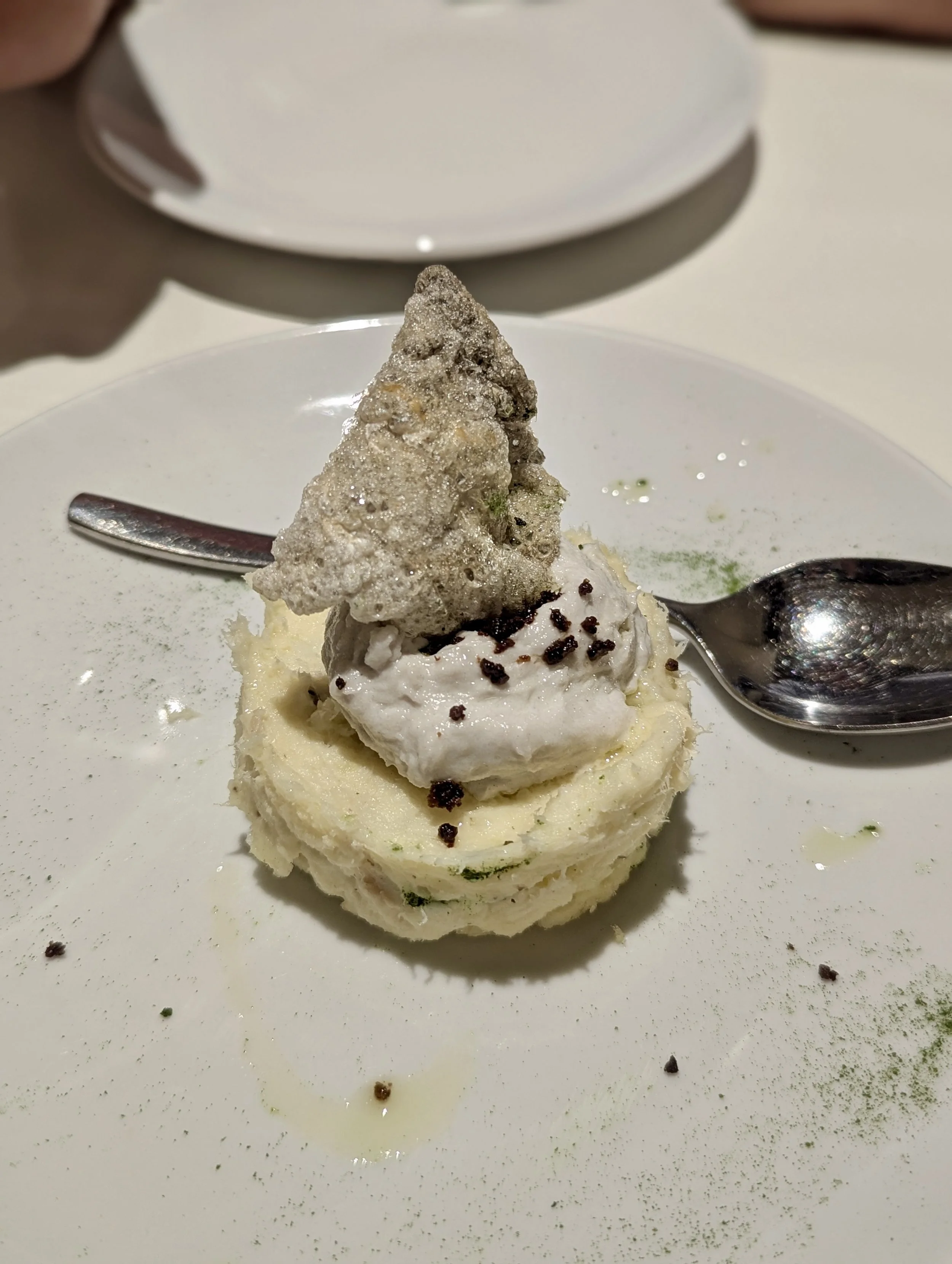
Our second and final dinner was at Tratttoria Rosmarino, which is both part of the Slow Food network as well as the winner of the Michelin Bib Gourmand distinction (great food for a good value). The Slow Food logo is something to look for if you’re wanting to eat at a restaurant that prioritizes local, small-scale production that follows traditional techniques when sourcing their produce. And this did not disappoint. We had a lovely bottle of local wine, a nice salad of cucumbers with some local, soft cheese, a fun bacalao and potato starter, trofie al pesto for me (of course), and fusilli with anchovies and olives for Geoffrey. Everything was delicious, service was excellent, and the atmosphere was fun, local, and pleasant.


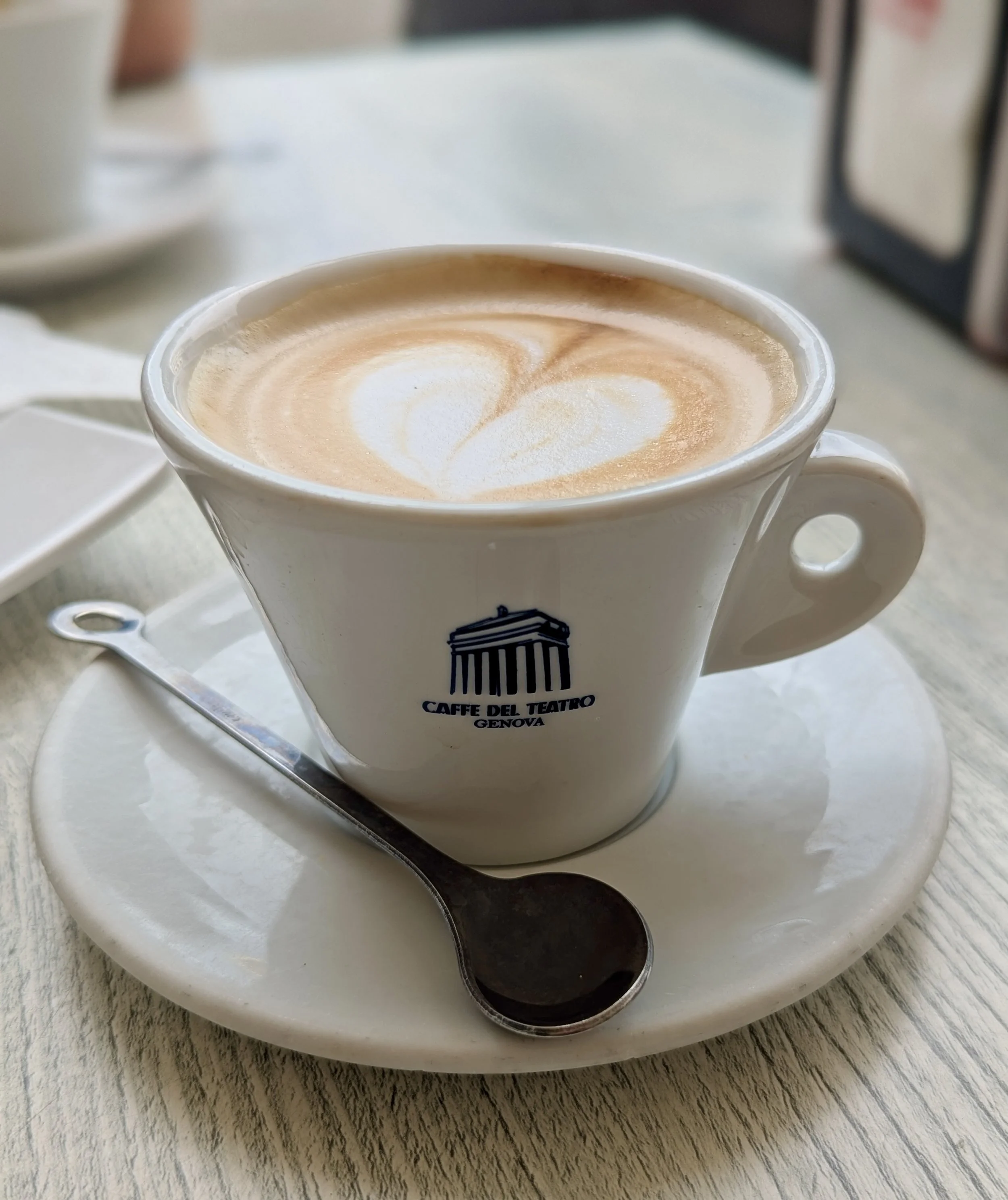
Caffè del Teatro (cafe) Galleria Cardinal G. Siri, 2, San Vincenzo
We grabbed a quick breakfast on our last morning at this picturesque cafe on Piazza De Ferrari. We had coffee and cornetti (like croissants, but not nearly as good, usually filled with cream, marmalade, or chocolate - if you can find a way to combine French pastries with Italian coffee. . . paradise). Geoffrey also grabbed a sandwich for the train to Bologna. I didn’t see anything I liked, so I decided to wait and get a focaccia at the focacceria by our apartment, which turned out to be the better choice.
Next Trip
As I said at the beginning, we didn’t have enough time here, so I’d love to come back. The weather was mostly overcast, though it was warm, and one of our two full days was a Sunday meant lots of closed restaurants.
Beaches: having just come from Corsica and with grey weather, not to mention limited time, we didn’t even chance a visit to one of the nearby beaches.
Palazzi del Rolli: we walked along via Garibaldi and saw some great exteriors, but we didn’t go inside any of the many, many palazzi in the city.
More Pesto: there’s no such thing as enough. . .